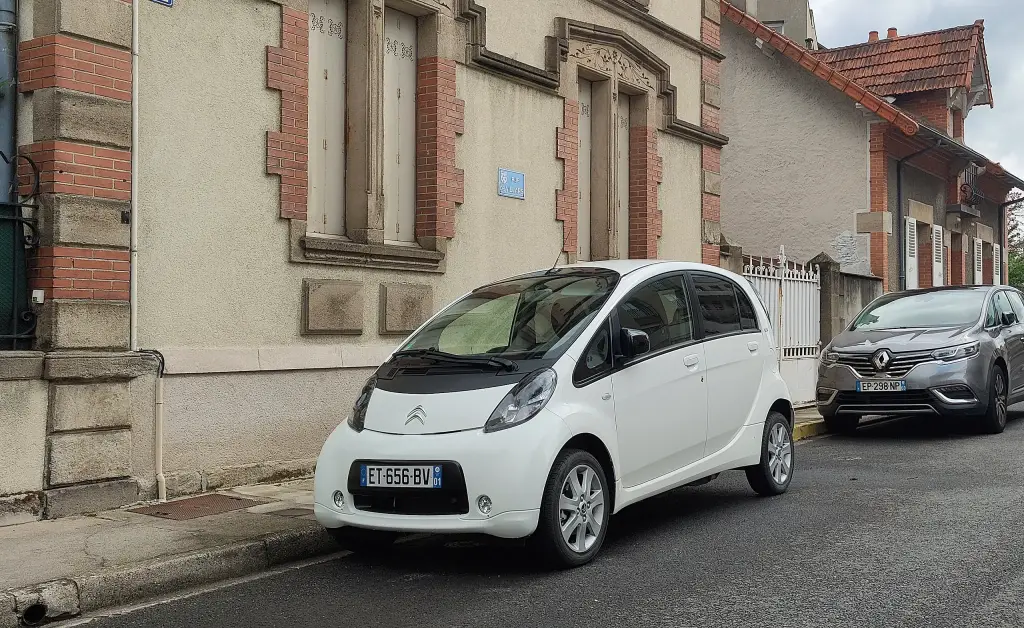
The Citroën C-Zero is a city car with fully electric power, developed in collaboration with Mitsubishi Motors. Its sister model was sold by Peugeot as the iOn, and the C-Zero itself was sold until 2020, when the Ami replaced it.
Citroën C-Zero at a glance
| Maker | Citroën, with Mitsubishi Motors |
|---|---|
| Type | five-door electric city car |
| Based on | Mitsubishi i-MiEV |
| Sister model | Peugeot iOn |
| Motor | 47 kW (64 hp), 3,000–6,000 rpm |
| Torque | 180 N·m from 0 to 2,000 rpm |
| Battery | lithium-ion, mounted in the centre of the car |
| Top speed | 130 km/h (81 mph) |
| 0–100 km/h | 15 seconds |
| Range | 130 km (81 mi) |
| Seats / boot | four seats, 166 litres |
| Sold until | 2020, replaced by the Ami |
Based on one source (English Wikipedia).
History of the Citroën C-Zero
A Mitsubishi in French clothes
The C-Zero is the French version of the Mitsubishi i-MiEV, itself based on the Mitsubishi i kei car sold in Japan, and the result of the partnership between PSA and Mitsubishi. After the Peugeot iOn was presented at the Frankfurt show, the C-Zero marked the second part of the sale of electric vehicles in Europe by the two groups; apart from the exterior and interior styling and the price, the two cars are the same. It was designed for urban use: small, quick to charge and with enough range for a daily commute. The car premiered at the World Exhibition in Brussels in January 2010 and went on sale in the last quarter of that year.
Motor and performance
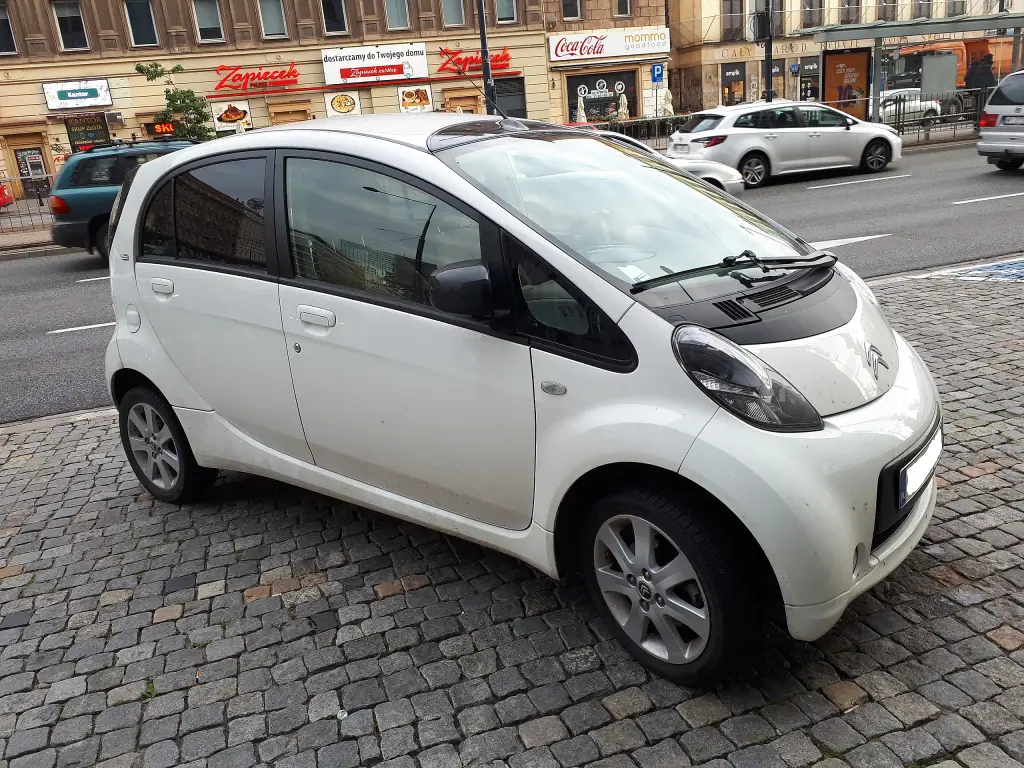
The motor delivers 47 kW, or 64 hp, between 3,000 and 6,000 rpm, with a maximum torque of 180 N·m from 0 to 2,000 rpm. It is fed by lithium-ion batteries located in the centre of the vehicle, a layout that keeps battery weight down. The top speed is 130 km/h, 0 to 100 km/h takes 15 seconds and 60 to 90 km/h takes six, and the range is quoted at 130 km. There are four seats and a 166-litre boot, with power steering, ESP, six airbags, telematics and air conditioning.
Charging and use
A full charge takes six hours from a 230 V socket at up to 16 A, while an external CHAdeMO charger refills the battery from empty to 80% in about 30 minutes. The driver simply turns the key and a beep announces that the car is on; it drives like an automatic, without gear changes, and a battery charge indicator replaces the fuel gauge.
An earlier attempt
Citroën had tried an electric car before, in the 1990s: a version of the Saxo that proved too expensive because of the cost of the batteries and had a limited range, so it never went beyond the experimental stage, with only 5,500 units sold. In Euro NCAP testing the C-Zero scored 73% for adult occupant protection, 78% for child occupants, 48% for pedestrians and 86% for safety assist, and the agency noted that the i-MiEV’s rating could be applied to it as well.
Design and features
- 47 kW electric motor: 64 hp and 180 N·m from standstill.
- Lithium-ion battery in the centre: a layout that keeps the weight low and central.
- Fast charging: six hours on a household socket, or 80% in 30 minutes on CHAdeMO.
- Four seats and 166 litres: a small but practical city package.
- Shared with Mitsubishi: the same car as the i-MiEV, sold by Peugeot as the iOn.
Citroën C-Zero versions
- C-Zero (2010–2020): the Citroën version.
- Peugeot iOn: the same car with a Peugeot badge.
- Mitsubishi i-MiEV: the original on which both were based.
The C-Zero was replaced by the Ami, and it shared its market with the C1. Electric Citroëns of other periods are in the Citroën collection.
Sources
- Citroën C-Zero, English Wikipedia: motor, performance, charging, equipment, safety, history