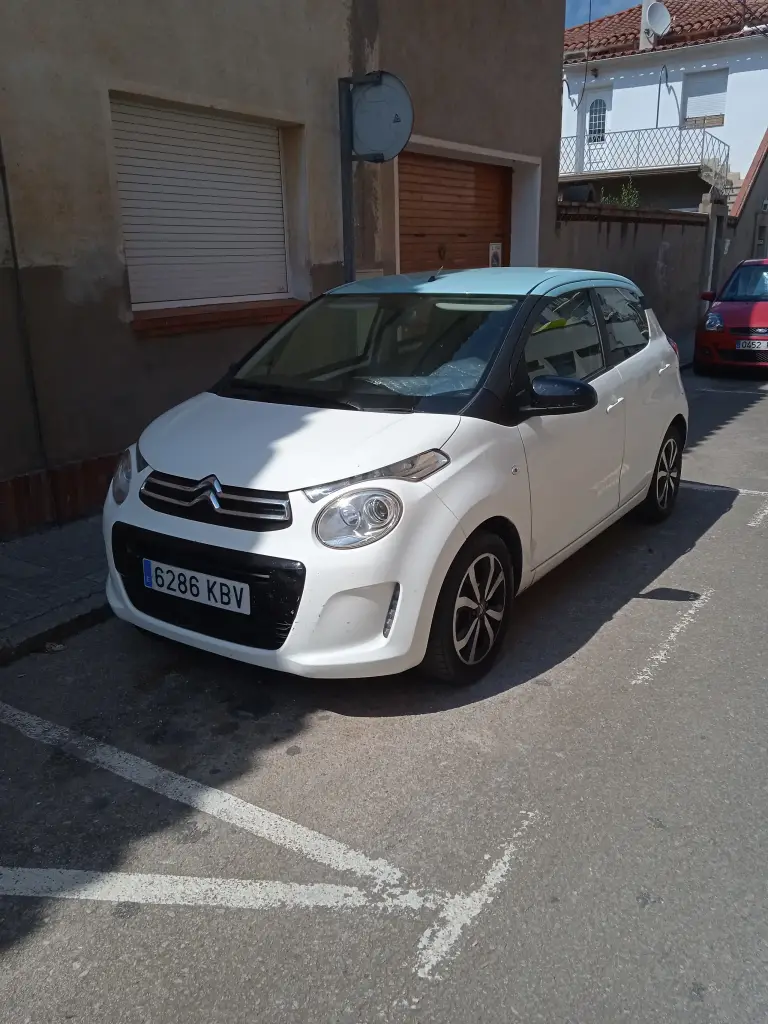
The Citroën C1 is a city car marketed from June 2005 to January 2022. It was developed as part of the B-Zero project by PSA Peugeot Citroën in a joint venture with Toyota, and two generations were produced.
Citroën C1 at a glance
| Maker | Citroën, with Toyota and Peugeot |
|---|---|
| Production | June 2005–January 2022 |
| Built at | TPCA joint venture plant, Kolín, Czech Republic |
| Sister models | Peugeot 107, Toyota Aygo |
| Debut | Geneva Motor Show, 2005 |
| Body | one-box city car, three or five doors |
| Petrol engine | 1.0-litre three cylinder |
| Diesel engine | 1.4-litre four cylinder |
| Economy | 4.6 l/100 km petrol, 4.1 l/100 km diesel (EU test) |
| Designer | Donato Coco |
| Later version | C1 ev’ie electric conversion, 2009–2012 |
Based on one source (English Wikipedia).
History of the Citroën C1
2005: one car, three badges
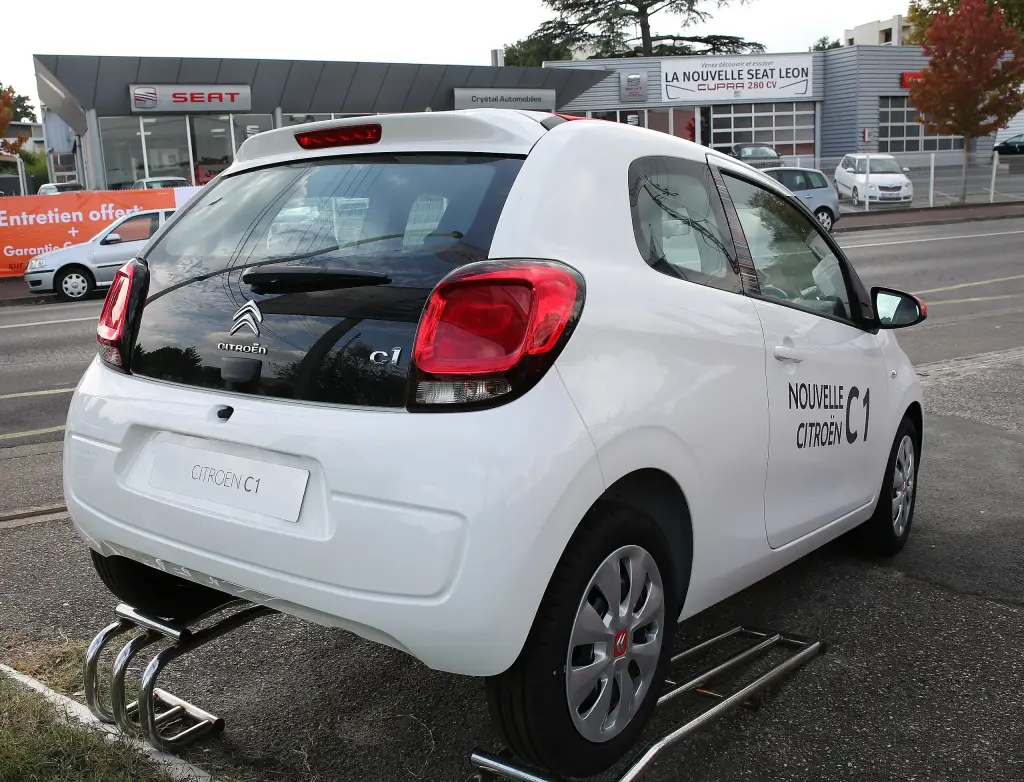
The C1 was developed alongside two badge-engineered versions: the Peugeot 107, almost identical apart from the front bumper and lights, and the Toyota Aygo, slightly more different. All three appeared at the 2005 Geneva Motor Show and were built by the TPCA joint venture in Kolín in the Czech Republic. The body was designed by Donato Coco in a one-box shape, and on the C1 and the 107 the tail light cluster ran from the edge of the rear doors to the rear window without a clearly expressed C-pillar. Power came from a 1.0-litre three-cylinder petrol engine or a 1.4-litre four-cylinder diesel, quoted at 4.6 and 4.1 litres per 100 km on the EU test; the German magazine Der Spiegel rated the C1 the production car with the second-best fuel economy among petrol engines, after the Toyota Prius, and among diesels, after the Smart Fortwo mhd.
Recall, racing and special versions
In January 2010 PSA recalled around 100,000 C1s and Peugeot 107s after Toyota’s worldwide recall for a sticking accelerator pedal. The C1 also became a popular cheap racing car for endurance events, in the spirit of its 2CV ancestor. British trim levels ran from the basic Vibe through Rhythm and Code, and special editions included the Cool and the Airplay, the latter with iPod connectivity revealed at the 2006 British International Motor Show. Franco Sbarro built a one-off GT-C1 with gullwing doors, very wide wheels, a 1.6 engine from the C2 VTS and C4 WRC-derived brakes, while in Portugal and Greece a three-door diesel van called the Entreprise was offered. From 2009 to 2012 the Electric Car Corporation of Britain sold an electric conversion, the C1 ev’ie.
Three facelifts
The car was facelifted in January 2009 along with its sisters, with a new bumper and grille, revised trims — Vibe became VT and Rhythm became VTR — and a revised clutch. March 2012 brought another facelift with LED daytime running lights, a new steering wheel and better economy, plus the Platinum and Edition trims and later the Connexion; in Greece the car was rebranded C1 eco between 2012 and 2014. Reliability data from the German automobile club in May 2010 put the C1, 107 and Aygo at the top of the sub-small class for low breakdown rates at one to four years old, but the Euro NCAP score fell from four stars to three in the 2012 assessment.
Design and features
- Shared engineering: one car sold as Citroën C1, Peugeot 107 and Toyota Aygo.
- Frugal engines: a 1.0 three-cylinder petrol and a 1.4 diesel, both among the most economical of their day.
- One-box body: Donato Coco’s shape, with the tail lights running into the rear window.
- Cheap racing: a popular base for endurance racing, like the 2CV before it.
- Electric conversion: the C1 ev’ie sold in Britain from 2009 to 2012.
Citroën C1 versions
- C1 first generation (2005): three- and five-door hatchback.
- Trim levels: Vibe, Rhythm, Code, later VT, VTR, VTR+, Platinum, Edition and Connexion.
- Airplay and Cool: special editions with extra equipment.
- Entreprise: a three-door diesel van for Portugal and Greece.
- GT-C1: Franco Sbarro’s one-off with gullwing doors.
The C1 is Citroën’s smallest model of its time and the stablemate of the C2 and C3. Its electric successor in spirit is the C-Zero. More cars are in the Citroën collection.
Video: Toyota Aygo, Peugeot 108, Citroën C1 – Genf 2014
Video by AUTO BILD on YouTube.
Sources
- Citroën C1, English Wikipedia: project, engines, trims, facelifts, reliability