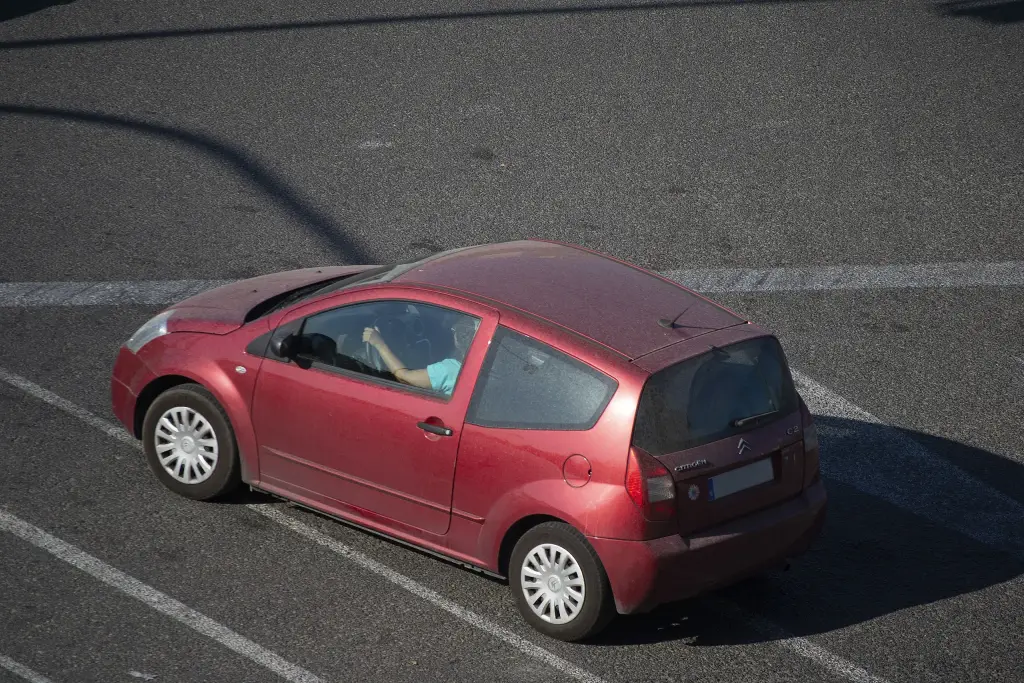
The Citroën C2 is a supermini made from August 2003 until October 2009. It is a three-door hatchback with a front engine and front-wheel drive, built at the Aulnay factory outside Paris, and along with the C3 it replaced the ageing Citroën Saxo.
Citroën C2 at a glance
| Maker | Citroën, Aulnay, France |
|---|---|
| Production | August 2003–October 2009 |
| Body | three-door hatchback |
| Designer | Donato Coco |
| Replaced | Citroën Saxo, together with the C3 |
| Euro NCAP | 4 stars out of 5 |
| Sports models | Furio, VTR (103 PS), VTS (118 PS) |
| Technology | Stop & Start and SensoDrive five-speed automated manual |
| Limited model | GT, 2,500 cars, United Kingdom only |
| Replaced by | Citroën DS3 in January 2010 |
Based on one source (English Wikipedia).
History of the Citroën C2
2003: a different C3 for younger buyers
The C2 and C3 replaced the Saxo with two different cars that shared a dashboard but little else, so Citroën could sell into different parts of the supermini class. The C3 was designed as a larger family five-door, while the C2 aimed at younger drivers with two doors and flatter styling. It was designed by Donato Coco and built at Aulnay. Unlike the Saxo, which managed two stars out of five in Euro NCAP, the C2 achieved four out of five. The motoring press thought the C2 the most neglected model in the range in terms of advertising, although it was named Best European Hatchback of 2003 in September 2003.
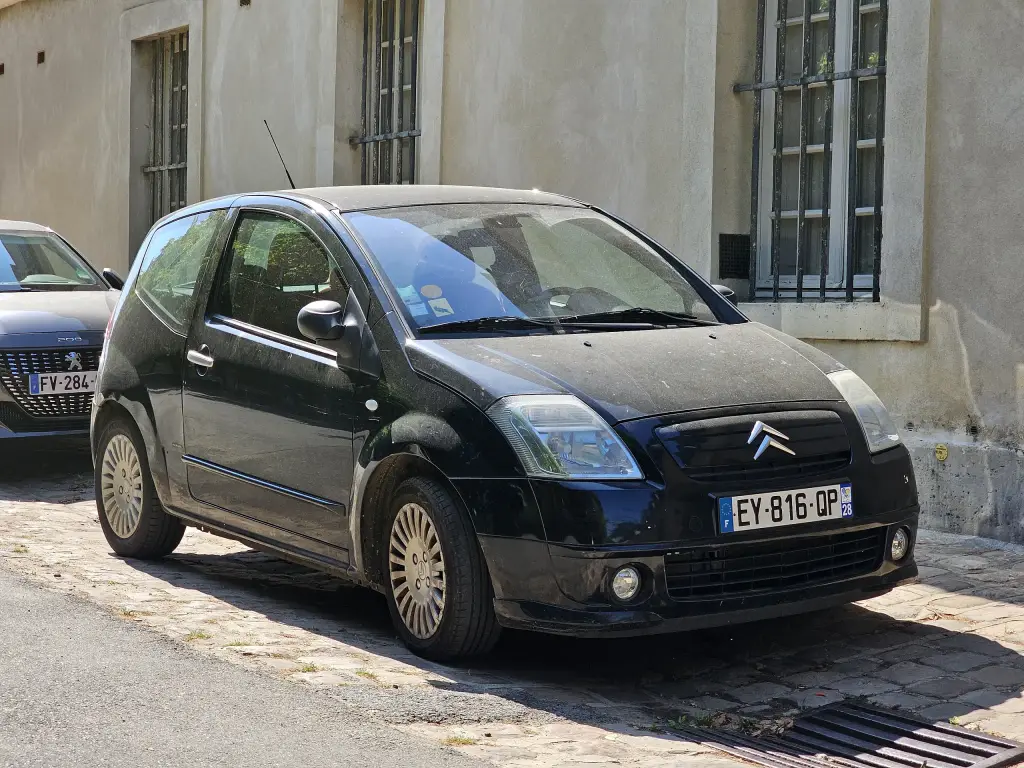
Technology: Stop & Start and SensoDrive
The C2 brought two notable technologies. Stop & Start, developed by Valeo with a small electric motor assisting the combustion engine, cut the engine when the car stopped with pressure on the brake pedal and restarted it when the pedal was released — holding the car on the handbrake was not enough to trigger it. The system was mounted with the SensoDrive gearbox, a five-speed automated manual with electronically managed clutch and gearchange, no clutch pedal, paddle shifters and manual and automatic modes.
Trims from LX to VTS
The range ran from the no-frills LX with black plastic bumpers and no fog lamps through the L (2003–2005), the Design and the SX luxury trim, which added air conditioning — increasing the 1.1 SX’s 0–100 km/h time by 4.5 seconds to 17.2 seconds. The Furio, VTR and VTS continued the Saxo’s sports tradition: the Furio had the body kit without alloy wheels, the VTR a 103 PS engine and the VTS 118 PS with 0–100 km/h in 8.0 seconds, deliberately tuned to be insurance friendly, with deadlocks and a Thatcham Category 1 alarm. The GT of September 2004 came with a sports body kit, white alloy wheels and a numbered certificate; only 2,500 were made, for the United Kingdom.
2006 changes and the end
In 2006 PSA replaced the C2’s two electrical networks, CAN bus and its own VAN bus, with an all-CAN system, which meant new displays, radio and some other electronics, along with clear indicator lenses. A facelift followed in April 2007 with a larger front bumper and a restyled grille with a chrome surround. Production ended in October 2009 and the DS3 took its place in January 2010.
Design and features
- Three-door only: a deliberate split from the five-door C3 it shared a dashboard with.
- Stop & Start: one of the first small cars to switch the engine off in traffic.
- SensoDrive: a five-speed automated manual with paddle shifters and no clutch pedal.
- Sports versions: Furio, VTR and VTS, with the VTS at 118 PS.
- Four Euro NCAP stars: two more than the Saxo it replaced.
Citroën C2 versions
- LX, L, Design, SX: the mainstream trim levels.
- Furio: the sports body kit without alloy wheels.
- VTR: 103 PS engine.
- VTS: 118 PS, 0–100 km/h in 8.0 seconds.
- GT (2004): 2,500 numbered cars for the UK.
- Facelift (2007): larger bumper and chrome-ringed grille.
The C2 replaced the Saxo alongside the C3 and was replaced by the DS 3. It shares its market with the C1. More cars are in the Citroën collection.
Sources
- Citroën C2, English Wikipedia: production, design, trims, technology, facelift