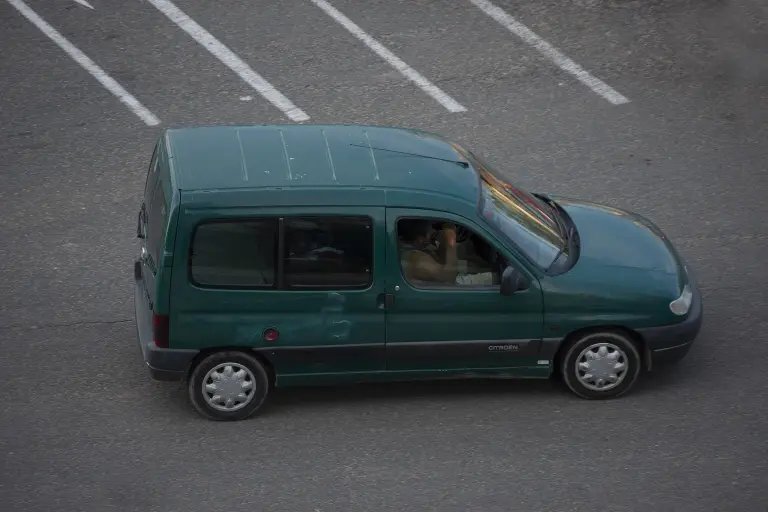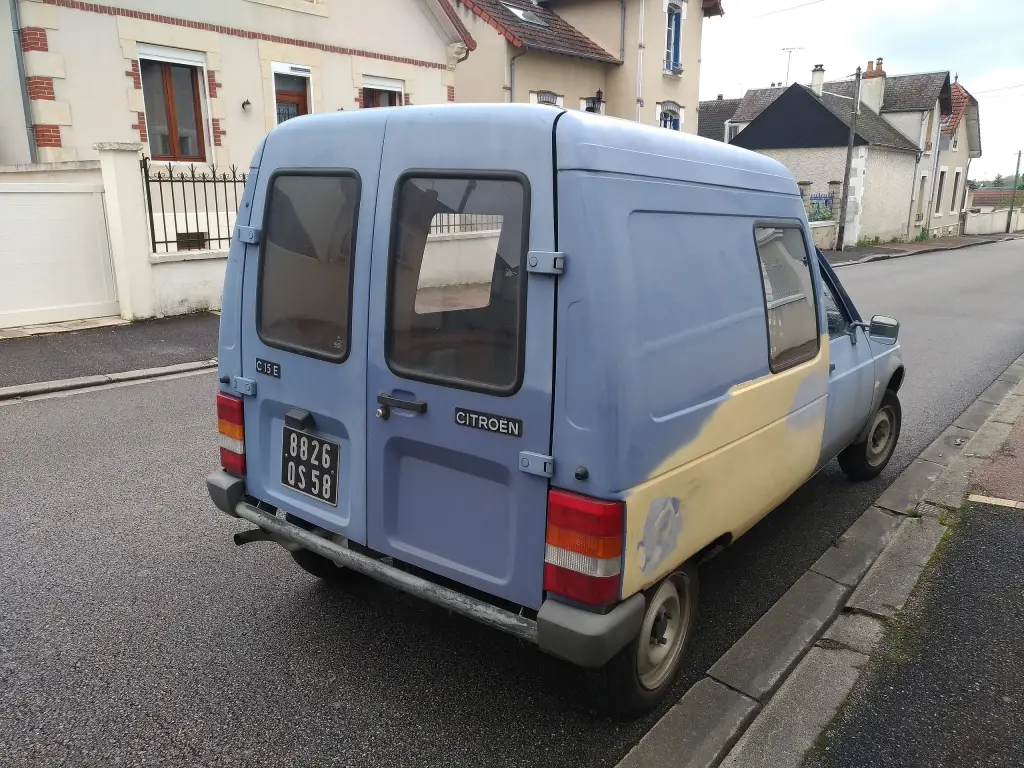
The Citroën C15 is a panel van produced from late 1984 until 2006. It succeeded the Acadiane, which had followed the 2CV vans, and its name refers to its 1,500 kg French gross vehicle weight rating, which placed it below the C25 and C35.
Citroën C15 at a glance
| Maker | Citroën, France and Spain |
|---|---|
| Production | late 1984–2006 |
| Built | 1,181,471 |
| Based on | Citroën Visa |
| Engines | 1,769 cc XUD diesel, later 1,868 cc DW8; 1,124 cc TU petrol |
| Power at launch | 60 PS diesel (C15D), 47 PS petrol (C15E) |
| Rear axle | shared with the Peugeot 305 Break and Citroën BX |
| Payload | 500 kg at first, later 600 and 800 kg models |
| Build locations | France and Vigo, Spain |
| Replaced by | Citroën Nemo in 2007 |
Based on one source (English Wikipedia).
History of the Citroën C15
A Visa turned into a van
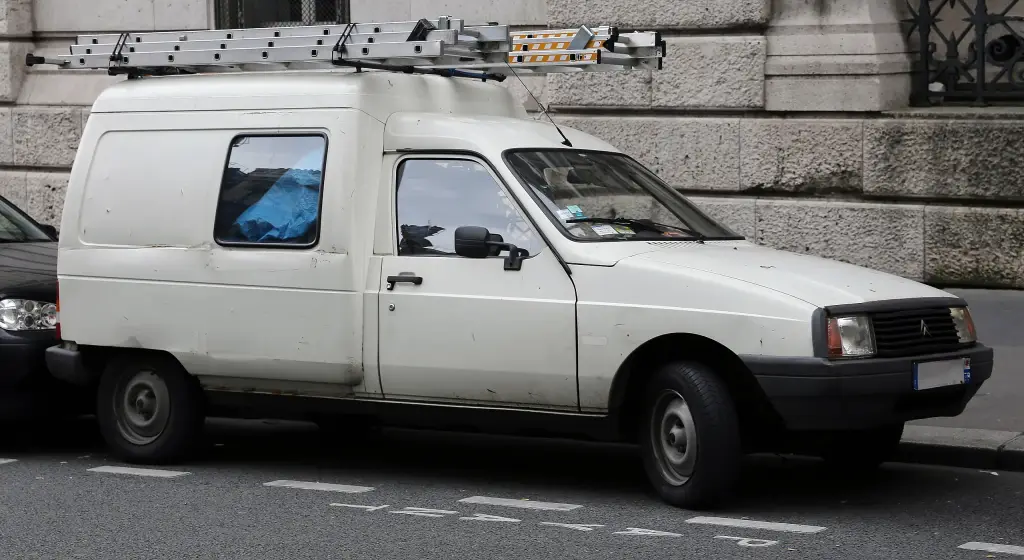
The C15 was based on the Citroën Visa and mainly used the 1,769 cc XUD diesel or, on late models, the 1,868 cc DW8, both naturally aspirated; until the early 1990s a petrol PSA TU engine was also offered. At launch the choices were the 60 PS XUD in the C15D and the 47 PS 1,124 cc TU1 in the C15E. Ahead of the B-pillar the van was much the same as a Visa, but the cargo area was unique: the wheelbase was lengthened and the rear axle, shared with the Peugeot 305 Break and the Citroën BX, was sturdier to carry heavier loads. The very curved sides of the windscreen allowed a single large wiper on the long narrow screen, and the bumper and plastic trim were shaped to keep dirt off the headlights and reduce stone chips.
A long, long production run
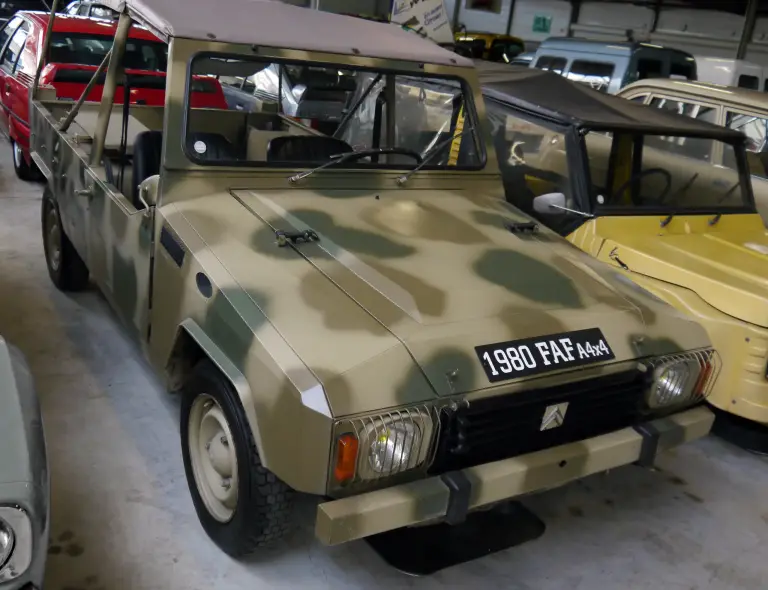
The Visa was built for about ten years, but the C15 ran for twenty-one. Models with 600 kg and 800 kg load capacities joined the original 500 kg version. The van was facelifted in September 1989 with a lower grille of three cross bars, turn signals moved into the bumper and an offset chevron; plastic side trims came in 1992. Early vans had a single wide rear door, which was awkward in tight spaces and prone to sagging or snapping in a high wind, so after a year or two only conventional two-door bodies with fold-back hinges were sold. Dangel made a four-wheel drive version in 1992, and a catalysed diesel was sold from February 1997. By December 2005, when the C15 was discontinued in most countries, production had reached 1,181,471; the last three went to the city of Vigo in Spain, the Citroën museum at Aulnay and the Vigo factory.
Versions and conversions
British C15s were badged “van blanc” or “van rouge” according to colour and always shipped without rear side windows because of tax rules, while European vans had windows and a combi version called the Weekend with an easily removed rear bench. In France there was a rare stretched body about half a metre longer. A chassis-only version was sold for conversions, which produced the RomaHome camper by Island Plastics and a few pickups. The layout with windows and a rear seat, pioneered by the 2CV, made the C15 a forerunner of the modern compact vans such as the Berlingo and the Renault Kangoo.
Design and features
- Visa base: car-like driving with a purpose-built cargo area behind the B-pillar.
- Sturdy rear axle: borrowed from the Peugeot 305 Break and the BX.
- XUD diesel: 60 PS at launch, with a 1.8-litre DW8 later, and remarkable longevity.
- Dangel 4×4: a four-wheel-drive conversion offered from 1992.
- Chassis-cab option: the basis for campers such as the RomaHome.
Citroën C15 versions
- C15D / C15E: the diesel and petrol versions at launch.
- 600 kg and 800 kg models: heavier-duty payload versions.
- Weekend: a combi with rear bench and side windows.
- C15 4×4 by Dangel (1992): four-wheel drive.
- Stretched body: a rare French version about 0.5 m longer.
- Camper and pickup conversions: built on the chassis-cab.
The C15 replaced the Acadiane and was replaced by the Nemo, while the bigger vans are the Jumper. More cars are in the Citroën collection.
Video: restauracion de citroen c15
Video by boyeria1 on YouTube.
Sources
- Citroën C15, English Wikipedia: design, engines, facelifts, versions, production total