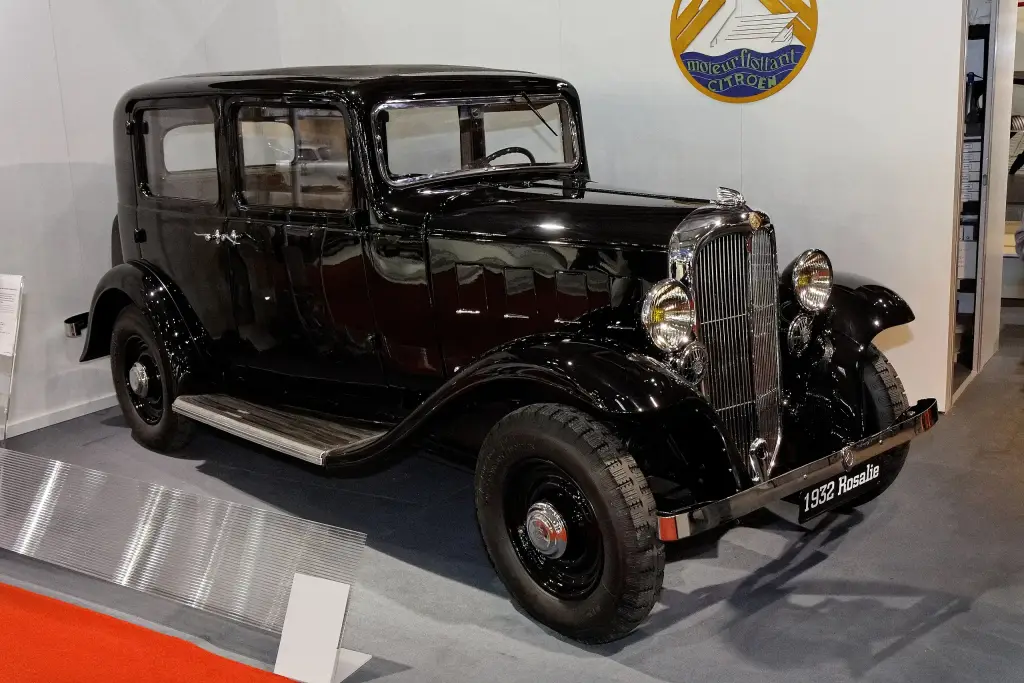
The Citroën Rosalie was, in general terms, a range of three models that formed the core of Citroën’s line-up between 1932 and 1938: the 8CV, the 10CV and the 15CV, the numbers referring to fiscal horsepower and so to engine size. The name also belonged to a lightweight racing car that set records at the Montlhéry circuit.
Citroën Rosalie at a glance
| Maker | Citroën, France |
|---|---|
| Production | 1932–1938 |
| Models | 8CV, 10CV, 15CV |
| Replaced | Citroën C4 and C6 |
| 8CV engine | 1,452 cc four, 90 km/h |
| 10CV engine | 1,767 cc four, 100 km/h |
| 15CV engine | 2,650 cc six, 115 km/h in berline form |
| Layout | rear-wheel drive, three-speed gearbox |
| Brakes | drums on all four wheels |
| Built | 88,090 four-cylinder and 7,230 six-cylinder |
| Facelift | 1934, the NH or B-series |
Based on one source (English Wikipedia).
History of the Citroën Rosalie
Three sizes for a whole market
The larger Rosalies replaced the Citroëns C4 and C6, launched in 1928 and 1929, and the range also marked a move upmarket for the whole business, since in the early 1930s Citroën seemed for a while to lose interest in the small cars that had filled its dealerships in the 1920s. The larger 15CV was offered with a wide choice of body types, which was normal practice at the time. The look was significantly more modern than that of the C4 and C6.
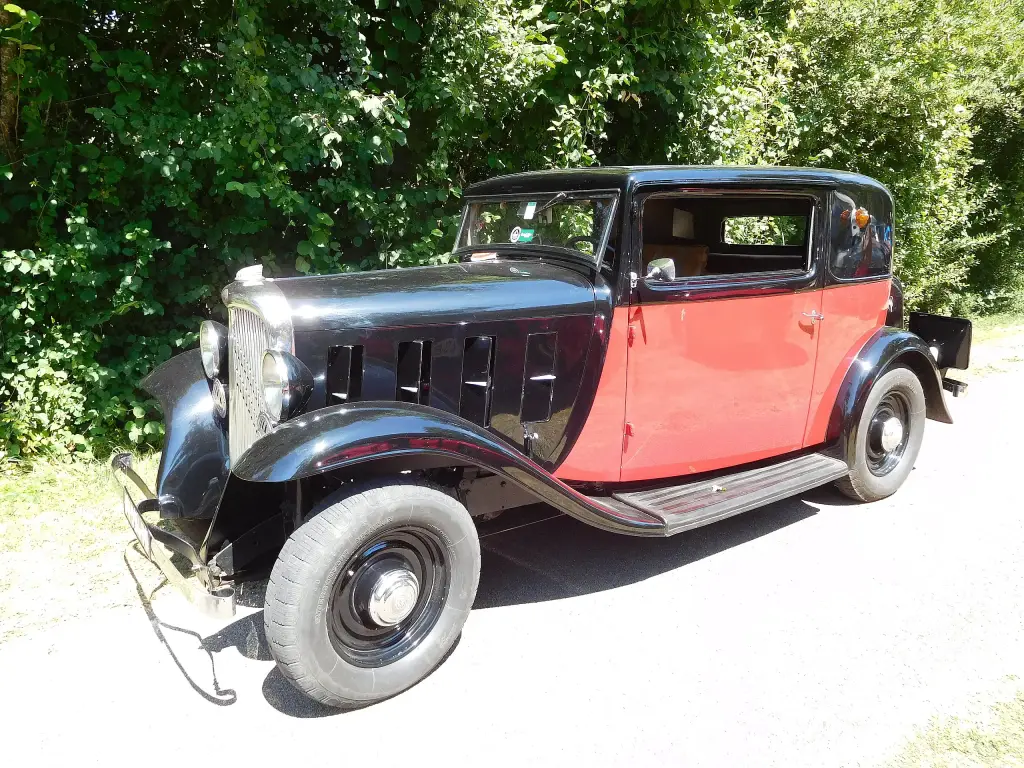
Production as the real revolution
André Citroën had drawn practical inspiration from his 1912 visit to Henry Ford’s Highland Park plant in Michigan, and in 1932 Citroën was still a European leader in applying assembly-line manufacturing. The Rosalies were competitively but apparently profitably priced, which is what made the volume possible.
The three models
The smallest Rosalie had a 1,452 cc four driving the rear wheels, a three-speed gearbox with synchromesh on the two higher ratios, drum brakes on all four wheels and a 90 km/h top speed at 4.27 m long. The 10CV had a 1,767 cc four, 100 km/h and 4.57 m, mechanically identical in most other respects but commercially more successful, perhaps because of its wider range of versions, including the lighter 10 Légère. The 15CV had a 2,650 cc six with the same cylinder size as the 10CV, a lengthened bonnet and a total length of 4.72 m; the 15 Légère, with the shorter cabin of the 10CV, was claimed at 120 km/h, and the berline at 115 km/h. Starting with the 1933 model year a 1,766 cc 11UD diesel engine was offered.
1934: facelift and the Traction Avant
In 1934 all the Rosalies were facelifted with a gently raked front grille, and the post-facelift cars were known as the NH, or Nouvel Habillage, also called the B-series. That same year brought their successor, the front-wheel-drive semi-monocoque Traction Avant, part of an ambitious investment programme that also brought the bankruptcy of the business in 1934 and its acquisition by Citroën’s principal creditor; André Citroën himself died in 1935. In that troubled situation the larger Rosalies continued until 1938, re-engined with a turned-around version of the Traction’s overhead-valve four. In total 88,090 four-cylinder and 7,230 six-cylinder Rosalies were built, including 8,400 of the short-lived B-series and about 15,000 of the later MI cars. For the last four model years the 8 and 10 became the 7UA and 11UA, called MI for Moteur Inversé because their engines were turned through 180 degrees to fit.
Design and features
- Three fiscal classes: 8CV, 10CV and 15CV, covering the middle of the French market.
- Assembly-line production: Citroën’s Ford-inspired methods kept the prices competitive.
- 15CV six: a 2,650 cc six with a long bonnet and up to 120 km/h in Légère form.
- MI cars: the 7UA and 11UA with the Traction’s engine turned around for rear-wheel drive.
- Optional diesel: a 1,766 cc 11UD diesel from the 1933 model year.
Citroën Rosalie versions
- 8CV: 1,452 cc four, 90 km/h.
- 10CV and 10 Légère: 1,767 cc four, 100 km/h, the lighter being faster.
- 15CV and 15 Légère: 2,650 cc six, up to 120 km/h.
- NH / B-series (1934): the facelifted cars with a raked grille.
- 7UA and 11UA (MI): the last four model years, with reversed Traction engines.
The Rosalie replaced the C4 and C6 and was succeeded by the Traction Avant. More cars are in the Citroën collection.
Sources
- Citroën Rosalie, English Wikipedia: range, models, engineering, production, MI cars