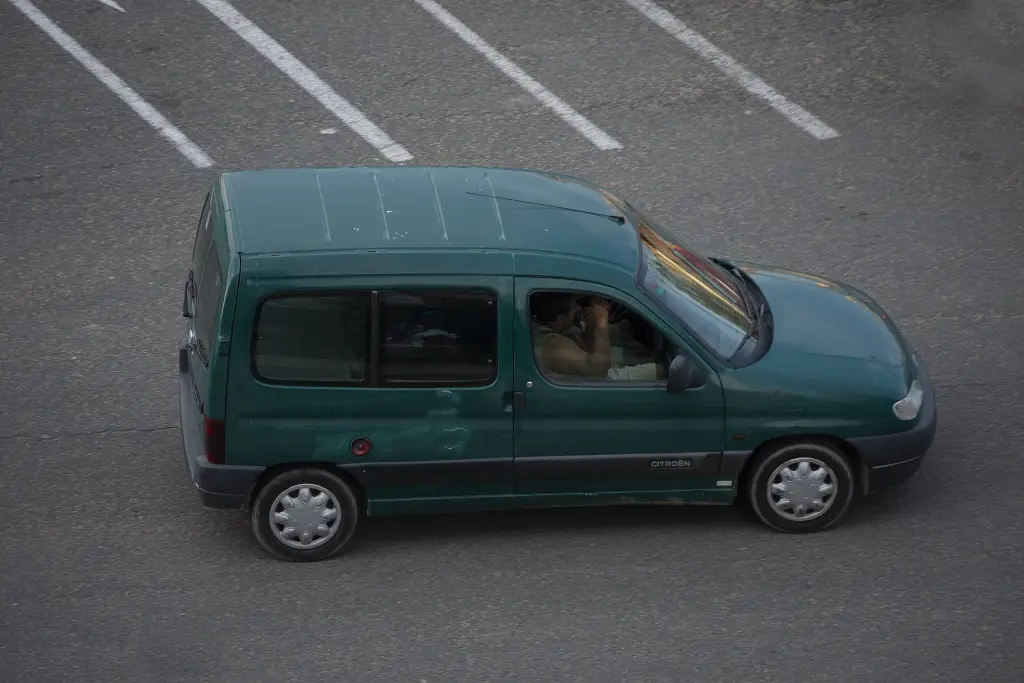
The Citroën Berlingo is a range of minivans produced since 1996 and sold both as a light commercial vehicle and as a passenger car called the Berlingo Multispace. It has always shared its body with the Peugeot Partner, and it stands in a direct line from the 2CV panel van.
Citroën Berlingo at a glance
| Maker | Citroën (PSA, then Stellantis), France and Spain |
|---|---|
| Production | since 1996 |
| Sister model | Peugeot Partner |
| Body styles | panel van, Multispace passenger van |
| First generation | M49, launched July 1996 |
| Basis | Citroën ZX / Peugeot 306 estate floorpan |
| Facelift | M59, September 2002 |
| Second generation | B9, from 2008, on the PSA PF2 platform |
| Third generation | K9, shown at Geneva in 2018 |
| Engines | petrol, diesel, CNG and electric |
| Related | Opel Combo, Toyota Proace City, Fiat Doblò |
Based on one source (English Wikipedia).
History of the Citroën Berlingo
1996: a van on car mechanicals
The Berlingo and the Peugeot Partner were officially launched in July 1996, initially based on the Citroën ZX and Peugeot 306 estate floorpan and mechanicals. They were sold as panel vans or as passenger multi-purpose vehicles, and with their boxy cargo space and aerodynamic front they can reasonably be seen as the descendants of the 2CV panel van, the AK400. At the Paris Motor Show in 1996 Citroën showed three concept cars alongside it: the Berlingo Coupé de Plage, the Berlingo Berline Bulle and the Berlingo Grand Large. Only the Grand Large was developed, becoming the Multispace and Partner Combi people carriers.
First generation and its long life
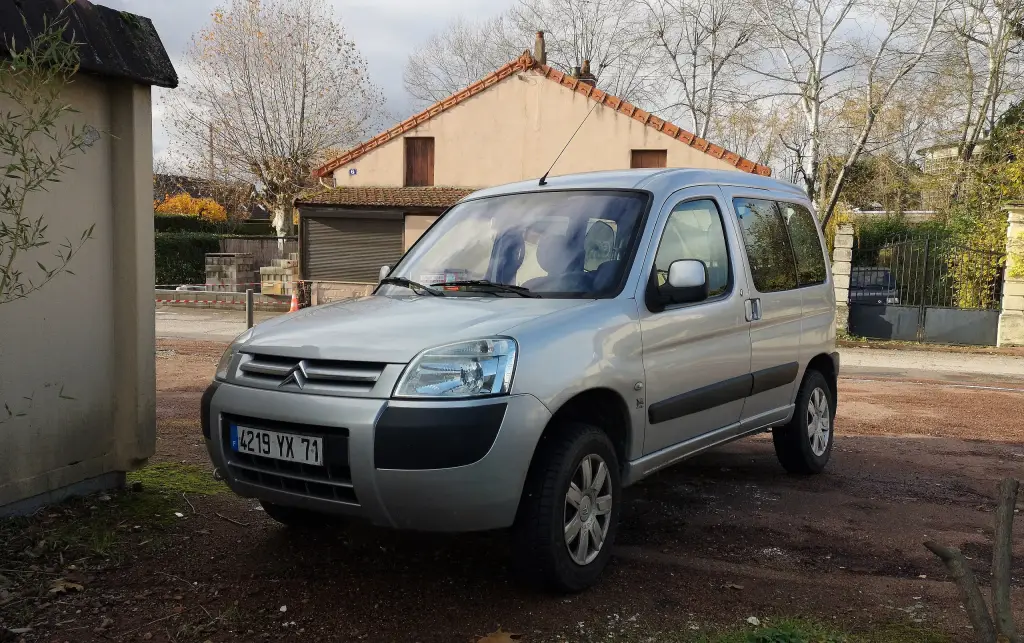
The first generation was updated in September 2002 with a new instrument cluster, redesigned interior and new front end, and again in 2004 with changes to the grille and light clusters. Pre-facelift cars were still built in Argentina until 2010. After the second generation arrived the old model stayed on sale as the Berlingo First. Electric versions had a long history too: a nickel-cadmium battery model from 1998 to 2005, a small fleet for La Poste in 2010 with a ZEBRA molten-salt battery and a Venturi powertrain, and a 1998 hybrid prototype, the Dynavolt, which used a 500 cc Lombardini twin as a range extender.
Second and third generations
The Berlingo II and Partner II of 2008 were two different vehicles: a smaller one, the Citroën Nemo/Peugeot Bipper, and a larger Berlingo II styled by Gilles Vidal on the PSA PF2 platform shared with the C4, slightly larger and considerably more expensive than before. An electric version using a motor and battery derived from the Mitsubishi i-MiEV followed in 2013, and in March 2017 a five-seat e-Berlingo Multispace was announced. The third generation was unveiled at the 2018 Geneva Motor Show and is also sold as the Opel and Vauxhall Combo, the Toyota Proace City and, since 2022, the Fiat Doblò.
Design and features
- Car-based van: ZX/306 estate mechanicals in the first generation, the C4’s platform later.
- Two characters: a bare panel van, or the Multispace with rear seats and windows.
- Boxy cargo space: the concept inherited from the 2CV AK400 panel van.
- Electric variants: nickel-cadmium in 1998, ZEBRA for La Poste and an i-MiEV-based model in 2013.
- Shared with Peugeot: always twinned with the Partner, and later with Opel, Toyota and Fiat.
Citroën Berlingo versions
- Berlingo M49 (1996): first generation, ZX-based.
- Berlingo M59 (2002): facelift with new interior and front.
- Berlingo First: the first generation kept on sale after 2008.
- Berlingo B9 (2008): second generation on the PF2 platform.
- Berlingo K9 (2018): third generation, also sold as the Opel Combo and Toyota Proace City.
- Multispace: the passenger version, developed from the Grand Large concept.
The Berlingo took over from the C15 as Citroën’s small van and sits under the bigger Jumpy. Its smallest stablemate is the Nemo. More cars are in the Citroën collection.
Sources
- Citroën Berlingo, English Wikipedia: generations, platforms, concepts, electric versions