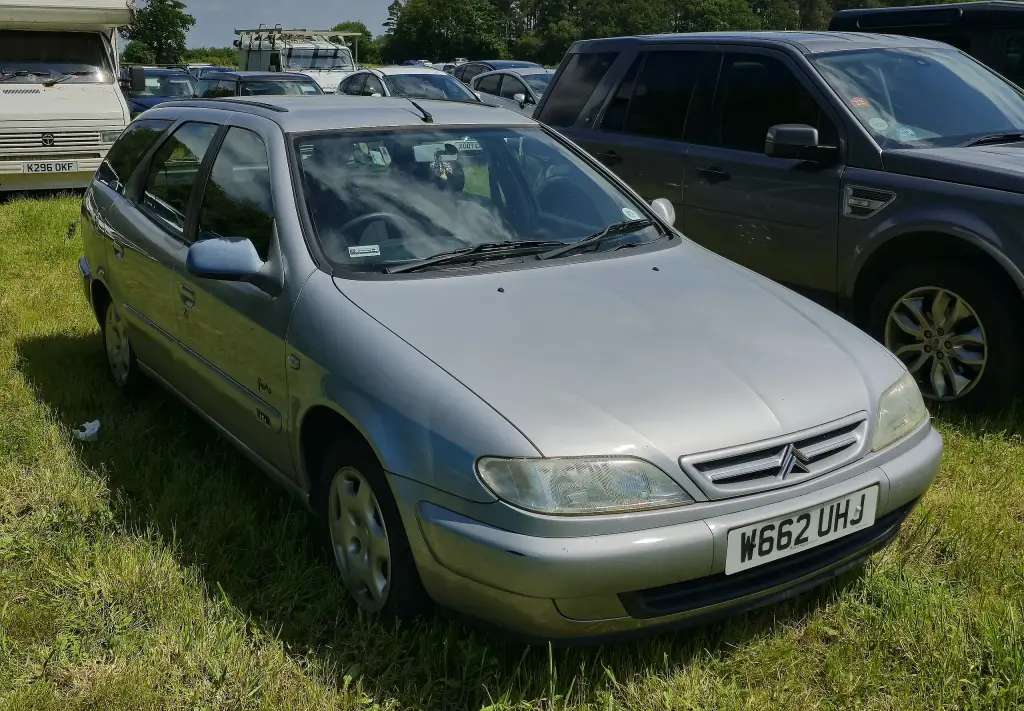
The Citroën Xsara is a compact C-segment family car built from 1997 to 2006. It was a development of the Citroën ZX and Peugeot 306, which shared a platform and running gear, and it came as three- and five-door hatchbacks and as a five-door estate sold as the Break, with the three-door called the Coupé.
Citroën Xsara at a glance
| Maker | Citroën, France |
|---|---|
| Production | 1997–2006 |
| Bodies | three-door Coupé, five-door hatchback, five-door Break estate |
| Base | Citroën ZX and Peugeot 306 |
| Engines | 1.4 to 2.0 petrol; 1.4, 1.8, 1.9 and 2.0 diesels |
| Power range | 75 to 167 PS |
| Rear suspension | independent trailing arms and torsion bars, with passive rear-wheel steering |
| Facelift | September 2000, for the 2001 model year |
| Award | 1998 Semperit Irish Car of the Year |
| Rally version | Xsara WRC |
Based on one source (English Wikipedia).
History of the Citroën Xsara
1997: a ZX with more polish
The original Xsara was launched in September 1997 and shared a platform and running gear with the ZX and the Peugeot 306. Its styling took cues from the larger Bertone-designed Xantia, though the motoring press regarded it as bland. The engine range ran from 1.4 to 2.0 litres petrol and from 1.4 to 2.0 litres diesel, including the 1.5 TUD5 in some countries such as Portugal; the most powerful petrol was the 167 PS 2.0 16-valve of the Xsara VTS. In Ireland the car was the 1998 Semperit Irish Car of the Year.
Chassis details
A conventional-looking chassis hid some unusual engineering. At the front there was a standard MacPherson strut layout with an anti-roll bar, and at the rear PSA’s fully independent trailing arm and torsion bar arrangement, first used on the Peugeot 305 estate. The engineers added passive rear-wheel steering through specially designed compliance bushes, though less pronounced than on the ZX, plus in-house developed shock absorbers. At high mileages the axle mounting bushes wear, which is easily fixed, but the rear trailing arm bearings can also wear and then wear the axle tubes, requiring an expensive rebuild or a replacement axle. The diesel and larger petrol engines were canted as far back as possible to put weight behind the front axle line, lowering the centre of gravity and reducing understeer.
2000 facelift
In September 2000, for the 2001 model year, the Xsara was substantially facelifted with a new bonnet, wings, bumper, grille and headlamps with integrated fog lights. The rear gained a revised light cluster and a new hatch with a prominent logo, the body was about 80 kg heavier and 21 mm longer, the A-pillars and door beams were reinforced, the tracks were widened and 15-inch wheels became standard. Inside there were better trims, a steering wheel from the C5 that allowed a bigger airbag, clearer instruments and side and curtain airbags on higher trims, and the facelift introduced multiplex wiring. New 16-valve 1.6 and 2.0 engines arrived and the 1.8 was dropped, and the 2002 model brought small interior changes.
Design and features
- Three bodies: a three-door Coupé, a five-door hatchback and the Break estate.
- Passive rear steering: compliance bushes in the rear suspension, as on the ZX but milder.
- VTS: the 167 PS 2.0 16-valve at the top of the range.
- 2000 facelift: new front end, multiplex wiring and a stiffer shell.
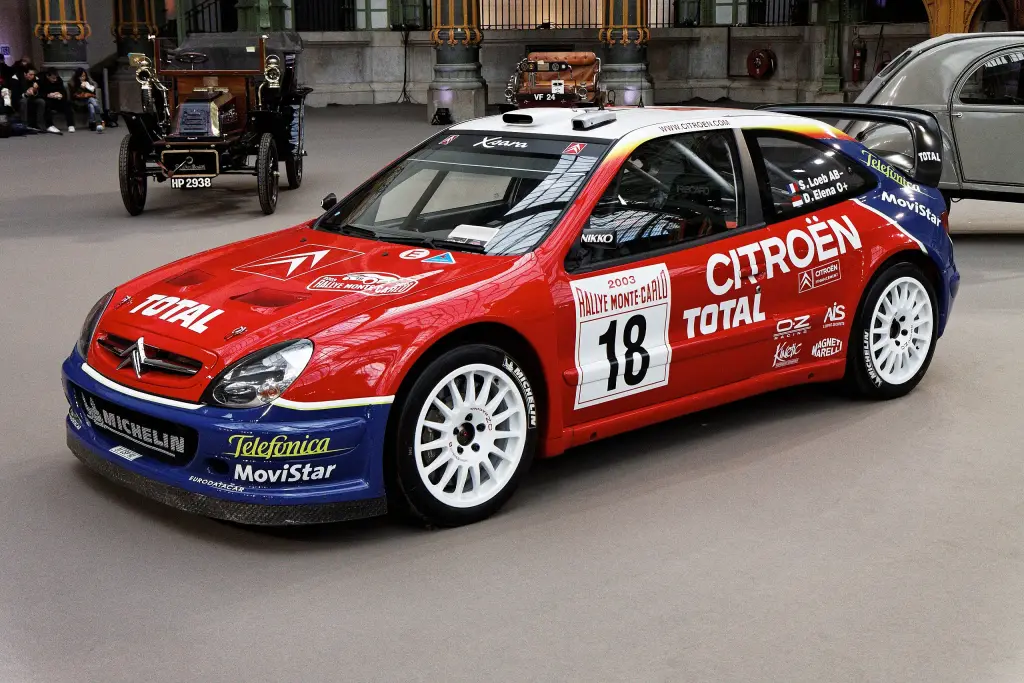
- Rally career: the Xsara WRC took the model into the World Rally Championship.
Citroën Xsara versions
- Xsara hatchback (1997): three and five doors.
- Xsara Coupé: the three-door body.
- Xsara Break: the estate.
- Xsara VTS: 2.0 16-valve of 167 PS.
- Facelift (2000): new engines, multiplex wiring and a stiffer body.
- Xsara WRC: the rally car.
The Xsara replaced the ZX and was replaced by the C4; its people carrier relative is the Xsara Picasso. More cars are in the Citroën collection.
Sources
- Citroën Xsara, English Wikipedia: bodies, engines, chassis, facelift, award