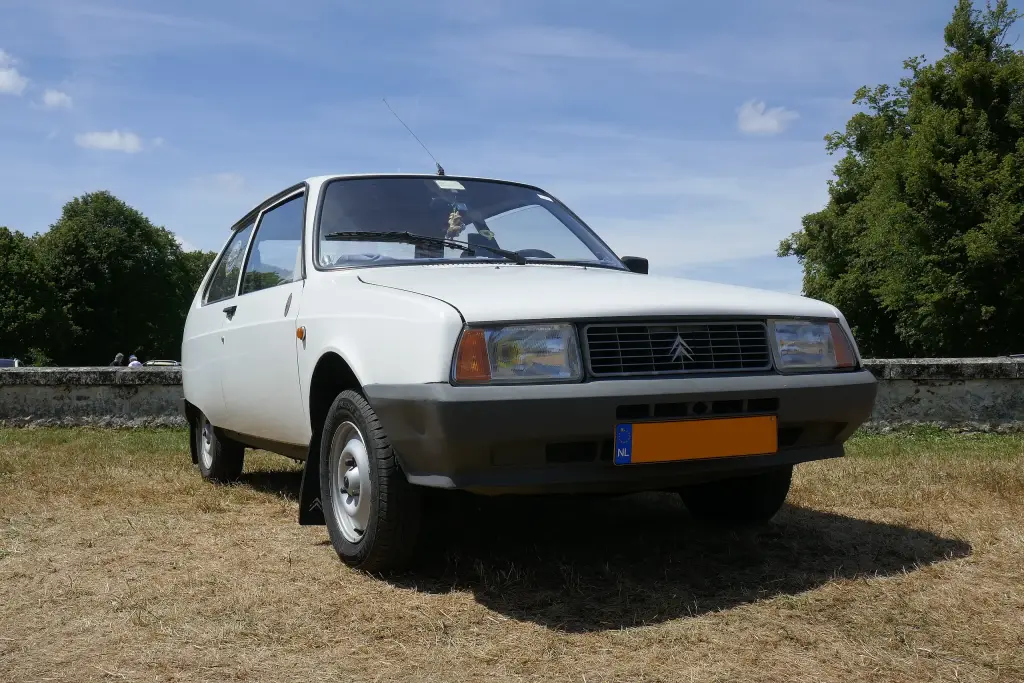
The Citroën Axel was the Western European name for the Oltcit Club, a supermini developed jointly by Citroën and the Romanian government and built from 1981 to 1991. The Axel version went on sale in Western Europe from July 1984 and was Citroën’s way of recovering money Romania could not repay.
Citroën Axel at a glance
| Maker | Oltcit, Romania, for Citroën |
|---|---|
| Production | Oltcit Club 1981–1991; Axel from July 1984 |
| Engines | Citroën GS/GSA air-cooled flat four: 1,129 cc and 1,299 cc |
| Models | Axel 11 R, Axel 12 TRS, Entreprise van versions |
| Brakes | four-wheel discs, front ones mounted inboard |
| Drag coefficient | 0.36 for the 12 TRS, 0.37 for the 11 |
| Built | 60,184 cars |
| Price | the four-cylinder Axel 11 was 10% cheaper than a two-cylinder Visa in France |
| Markets | continental Europe; never sold in the UK |
| Later names | Oltena, then Rodae and Daewoo |
Based on one source: the English Wikipedia article on the Oltcit Club, which covers the Citroën Axel. No separate English article exists for the Axel.
History of the Citroën Axel
Project Y and the Romanian deal
The Axel’s story starts with the Citroën Prototype Y, intended in the early 1970s to replace the Ami. It was developed with Fiat on the Fiat 127 platform, and when that cooperation ended a new Citroën-designed platform was planned. After Peugeot took over Citroën in the wake of the 1974 oil crisis, the renamed Projet VD became the Visa, using the Peugeot 104 floor pan. The original Citroën platform finally emerged in 1981 in Romania as the Oltcit, with a Citroën Visa flat-twin engine and Citroën GS-based gearbox in the small model, and the GS flat-four and gearbox in the larger one.
1984: the Axel for Western Europe
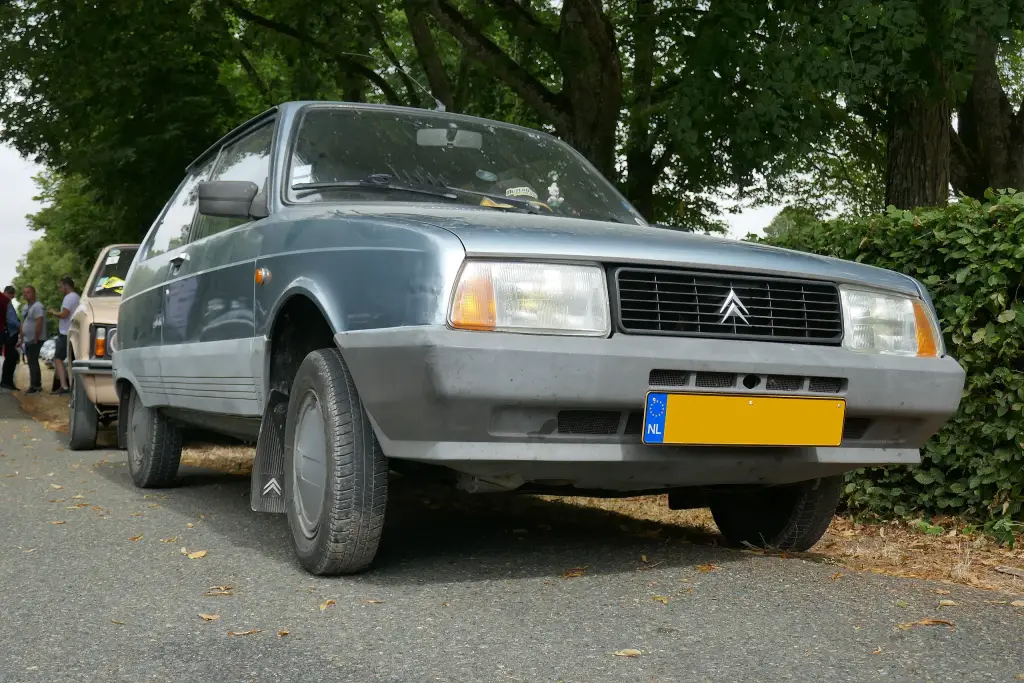
From July 1984 the car was also sold in Western Europe as the Citroën Axel. Citroën was hoping to recoup the money it had invested in Romania, which the communist government could not repay. The launch had been scheduled earlier, but Oltcit could not provide the quality or the quantity the French partner expected; 60,184 cars were eventually made, even though the base models were priced below the 2CV in Western Europe. The Axel was never sold in the UK.
What it was like
The car used Citroën GS air-cooled flat-four engines, with four-wheel disc brakes whose front discs were mounted inboard to reduce unsprung weight, as on the GS. The three-door body was simpler and more robust than the Visa’s, and Citroën admitted in France that the Axel competed with its own Visa, arguing that the coupé-like body and lower price offset any lost sales. The four-cylinder Axel 11 was 10 percent cheaper than a two-cylinder Visa on the French market. Its particularly low rear loading height and sturdy construction made it popular with farmers and with people in smaller towns, and a light commercial version without rear seats was sold as the Axel Entreprise.
The end in Romania
The Oltcit Club was sold from 1981 to 1991. In 1991, after Citroën withdrew from the joint venture, the company was renamed Automobile Craiova and production continued under the Oltena brand; after 1994 the cars were sold as Rodae, after a partnership with Daewoo Heavy Industries. A small pickup, the Oltcit Club 12 CS, was launched in 1993.
Design and features
- GS engines: air-cooled flat fours of 1,129 and 1,299 cc, an unusual choice for a supermini.
- Inboard front discs: four-wheel disc brakes with the front discs mounted inboard to cut unsprung weight.
- Simple three-door body: more robust and cheaper than the Visa it competed with.
- Low loading height: one reason farmers liked it.
- Entreprise version: a light commercial model without rear seats.
Citroën Axel versions
- Axel 11 R (1,129 cc): the four-cylinder base model.
- Axel 12 TRS (1,299 cc): the larger-engined version.
- Axel 11 R and 12 TRS Entreprise: commercial versions without rear seats.
- Oltcit Special: the Romanian-market model with the Visa flat twin.
- Oltcit Club 12 CS: a pickup launched in 1993.
The Axel shared its market with the Visa and used engines from the GS, and it was meant to replace the Ami. More cars are in the Citroën collection.
Video: Citroen Axel
Video by Stijn Kraft on YouTube.
Sources
- Oltcit Club, English Wikipedia: development, Axel launch, engines, production, later brands