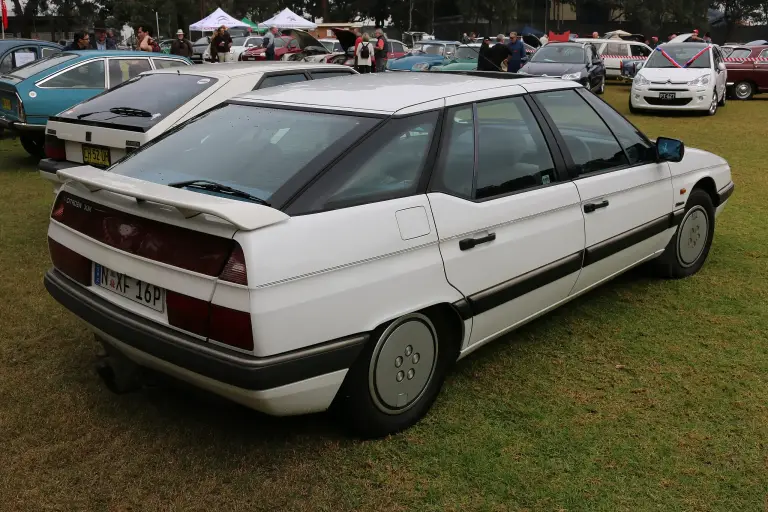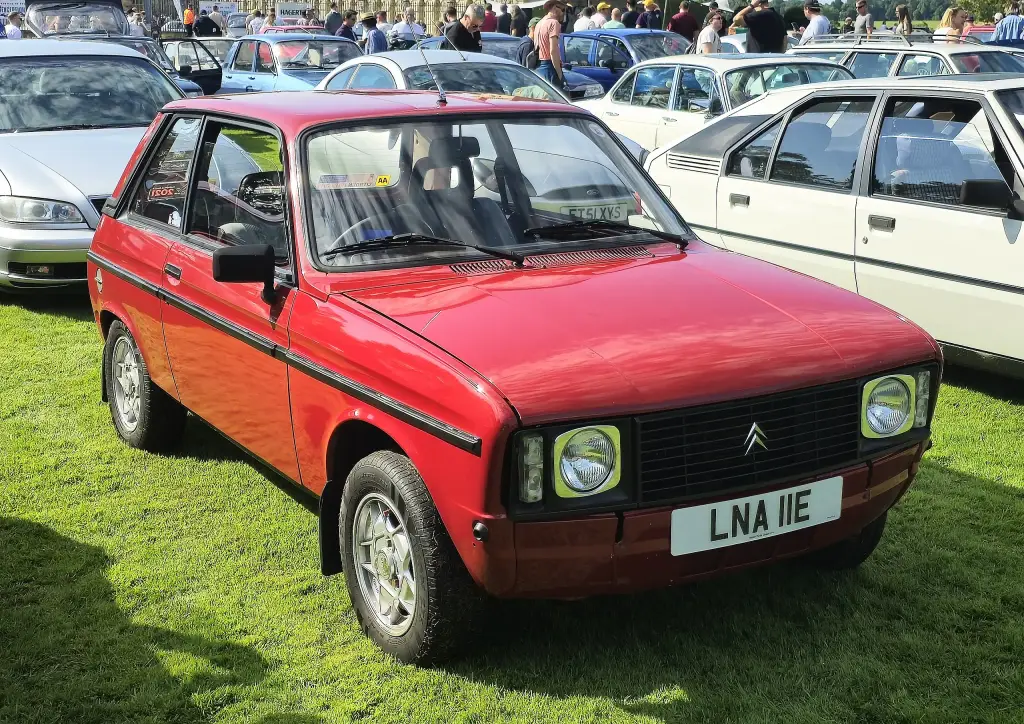
The Citroën LN and Citroën LNA are front-engine, front-wheel-drive three-door hatchback city cars built from 1976 to 1986 over a single generation. They were badge-engineered variants of the Peugeot 104, introduced shortly after Peugeot took over Citroën.
Citroën LNA at a glance
| Maker | Citroën, France |
|---|---|
| Production | 1976–1986 |
| Bodies | three-door hatchback, four seats |
| Base | Peugeot 104 Z floorpan |
| LN engine | 602 cc two-cylinder from the 2CV |
| LNA engine | 652 cc two-cylinder from the Visa, with electronic ignition |
| LNA 11E / 11RE | 1.1-litre four, from December 1982 |
| LNA 10E | 954 cc Peugeot engine, France and Italy only |
| Noise | 69 decibels |
| Replaced by | Citroën AX |
Based on one source (English Wikipedia), which covers both the LN and the LNA.
History of the Citroën LNA
1976: the LN
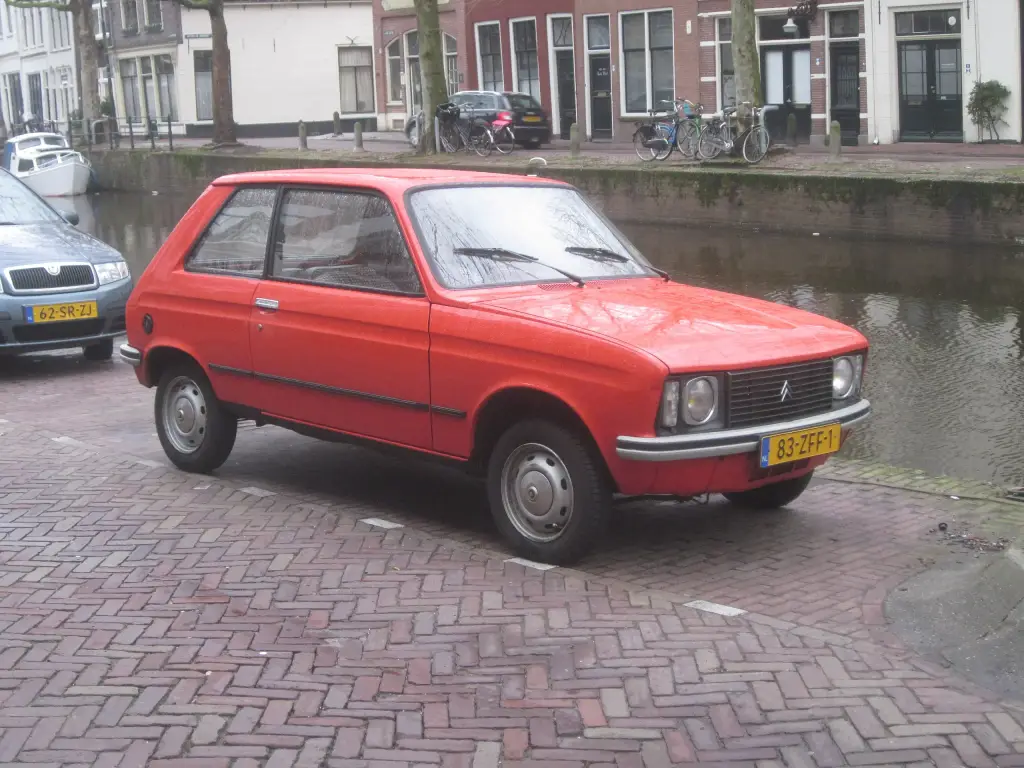
The LN was introduced in July 1976 and combined the bodyshell of the Peugeot 104 Z, a shortened-floorpan version of the 104, with the economical 602 cc two-cylinder engine of the Citroën 2CV. Equipment was basic, but the car’s selling points were its low price and running costs. It closely resembled the Peugeot it was based on and was assembled at a Citroën plant with a Citroën engine. Since Peugeot had recently acquired Citroën, the LN sat awkwardly against assurances that the two marques would keep their individuality; Citroën explained that the project had been rushed because of the need to give dealers a model at the bottom of the market. It was the first Citroën to come out of the Peugeot absorption, and Citroën made clear that it would not happen again — largely true until the Saxo, a badge-engineered Peugeot 106.
1978: the LNA
The LN was sold mainly in southern Europe and neighbouring countries, and the more powerful LNA replaced it on 6 November 1978, exported across much of the rest of Europe, including right-hand-drive versions for Britain from early 1983. The A stood for Athlétique, and the car had the more modern 652 cc two-cylinder engine of the Citroën Visa with electronic ignition. In December 1982 a 1.1-litre four was added, giving the LNA 11E and 11RE a top speed of nearly 90 mph (145 km/h) and ending the two-cylinder models in many markets. For France and Italy only there was also an LNA 10E with a 954 cc Peugeot engine.
The 1980s and the end
By 1980 a French LNA Entreprise was sold with the back seat removed, which allowed a reduced rate of VAT under the tax rules. The LNA also produced another badge-engineered variant, the Talbot Samba, with square headlights and a slightly longer rear body, while its mechanicals and a developed 104 floorpan went into the Visa of 1978. Cars for 1983 arrived early, in July 1982, with moulded black plastic bumpers, a new C-pillar decoration, larger rear lights on a black panel, blacked-out window trim and better wheels and interior; in July 1985 the black grille and bumpers turned grey. Production stopped in the summer of 1986, around the same time as the Talbot Samba, and the Citroën AX arrived shortly afterwards. In Britain the LNA came in 1983 against the Austin Metro and Ford Fiesta, and was withdrawn after just two years.
Design and features
- Peugeot base: a shortened Peugeot 104 Z bodyshell with Citroën mechanicals.
- Two-cylinder engines: 602 cc from the 2CV, then 652 cc from the Visa.
- LNA 11E: a 1.1-litre four giving nearly 145 km/h.
- Entreprise version: two seats and reduced VAT in France.
- Quiet for its class: a noise figure of 69 decibels.
Citroën LNA versions
- LN (1976–1978): 602 cc two-cylinder.
- LNA (1978–1986): 652 cc with electronic ignition.
- LNA 11E and 11RE (from 1982): 1.1-litre four.
- LNA 10E: 954 cc Peugeot engine, France and Italy only.
- LNA Entreprise: two-seat commercial version.
- Talbot Samba: the related badge-engineered Peugeot model.
The LNA was replaced by the AX, and its engine relative is the Visa, which used the same 104 floorpan. More cars are in the Citroën collection.
Video: Citroën LNA
Video by ginkelvanmichiel on YouTube.
Sources
- Citroën LNA, English Wikipedia: LN and LNA, engines, versions, facelifts, end of production