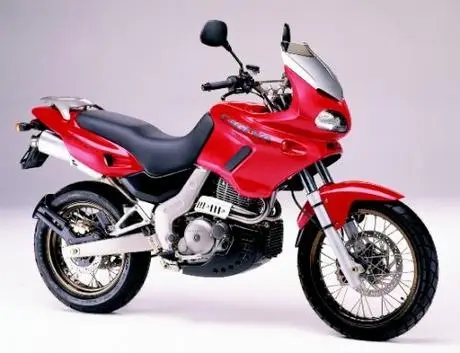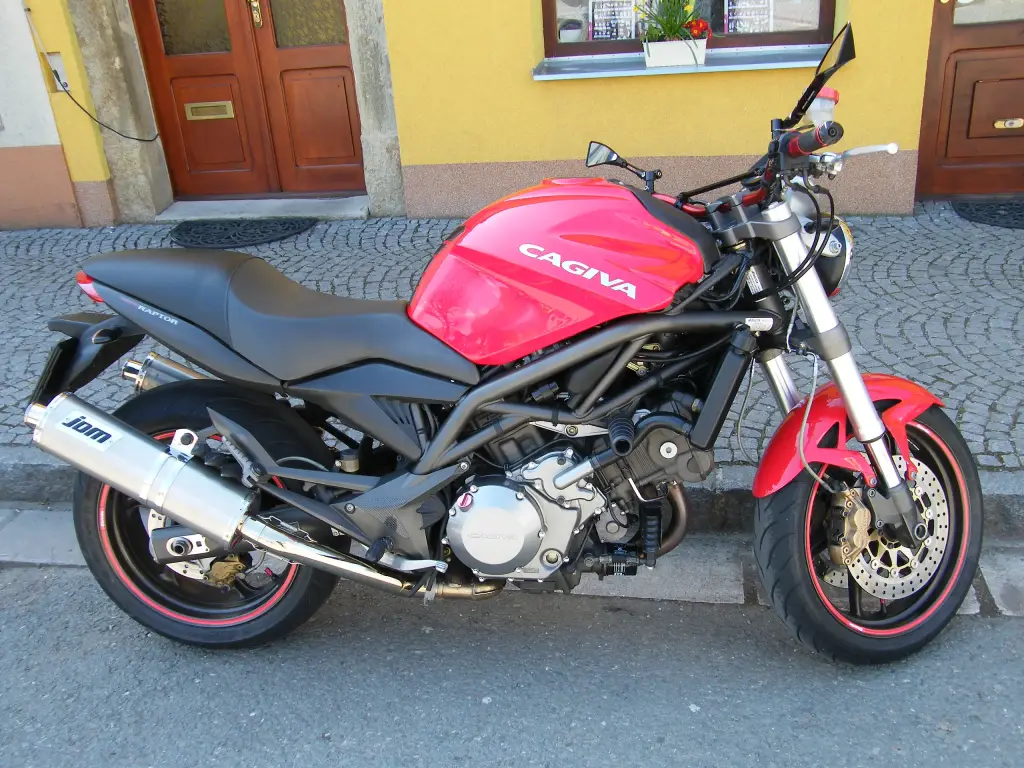
The Cagiva Raptor is a naked motorcycle designed by Miguel Angel Galluzzi, the designer of the first-generation Ducati Monster. It was conceived while Cagiva still owned Ducati and was meant as the next Monster, but after the sale of Ducati it became a Cagiva with Suzuki engines, and it was built in 1000, 650 and 125 cc versions.
Cagiva Raptor at a glance
| Maker | Cagiva, Varese; frames by Telca of the MV Agusta group |
|---|---|
| Designer | Miguel Angel Galluzzi |
| Original name | M2 (Monster 2) |
| Raptor 1000 | 2000–2006, 82 kW (110 hp), 197 kg dry |
| 1000 engine | Suzuki TL1000S V-twin, remapped for more torque |
| Raptor 650 | 2001–2007, Suzuki SV650 engine, 51 kW (69 hp) |
| Raptor 125 | from 2003, based on the Mito and Planet |
| Front brake | two discs, one at the rear; a single front disc on the 125 |
| Forks | 43 mm upside-down Marzocchi, 40 mm on the 125 |
| Xtra-Raptor | 2001, about 600 built according to unofficial sources |
History of the Cagiva Raptor
An orphaned Ducati project
The Raptor was conceived while Cagiva was still the owner of Ducati and was originally called the M2 — Monster 2 — as an intended second generation of that motorcycle. Following the 1998 sale of Ducati, Cagiva kept the design but lost access to Ducati’s tubular frames and engines. It contracted with Telca, part of the MV Agusta group, for the frames, and with Suzuki for V-twin engines of similar dimensions and specifications to the Ducati units the design had been drawn around. The manufacturer’s plate still carries the M2 name and shows MV Agusta as the manufacturer.
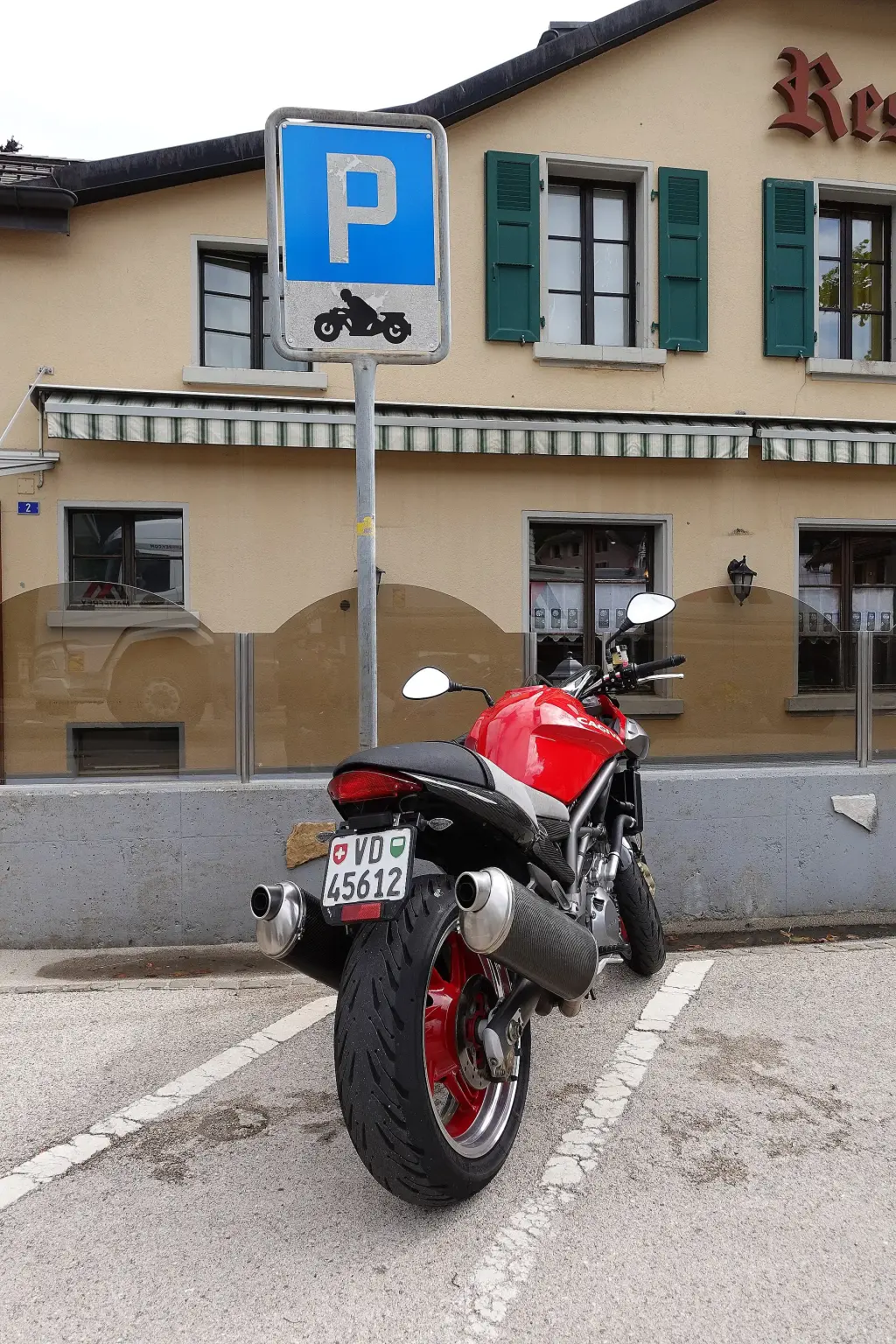
Raptor 1000
The largest version entered production first, in 2000, and was discontinued in 2006. It was made in a single series but in two versions, the standard naked and the sporty V-Raptor. In 2001 came the Xtra-Raptor, an upgraded V-Raptor with identical dimensions but carbon-fibre bodywork parts and fully adjustable suspension; in 2004 a prototype called the X3 Raptor was shown but never produced. The engine came from the Suzuki TL1000S, remapped to increase torque slightly at the expense of power, and produced 82 kW (110 hp) with a dry weight of 197 kg — 194 kg for the standard model. There were two front discs and one at the rear. Unofficial sources say that about 300 V-Raptor 1000s and about 600 Xtra-Raptors were built; the Xtra was produced in a limited series with a plate numbered from 1/999 to 999/999.
Raptor 650
The 650 entered production with a first series from 2001 to 2004, using a carburetted 69 hp engine from the Suzuki SV650 with tuning differences to suit the Raptor’s freer-flowing twin exhaust. The second series, from 2005 to 2007, had the updated SV650 engine with SDTV digital injection and the PAIR secondary air system, revised again at the CRC centre in San Marino. The oil cooler of the 1000 was adapted, the rectifier was moved from under the seat — where it caused overheating in the first series — to a side panel with cooling vents, and the tank was revised for the injection system, losing a few litres. The rear monoshock gained raised triangle linkages, the screen came from the X3 concept, the frame panels became smooth instead of textured to imitate carbon fibre, and the mirrors changed from round to pointed.
Raptor 125
The 125 began production in 2003 as a derivation of the Cagiva Planet, both based on the Mito. It was a naked meant for more urban use, with a different riding position and different calibrations of the brakes and shock absorbers that made it more comfortable and agile. It had Brembo “gold series” brakes, also fitted to the first-generation Ducati Monster, and 40 mm upside-down Marzocchi forks. In full-power form the engine came close to 30 CV, and from 2007 a new electronic management system allowed Euro 3 homologation.
Design and features
- Monster lineage: designed by the author of the first Ducati Monster and originally intended as its second generation.
- Suzuki power: TL1000S and SV650 V-twins replaced the Ducati engines the design was drawn around.
- Telca frames: built by a company of the MV Agusta group, which also appears on the manufacturer’s plate.
- V-Raptor, Xtra-Raptor, X3: a sport version, a carbon-fibre limited edition and an unproduced prototype.
- 125 derivative: a naked Mito for the city, with Brembo brakes and Marzocchi forks.
Cagiva Raptor versions
- Raptor 1000 (2000–2006): standard naked with the Suzuki TL1000S engine.
- V-Raptor 1000: sport version of the same machine.
- Xtra-Raptor (2001): carbon parts, fully adjustable suspension, numbered plate.
- Raptor 650 (2001–2007): carburettor and later injection series.
- Raptor 125 (from 2003): naked derivative of the Mito and Planet.
- X3 Raptor (2004): prototype, never produced.
The 125 is described in the Cagiva Mito article, and the Suzuki-engined adventure bike of the same years is the Cagiva Navigator. More Cagivas are in the Cagiva collection.
Sources
- Cagiva Raptor, English Wikipedia: origins, 1000 and 650 versions, engines, production
- Cagiva Raptor, Italian Wikipedia: 125 version, equipment, series changes