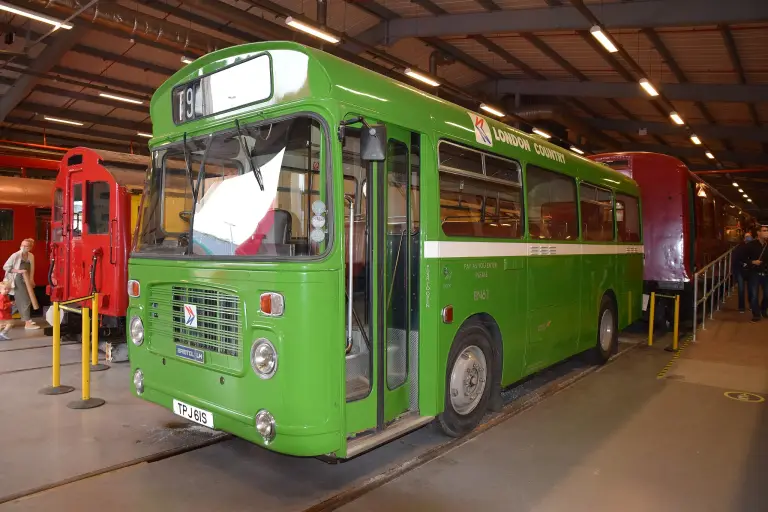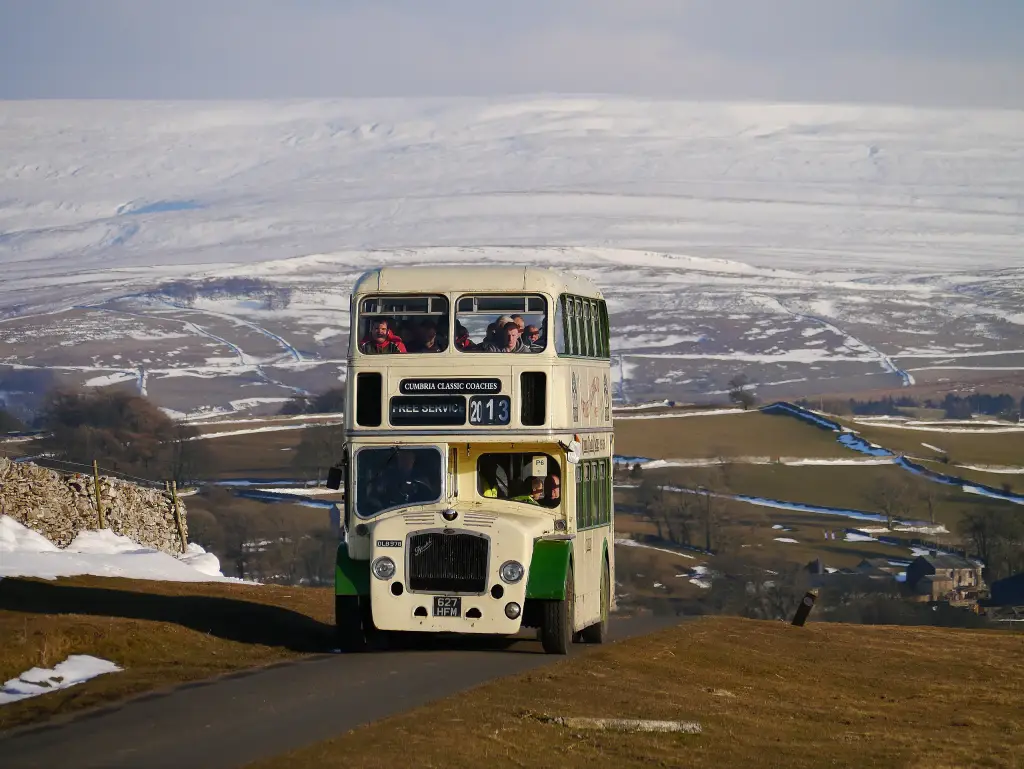
The Bristol Lodekka is a half-cab, low-height, step-free double-decker bus built by Bristol Commercial Vehicles in England, and the first production bus design with step-free access from the passenger entrance through the lower deck. It was designed to replace the lowbridge step-entrance layout that passengers and operators alike disliked.
Bristol Lodekka at a glance
| Maker | Bristol Commercial Vehicles |
|---|---|
| Prototypes | 1949 and 1950 |
| Production | 1953–1968, over 5,000 built |
| Body | half-cab by Eastern Coach Works, 58 seats |
| Engine | Gardner five- or six-cylinder; some Bristol AVW or Leyland O.600/O.680 |
| Layout | dropped chassis frame with a drop-centre rear axle |
| Entrance | rear platform on early cars, stepless forward door on FSF and FLF |
| Chassis codes | LDX, LD, LDL, LDS, FS, FSF, FL, FLF |
| Licensed version | Dennis Loline |
This page is based on the English Wikipedia article on the Bristol Lodekka.
History of the Bristol Lodekka
The Lodekka was designed to replace the traditional step-entrance, side-gangway lowbridge double-decker layout, which had been widely disliked by both passengers and bus operating companies. Bristol’s answer lowered the chassis frame, integrated it with a 58-seat Eastern Coach Works body and fitted a drop-centre rear axle, so there were no steps from the rear entrance platform to the front of the lower-deck gangway. On the early LDX, LD and first five LDL models, the positioning of the longitudinal chassis members let the gangway itself sit about 10 centimetres below the seating platforms, and a full flat floor was developed for the last LDL and used on all LDS and later F-series Lodekkas.
Half-cab bodywork
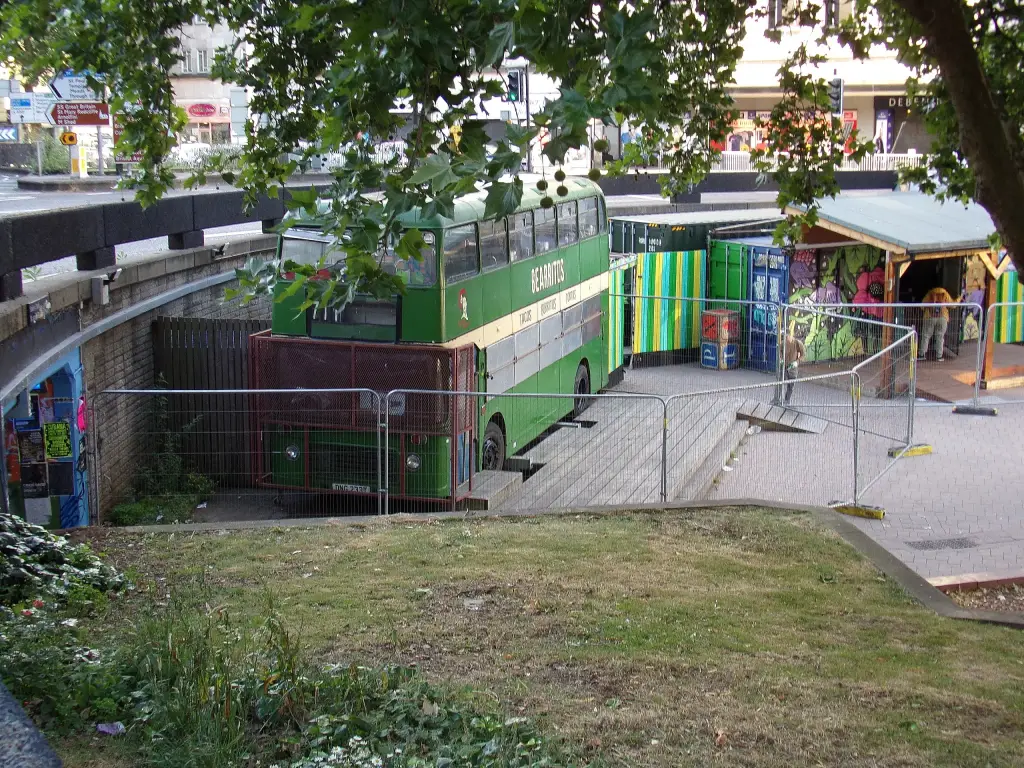
All Lodekkas used a traditional half-cab design by Eastern Coach Works of Lowestoft, the low floor allowing a low overall body height. The earlier LD series and the later FL and FS had a rear entrance platform, but the FSF and FLF, with rear air suspension, had a stepless forward entrance behind the front axle and driver’s cab, achieved by lowering the nearside chassis frame. Early models had one-piece sliding doors, later replaced by faster four-leaf folding doors. Most Lodekkas were powered by five- or six-cylinder Gardner engines, with a small number using Bristol AVW or Leyland O.600 and O.680 engines.
Chassis codes
Following Bristol Commercial Vehicles practice, chassis were designated by a two- or three-letter code followed by the number of engine cylinders and the engine maker. LDX meant Low Decker Experimental (the first two vehicles), LD Low Decker, LDL Low Decker Long, LDS Low Decker Short, FS Flat-floor Short, FSF Flat-floor Short Forward entrance, FL Flat-floor Long and FLF Flat-floor Long Forward entrance, so that FS5G was an FS with a Gardner 5LW and FLF6L an FLF with a Leyland engine.
Dennis Loline
Because Bristol Commercial Vehicles and Eastern Coach Works had been taken into state ownership when the Tilling Group was nationalised, Lodekkas could only be bought by British Transport Commission bus subsidiaries, later the Transport Holding Company. The design appealed to privately owned operators, so Bristol licensed it to Dennis Brothers, who sold their version as the Dennis Loline with a Gardner 6LW engine and a five-speed version of the reverse-drive gearbox used in the Dennis Hefty lorry chassis.
In service
The first prototype, chassis LDX001, went to Bristol Tramways & Carriage Company in 1949 as fleet number LC5000, registered LHY 949, working mainly on Bristol’s 36 service between Old Market and Knowle and touring other BTC subsidiaries. West Yorkshire Road Car Company took the second prototype in 1950, registered JWT 712, which worked Harrogate route 36 and appeared at the Festival of Britain in 1951. Despite sales restrictions, over 5,000 production Lodekkas were built between 1953 and 1968 as the standard double-decker of nationalised operators. The largest fleet was Crosville Motor Services of North Wales, which bought 593 across nearly all chassis types after a new bridge over the River Conwy replaced a weight-restricted suspension bridge, including eight LD6B coaches for summer services to Merseyside.
Design and features
- Step-free lower deck: the first production bus with level access from entrance to gangway.
- Dropped frame: a lowered chassis and drop-centre rear axle kept the body height down.
- Half-cab ECW body: 58 seats in the traditional Bristol layout.
- Licensed to Dennis: private operators could buy the same design as the Dennis Loline.
Bristol Lodekka versions
- LD, LDL and LDS: the low-decker series with a sunken gangway.
- FS and FSF: flat-floor short versions, the FSF with a forward entrance.
- FL and FLF: flat-floor long versions, the FLF with a forward entrance and air suspension.
- Dennis Loline: the licensed version for private operators.
The Lodekka was joined in the Bristol range by the single-deck Bristol MW and later the Bristol VR, while the whole company history is on the Bristol Commercial Vehicles page. More are in the Bristol collection.
Video: A ride through Bath on a Bristol Lodekka
Video by John Dawkins on YouTube.
Sources
- Bristol Lodekka, English Wikipedia: design, chassis codes, Dennis Loline, operators