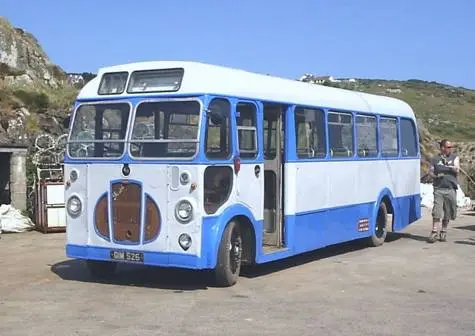
Bristol Commercial Vehicles was a vehicle manufacturer based in Bristol, England, best known for buses but also building lorries and railbus chassis. It began inside the Bristol Tramways and Carriage Company, which started building buses for its own use in 1908, and closed in 1983 when production moved to its parent Leyland.
Bristol Commercial Vehicles at a glance
| Founded | 1908, as the motor department of Bristol Tramways |
|---|---|
| Separate company | Bristol Commercial Vehicles Limited, 1955 |
| Location | Brislington, Bristol |
| Products | bus, coach and lorry chassis; some railbus chassis |
| Chassis codes | C-series, then letter types A to M, then initials such as RE |
| Engine suffix | LD5G means an LD with a five-cylinder Gardner engine |
| Key models | K, L, LS, MW, RE and LH chassis |
| Closed | 1983, work moved to Leyland |
The five records filed under this page covered the K, L, LS, SC and HA chassis, which have no separate Wikipedia articles; the page tells the company’s story and the chassis system that produced them. No usable free photograph of these buses was found, so the page has no pictures.
History of the Bristol Commercial Vehicles
The first trams of the Bristol Tramways Company ran in 1875, and in 1906 the company began operating motor buses to bring extra passengers to its trams. In 1908 it decided to build bus chassis for its own use, the first entering service on 12 May. The motor department was based at the tram depot in Brislington, on the road running east from Bristol towards Bath, where the Car Building Works had erected electric trams and built horse-drawn vehicles. The first motor bodies there were three charabanc bodies built in 1907 for Thornycroft buses delivered the year before. In 1908 the company built its first six buses, with chassis erected by the motor department and bodies split between Brislington and the carriage works at Leek Lane.
Aircraft and buses
In 1910 the company decided to build aeroplanes, forming the British and Colonial Aeroplane Company. The best place for that work was the sheds at Filton used by the motor department, so motor repairs and construction returned to Brislington, where a new four-acre site called the Motor Constructional Works was bought at Kensington Hill. In May 1914 the company supplied its first bus to another operator, a C50 charabanc for Imperial Tramways at Middlesbrough, followed by lorries for the Royal Naval Air Service.
Under the Tilling Group
The Great Western Railway bought a controlling interest in the tramway company in 1929, but its bus interests passed to Western National in 1931, bringing Bristol Tramways and its manufacturing into the Tilling Group. Tilling decided that the diesel engine should be standard, beginning decades of Gardner diesels in Bristol chassis, and other group companies increasingly ordered Bristol chassis, many bodied by Eastern Coach Works at Lowestoft. Unbodied chassis travelled between the two towns driven by delivery drivers in heavy weatherproof suits.
Bristol Commercial Vehicles was created in 1943 as a subsidiary of Bristol Tramways. The 1948 Transport Act nationalised the Tilling Group into the British Transport Commission, and BCV and ECW were soon restricted to selling to other BTC operators. In 1955 BCV became an independent company owned by the BTC, and body construction at Bristol ended in 1956.
Chassis types
Early chassis carried C-series numbers; when a new lower frame arrived in 1920 they were named after the body capacity they were designed to carry. From 1925 a sequential letter system ran from A to M, though the M type never entered full production, and it was later replaced by initials describing the vehicle, such as RE for rear engine. Letters identified petrol engine sizes, and from 1933 a suffix showed the size and make of diesel: LD5G meant an LD with a five-cylinder Gardner, FS6B an FS with a six-cylinder Bristol engine.
All early chassis served single-deck buses or goods vehicles. In 1931 a longer J type single-decker exploited the greater permitted length, replaced by the L in 1937. The G of 1931 was a dedicated double-deck chassis, replaced by the K in 1937, and larger versions followed. In 1952 the Light Saloon was built on integral principles, with no true chassis but lightweight running units in a special ECW body that gave the bus its strength; the more conventional Medium Weight chassis arrived in 1957. A larger rear-engined single-decker, the RE, appeared in 1962, and shorter versions to replace the MW came in 1968 together with the Lightweight Horizontal-engined LH, which replaced the SU midibus.
The end under Leyland
Changes in government policy in 1965 allowed the Leyland Motor Corporation to buy shares in BCV and ECW, so their products could be sold to independent operators again. The last new chassis to carry a Bristol badge was a VRT/SL double-decker built in 1981. For a while the factory built buses with Leyland badges, notably the Olympian designed by staff at Brislington. All work ended in October 1983, when the final Bristol-built Olympian chassis went to ECW for Devon General, and production moved to other Leyland factories.
Design and features
- Buses first: production centred on buses, with lorries and railbus chassis as sidelines.
- Gardner diesels: Tilling’s 1930s policy made Gardner engines standard in Bristol chassis.
- Eastern Coach Works: many chassis went to ECW at Lowestoft, the group’s bodybuilder.
- Logical codes: chassis letters plus engine suffixes, such as LD5G or FS6B.
Bristol Commercial Vehicles versions
- K (1937): the dedicated double-deck chassis that replaced the G.
- L (1937): the long single-deck chassis that replaced the J.
- LS (1952): the integral Light Saloon built with an ECW body.
- MW (1957): the Medium Weight chassis with an underfloor horizontal engine.
- RE (1962) and LH (1968): rear-engined and lightweight horizontal-engined single-deckers.
Individual Bristol bus models have their own pages, among them the Bristol Lodekka, Bristol MW, Bristol RE and Bristol VR. More are in the Bristol collection.
Sources
- Bristol Commercial Vehicles, English Wikipedia: company history, chassis types, closure