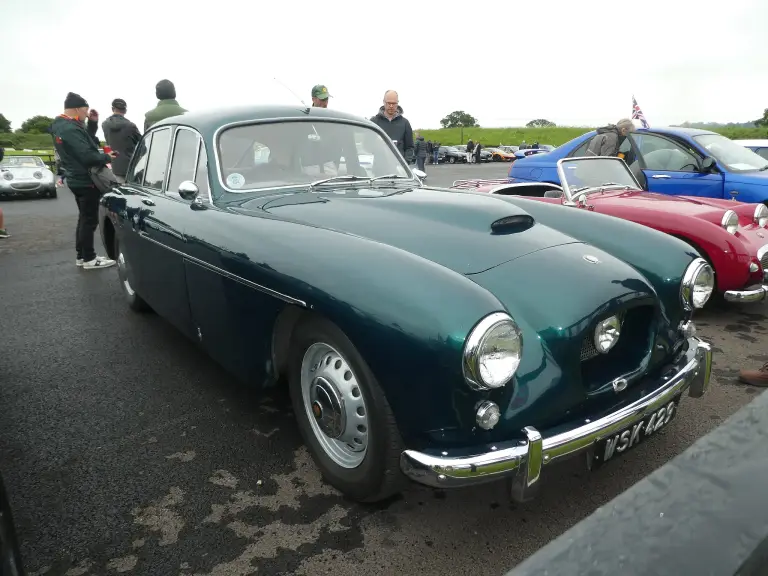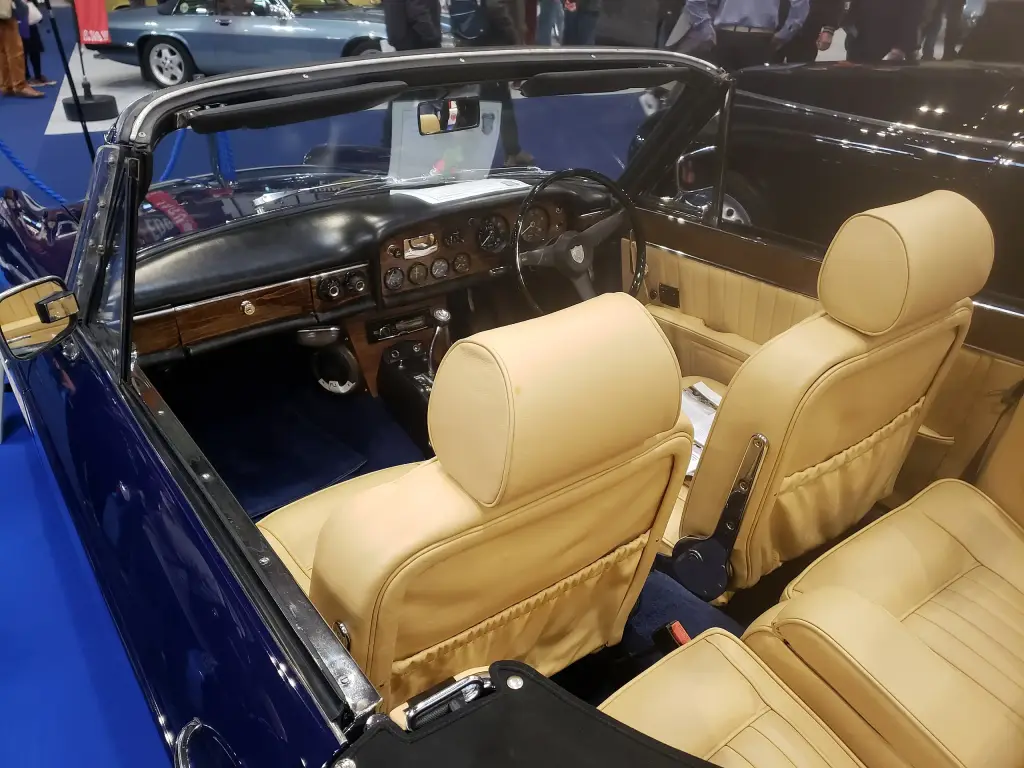
The Bristol 407 was the first Bristol built after the car company separated from the Bristol Aeroplane Company, and the first to use a Chrysler V8. Made from 1961 to 1963, it looked almost identical to the 406 it replaced but more than doubled the power and gave the marque its performance reputation back.
Bristol 407 at a glance
| Maker | Bristol Cars |
|---|---|
| Production | 1961–1963 |
| Body | four-door saloon |
| Engine | 5,130 cc Chrysler V8, built in Canada |
| Power | 250 bhp (186 kW) |
| Top speed | over 125 mph (201 km/h) |
| Gearbox | TorqueFlite three-speed automatic |
| Front suspension | coil springs instead of transverse leaf springs |
| Steering | no longer rack and pinion |
| Based on | Bristol 406 |
This page is based on the English Wikipedia article on the Bristol 407.
History of the Bristol 407
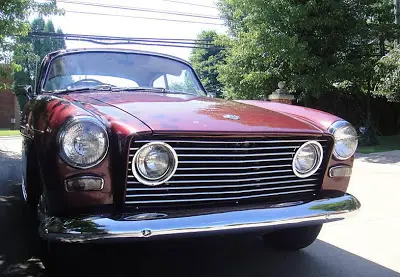
The 407 was made between 1961 and 1963, and was the first model built after Bristol Cars separated from the Bristol Aeroplane Company, which had made every previous Bristol. Outwardly it resembled the 406 on which it was based. The only visible changes were very subtle: a single horizontal bar on the somewhat enlarged radiator grille, which had grown steadily from the 405 to the 406 and then the 407, and two exhaust pipes instead of one at the rear.
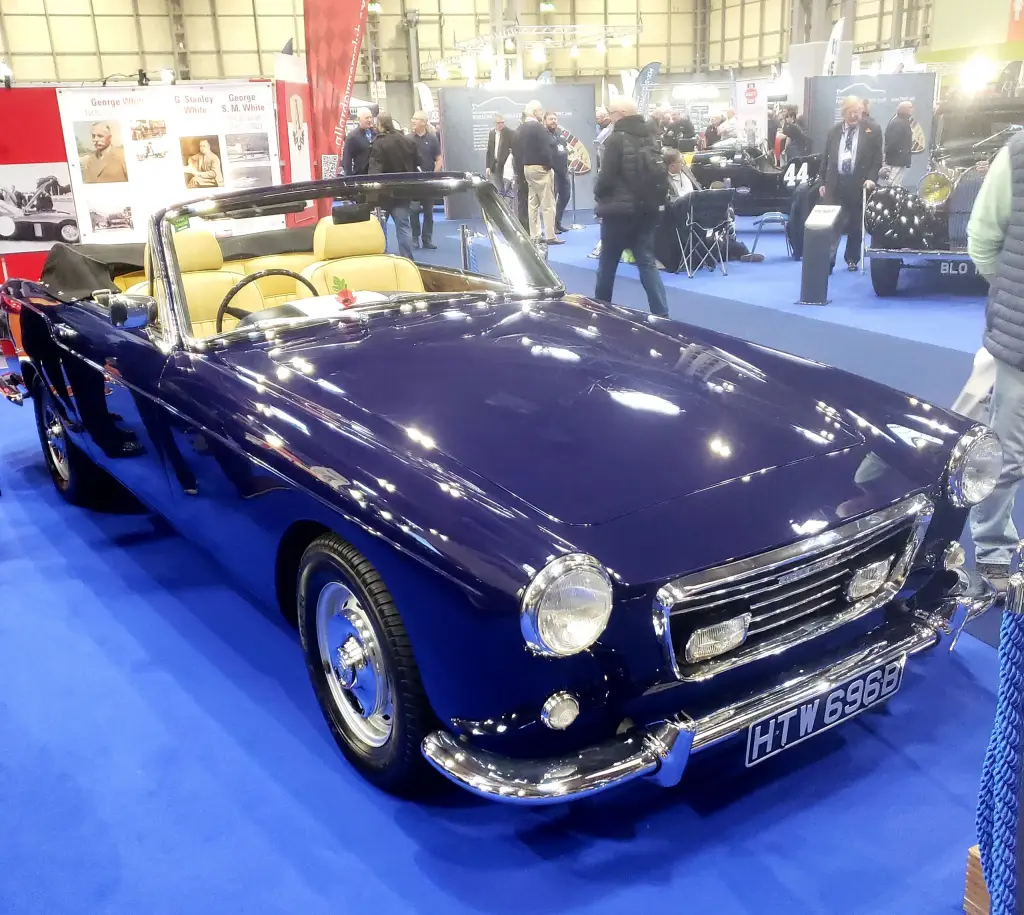
Why Bristol needed a V8
Unlike its predecessors, the 406 suffered from a lack of power. Bristol’s BMW-derived 105 bhp inline six, type 110, could no longer give the 1.5-ton car the sporty performance that had distinguished earlier Bristols, and the engine concept dated back to before the Second World War. Bristol therefore looked for a new engine in the second half of the 1950s.
The company first started to develop its own new engine, type 160, with a six-cylinder layout and a displacement of 3.0 to 3.5 litres, similar to contemporary Alvis engines. The first prototypes were not convincing, and the parent company felt the financial expense was not justified. In 1959 Bristol tested the 4.0-litre Armstrong Siddeley six used in the Star Sapphire, rated at 165 bhp, and fitted one to a 406 for factory test runs, but it never entered series production. The prototype was sold and in regular use until 1975; it was rediscovered unrestored in 2015.
The Chrysler deal
In the end Bristol chose Chrysler’s American V8. Bristol’s owner Tony Crook told the story that the company only wanted to order a TorqueFlite automatic transmission for testing, and that Chrysler included one of its own eight-cylinders along with the gearbox. Bristol tested the engine thoroughly and chose it for its performance and cost-effectiveness, which also saved the company its own development costs. To save more, Bristol sourced the engines not directly from the United States but from Canada, a Commonwealth member, so no import duty was payable on their arrival in Britain.
The Bristol engine was based on an older American unit that had made its debut in Chrysler’s Plymouth brand in 1956 with a displacement of 260 cubic inches (4.2 litres). Bristol obtained the blocks from the USA and had them completed by hand in a Canadian Chrysler workshop. The bore was increased from 3.56 to 3.87 inches, giving 5.2 litres with only a marginally changed stroke, because Chrysler had no engine of the right size in its range. The engines received a new cylinder head of Bristol’s own design in place of the original polyspherical Plymouth head, and the intake ducts were revised. After the manual work the engine delivered 250 bhp, more than doubling the previous model’s performance.
The conservative British clientele was sceptical, and according to Crook quite a few saw the switch to an American engine as a sin, but most critics were reconciled by the car’s outstanding performance. Bristol’s long-serving 2-litre six continued to be built for a while after the 407 appeared, mainly for AC Cars, which used it in the Ace, Aceca and Greyhound until the end of 1962.
Chassis changes
Beneath the skin the front suspension changed from transverse leaf springs, which could not provide effective handling at the higher weight and speeds, to coil springs, a layout used on all later eight-cylinder Bristols, though much refined from the 603 onwards. Rack and pinion steering was also dropped. The bodywork on the 407 and the models that followed was built by a bus body builder.
Design and features
- Chrysler V8: 5,130 cc, Bristol cylinder head and intake work, 250 bhp.
- TorqueFlite automatic: a three-speed automatic with torque converter was the only transmission.
- Coil-spring front suspension: replaced the transverse leaf springs for the heavier, faster car.
- Discreet styling: a single horizontal grille bar and twin exhausts were the only visual clues.
Bristol 407 versions
- 407 saloon (1961–1963): the standard four-door car.
- Viotti drophead coupés: open cars bodied by the Italian coachbuilder Viotti, shown in the pictures.
- Armstrong Siddeley prototype: a one-off 406 with the 4.0-litre six, never produced.
The 407 followed the six-cylinder Bristol 404 and 405 and was developed into the Bristol 408. All V8 models are in the Bristol collection.
Sources
- Bristol 407, English Wikipedia: engine history, chassis, performance