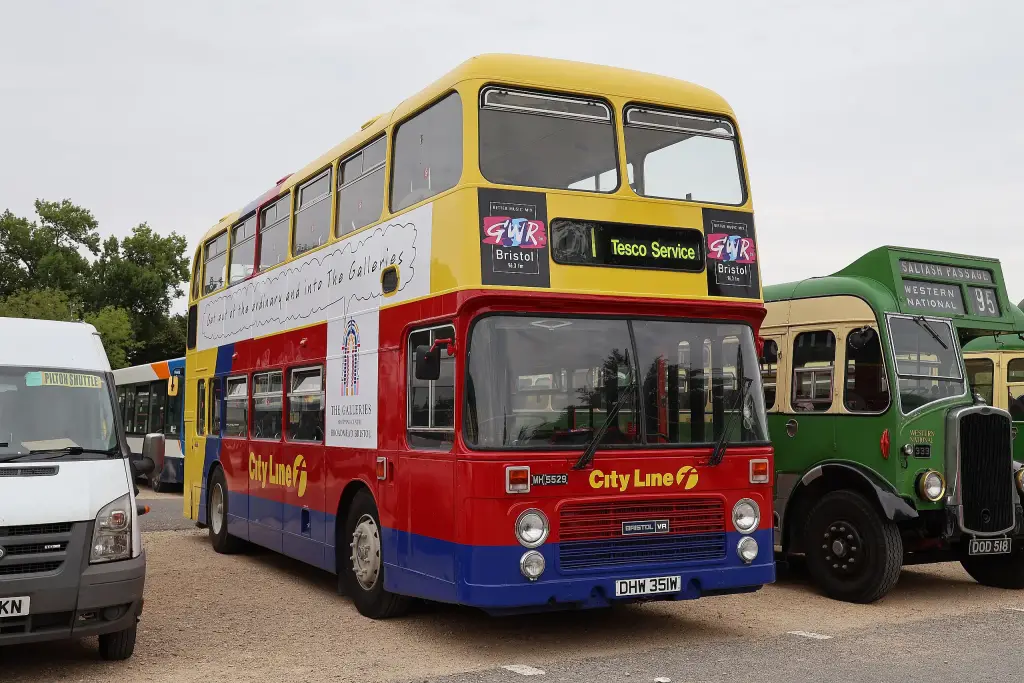
The Bristol VR was a rear-engined double-decker bus chassis manufactured by Bristol Commercial Vehicles as a competitor to the Leyland Atlantean and Daimler Fleetline. Its name stood for Vertical Rear, a reference to the longitudinal engine behind the rear offside wheels, though the later transverse-engined VRT became the version that mattered.
Bristol VR at a glance
| Maker | Bristol Commercial Vehicles |
|---|---|
| Prototypes | 1966, shown at the Earls Court Motor Show |
| Production | 1968–1981 |
| Name | Vertical Rear |
| Layout | longitudinal engine behind the rear offside wheels, transverse from 1967 |
| Lengths | VRS at 32 ft 9 in, VRL at 36 ft |
| Engines | Gardner 6LX or 6LXB, Leyland O.600 or 501 |
| Gearbox | Self-Changing Gears semi-automatic |
| Series | Series 2 in 1970, Series 3 in 1974 |
| VRT built | 4,531 by 1981 |
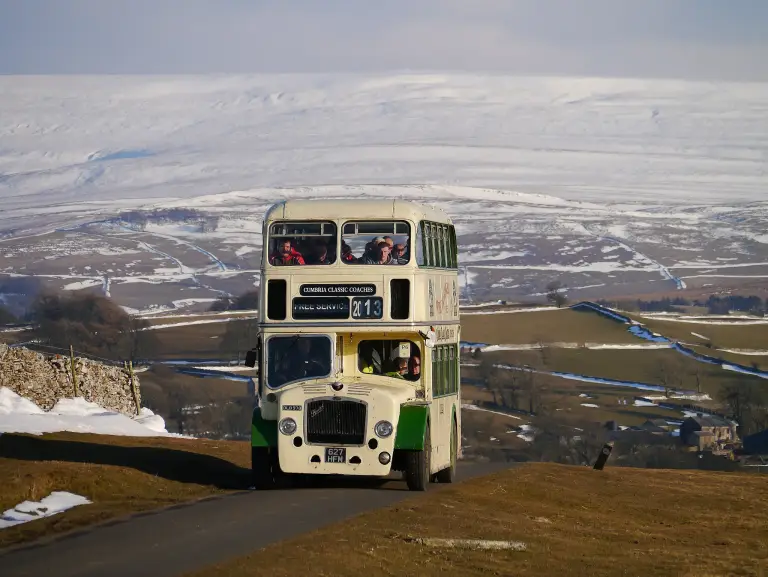
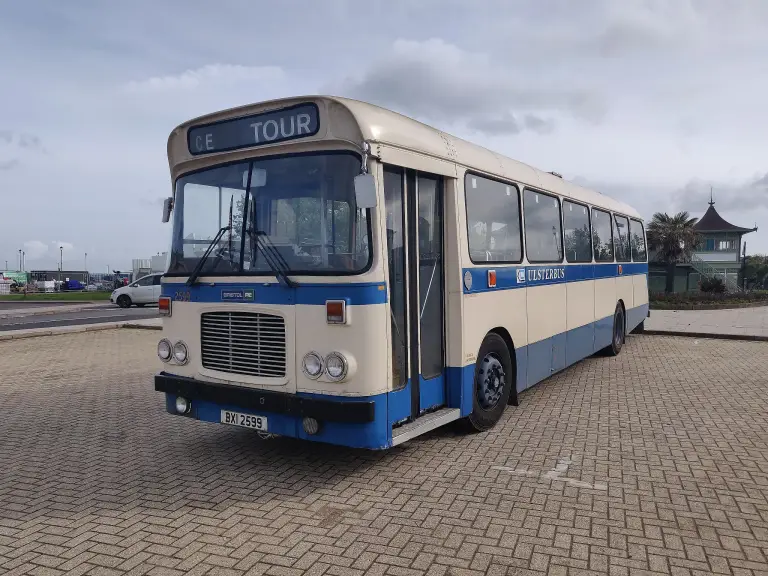
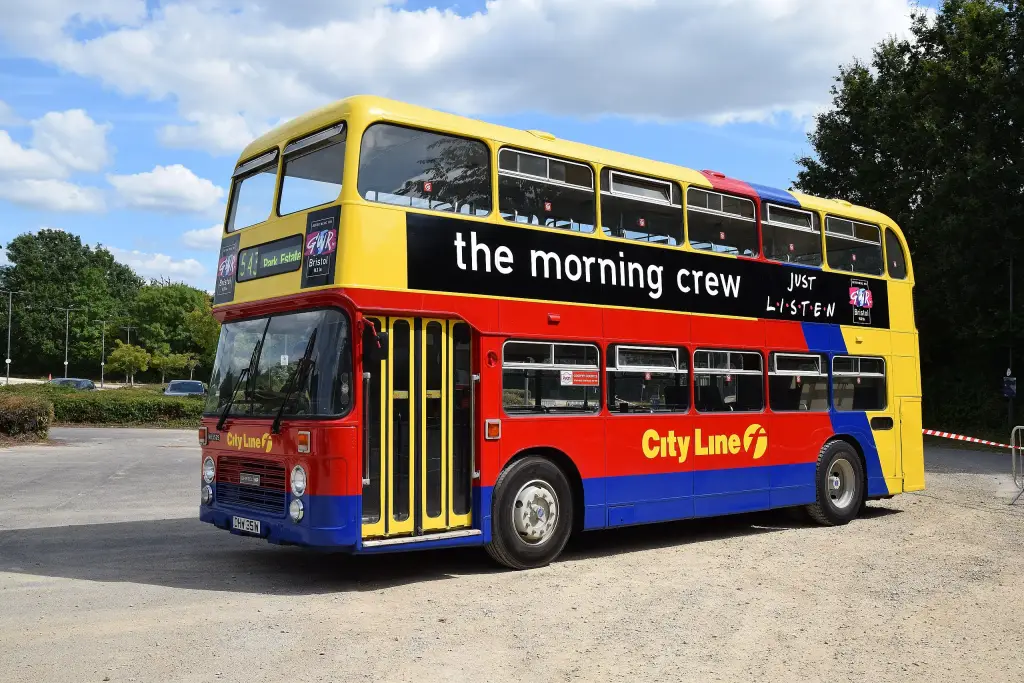
This page is based on the English Wikipedia article on the Bristol VR; the photographs show the VRT/SL3 with Eastern Coach Works bodywork.
History of the Bristol VR
The VR was originally designed for single-deck or double-deck bodywork, with a longitudinally mounted engine set behind the rear offside wheels rather than in the more typical transverse layout. A choice of Gardner 6LX or 6LW engines or the Leyland O.600 was to be available, with a semi-automatic transmission by Self-Changing Gears. The chassis was first intended to be the Bristol N-type but became the VR, short for Vertical Rear. Two lengths were offered, 32 ft 9 in and 36 ft, designated VRS and VRL, and a drop-centre rear axle and low frame kept the vehicle height down.
Prototypes and the VRT
Two prototypes were built in spring 1966 and shown at the Earls Court Motor Show that year, the first show at which Bristol could exhibit since 1948 because its products were available on the open market again. They had 80-seat bodies by Eastern Coach Works and entered service with Central SMT and Bristol Omnibus Company. In July 1967 Bristol introduced the VRT with a more conventional transverse-engined layout, available only as a double-decker and with a choice of two frame heights; the longitudinal version remained as the VRL.
In July 1968 the British government introduced a grant to modernise bus fleets and speed up one-man operation. Its standard specification required a transverse rear-engined vehicle, so few VRLs were produced.
Early troubles
The first production vehicles entered service with Eastern Scottish in December 1968, and problems with the transmission and engine overheating appeared almost immediately, similar to those of early Leyland Atlanteans and Daimler Fleetlines. A large number of the initial production versions went to the Scottish Bus Group, and continued reliability issues led in 1973 to the one-for-one exchange of 91 Bristol VRTs from Central SMT, Eastern Scottish and Western SMT for front-engined Bristol Lodekka FLF6Gs from the National Bus Company, most of them from Eastern Counties.
Series 2 and Series 3
The Series 2 arrived in 1970, replacing the single-piece wraparound engine compartment door with a three-piece version with a lift-up rear section and swing-out sides. The Series 3 of 1974 changed the engine compartment to meet new noise legislation; the most visible change moved the ventilation grilles from beside the engine to just below the top-deck windows, connected by trunking, and removed the grilles from the rear engine compartment door. The short, low-height version became the standard vehicle of the National Bus Company. The VRT remained in production until 1981, by which time 4,531 had been built, and its successor, the Leyland Olympian, shared many similarities with the Series 3 VR.
Late service
Later VRs stayed in service with independents and major companies across Britain until the late 2000s. East Yorkshire Motor Services, which amassed 150 new and second-hand VRs, withdrew its last closed-top examples in 2004; Wilts & Dorset withdrew its last in 2007, with some continuing until 2009 with Damory Coaches; First Devon & Cornwall retired its last closed-top VRs in December 2006. First Hampshire & Dorset ran one on an open-top service between Weymouth and Portland Bill until September 2010, and Arriva Buses Wales used a VR for a summertime open-top tour of Llandudno and Conwy.
Design and features
- Vertical rear engine: a longitudinal layout behind the rear offside wheels, later supplemented by the transverse VRT.
- Logical codes: VRT/SL3/6LXB means a short, low, Series 3 car with a transverse Gardner 6LXB.
- Series updates: a three-piece engine door in 1970 and quieter Series 3 engine bays in 1974.
- Long service: VRs worked in Britain into the late 2000s, some on open-top tours.
Bristol VR versions
- VRS and VRL: the short and long longitudinal-engined originals.
- VRT: the transverse-engined double-decker from 1967, 4,531 built.
- Series 2 (1970): revised engine compartment door.
- Series 3 (1974): quieter engine bay and relocated ventilation grilles.
The VR replaced the front-engined Bristol Lodekka as the standard double-decker and shared the range with the single-deck Bristol RE. More Bristol buses are in the Bristol collection.
Video: Awesome Sounding – Workington Transport Heritage Trust Bristol VR PHH 149W
Video by Cumbrian Transport Lover on YouTube.
Sources
- Bristol VR, English Wikipedia: development, production, series, operators