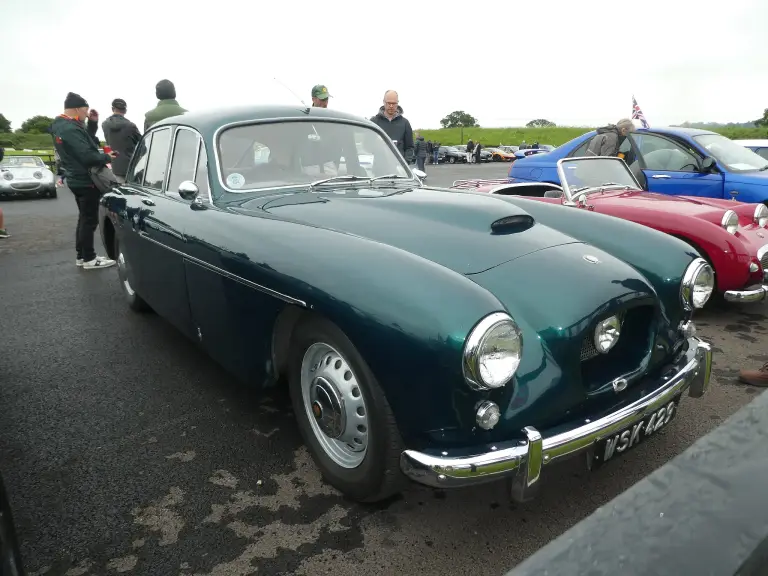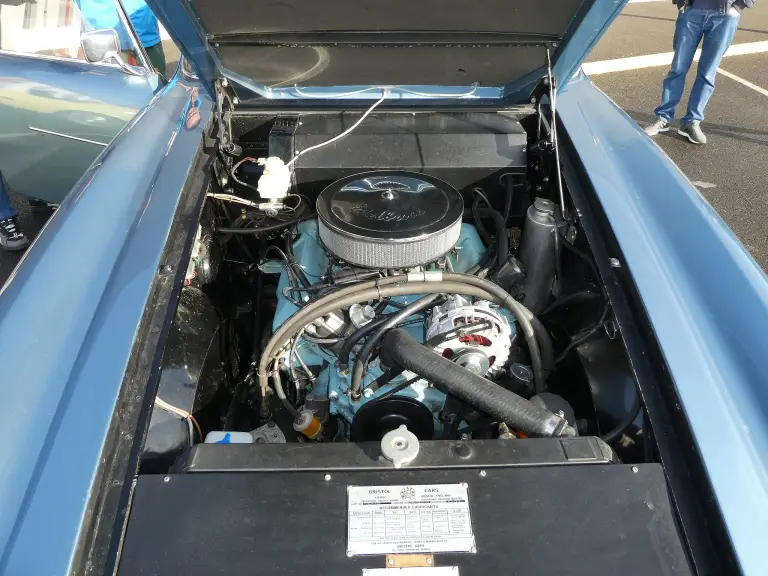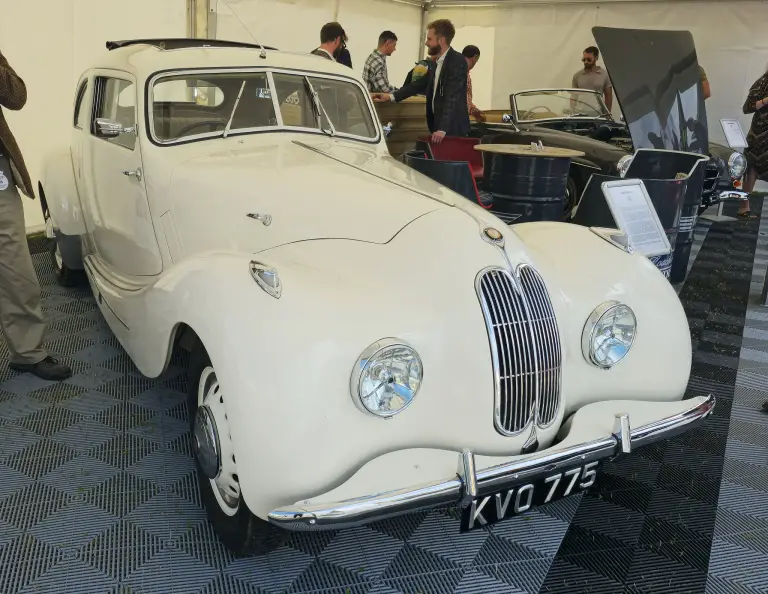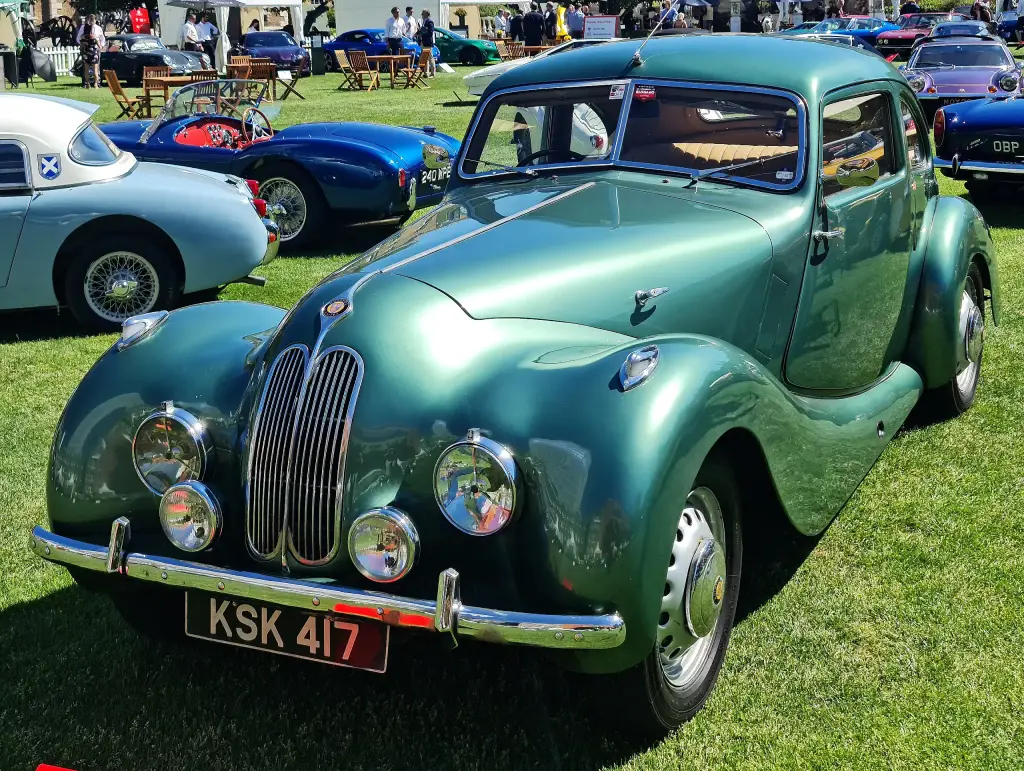
The Bristol 400 was the first car made by the Bristol Aeroplane Company’s car division. Built from 1947 to 1950, it combined the engine of the pre-war BMW 328 with the chassis of the BMW 326 under a coupé body inspired by the BMW 327, and it set the pattern for a line of luxury cars that lasted into the 21st century.
Bristol 400 at a glance
| Maker | Bristol Cars, Bristol Aeroplane Company |
|---|---|
| Production | 1947–1950 |
| Body | two-door coupé |
| Engine | 1,971 cc straight-six, pushrod, hemispherical head |
| Power | 80 hp at 4,500 rpm |
| Top speed | about 148 km/h (92 mph) |
| Gearbox | four-speed manual, synchromesh on top three, freewheel in first |
| Front suspension | independent, transverse leaf spring |
| Rear suspension | live axle on torsion bars |
| Wheelbase | 2,895 mm (114.0 in) |
| Body material | steel with aluminium bonnet, door and boot skins |
This page is based on the English Wikipedia article on the Bristol 400.
History of the Bristol 400
As the Second World War drew to a close, Bristol Aircraft considered how it would occupy its workshops in peacetime. A car division was formed in 1945, and it later became Bristol Cars as a company in its own right. Bristol engineers were sent to the BMW factory at Eisenach, in the Soviet occupation zone of Germany, and returned with plans for the BMW 327 and the BMW six-cylinder engine, taken as official war reparations. Bristol also employed the BMW engineer Fritz Fiedler to lead its engine development team, and in 1946 it bought a majority shareholding in Frazer Nash, which had held a licence to build the BMW 328 in the 1930s.
A BMW in all but name
The 400, released in 1947, took the best features of two outstanding pre-war BMWs: the engine of the 328 and the chassis of the 326. The body was mainly steel, but the bonnet, door skins and boot lid were aluminium, and the whole car was a lengthened version of the BMW 327 coupé, complete with BMW’s double-kidney radiator grille. The 1,971 cc six (66 mm bore, 96 mm stroke) kept BMW’s hemispherical combustion chambers and very short inlet and exhaust ports, which were considered advanced for the time. In Bristol form it produced 80 hp at 4,500 rpm.
The hemispherical head put the valves at an angle, so a single camshaft drove the far-side valves through a train of rods, followers and bell-cranks. Owners soon discovered that setting and maintaining the numerous clearances in this system was difficult, but vital to keep the engine in tune. The gearbox was a four-speed manual with synchromesh on the upper three ratios and a freewheel in first gear.
Body and chassis
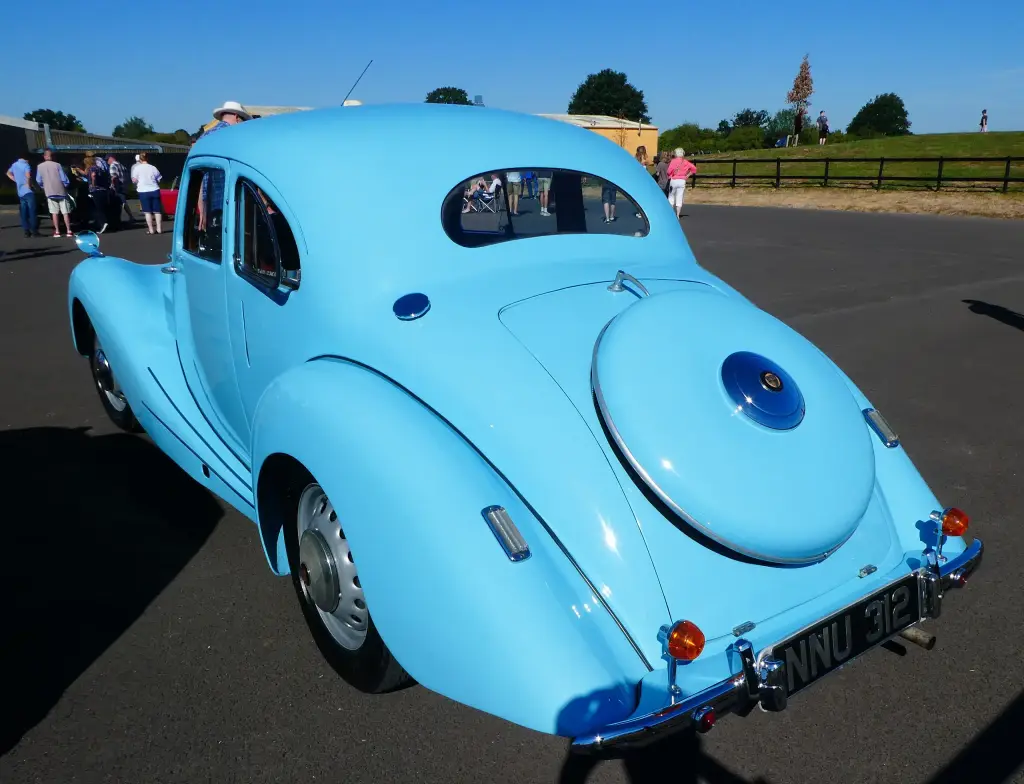
The 400 is the only Bristol with a body combining steel and aluminium panels. All its glass was flat apart from the curved rear window, which was glazed in Perspex, and a top-hinged rear window was available to specification — welcome in warmer export markets, where the sliding door windows gave only marginal ventilation. The front suspension was independent with a transverse leaf spring, while the rear used a live axle located by an A-bracket over the differential case, with longitudinal torsion bars. The passenger compartment was short, and on the first cars the spare wheel was mounted inside the boot; later examples carried it on the rear-hinged boot lid, inside an aluminium cover.
Battista Pininfarina designed an alternative body for the 400 whose lines prefigured the 401, the successor Bristol launched in 1948.
Design and features
- BMW-derived six: 1,971 cc, hemispherical combustion chambers and 80 hp at 4,500 rpm.
- Mixed construction: steel body with aluminium bonnet, doors and boot lid, the only Bristol built this way.
- BMW-style grille: the double-kidney front that later Bristols gradually abandoned.
- Complex valve gear: a single camshaft driving the opposite valves through rods and bell-cranks.
Bristol 400 versions
- Standard 400 coupé (1947–1950): the production car with the BMW-inspired body.
- Early cars: spare wheel carried inside the boot.
- Later cars: spare wheel on the rear-hinged boot lid in an aluminium cover.
- Pininfarina proposal: an alternative body whose lines prefigured the 401.
The 400 was replaced in the range by the Bristol 401 and Bristol 403, which kept its engine and developed its styling. More Bristol models are in the Bristol collection.
Sources
- Bristol 400, English Wikipedia: history, engine, body, suspension