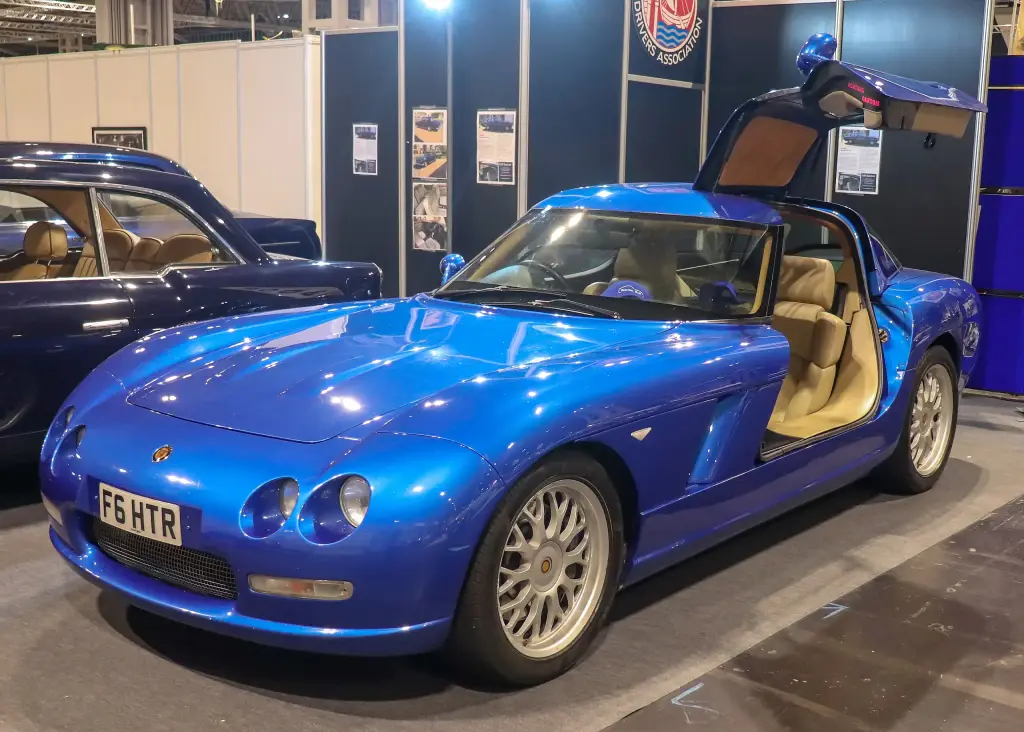
The Bristol Fighter is a sports car produced in small numbers by Bristol Cars from 2004 until the company suspended manufacturing in 2011, and it is generally classed as a supercar. Its gullwing coupé body was designed by the former Brabham Formula One engineer Max Boxstrom and gives the car a drag coefficient of 0.28.
Bristol Fighter at a glance
| Maker | Bristol Cars |
|---|---|
| Production | 2004–2011, small numbers |
| Designer | Max Boxstrom, former Brabham Formula One engineer |
| Body | coupé with gullwing doors |
| Drag coefficient | 0.28 |
| Engine | 7,996 cc V10, derived from the Dodge Viper |
| Power | 525 bhp at 5,600 rpm |
| Torque | 525 lb·ft at 4,200 rpm |
| Weight | 1,600 kg |
| Transmission | six-speed manual or four-speed automatic |
| 0–60 mph | 4.0 seconds, claimed |
| Top speed | 210 mph (338 km/h), claimed |
| Chassis built | about 20, of which perhaps 14 cars completed |
This page is based on the English Wikipedia article on the Bristol Fighter automobile; it is not to be confused with the Bristol F.2 Fighter aeroplane.
History of the Bristol Fighter
The Bristol Fighter was produced by Bristol Cars in small numbers from 2004 until the company suspended manufacturing in 2011. Its coupé body, with gullwing doors, was designed by the former Brabham Formula One engineer Max Boxstrom and gives the car a drag coefficient of 0.28.
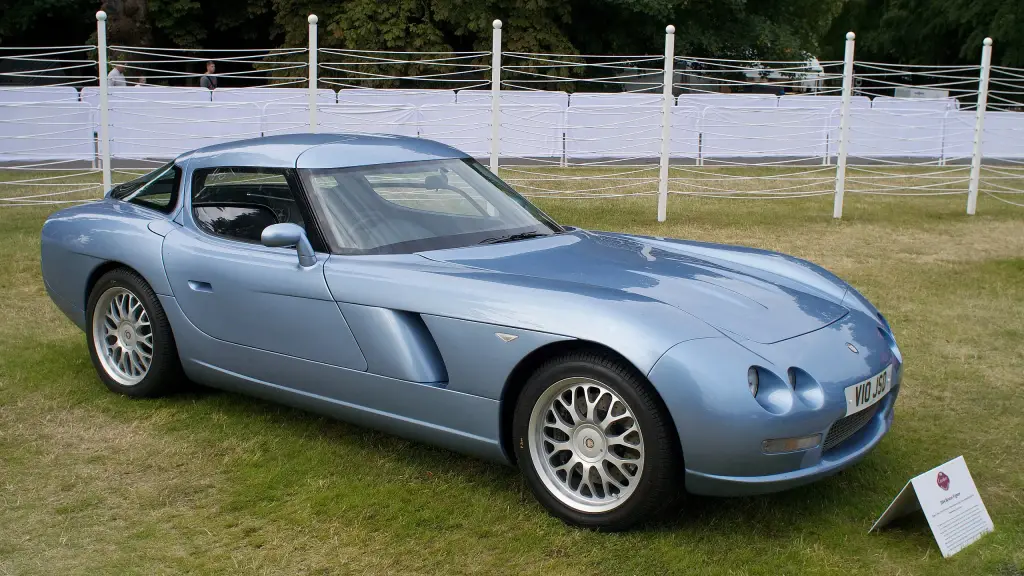
Viper heart
The Fighter uses a front-mid-mounted 7,996 cc V10, a modified version of the engine fitted to the Dodge Viper and the Dodge Ram SRT-10 pick-up, itself originally based on the Chrysler LA engine. Bristol modified it to produce 525 bhp at 5,600 rpm and 525 lb·ft of torque at 4,200 rpm, in keeping with the company’s use of Chrysler engines since 1961. In the more powerful Fighter S the engine was tuned to 628 bhp, or 660 hp at high speed using the ram-air effect. The car weighs 1,600 kg.
Transmission is a six-speed manual or a four-speed automatic, driving the rear wheels. Bristol claimed 0 to 60 mph in 4.0 seconds, a power-to-weight ratio of 359.1 bhp per tonne and a top speed of 210 mph, and the car was roomy enough for a driver 6 ft 7 in tall.
Few built
Sketches and models had been publicised some time before, but a complete car was first shown to the press in May 2003, and the first magazine drive appears to be in the April 2005 issue of Evo. It is not known exactly how many Fighters were made, though research indicates that 20 chassis were produced. Of these, 18 series 1 chassis have been accounted for and one series 2 chassis exists. When Bristol Cars collapsed, three series 1 chassis were in various states of completion and two series 1 chassis and the series 2 chassis were untouched. One of these cars was completed and delivered in 2015, suggesting, though it is not confirmed, that 14 cars were finished including the pre-production car. The series 2 chassis is believed to have been intended for the Fighter T, and the remaining five chassis were to be completed in a continuation series announced in September 2026.
The Fighter T that never was
In 2006 Bristol announced the Fighter T, a turbocharged Fighter planned to use a modified Chrysler V10 producing 1,050 bhp and 1,036 lb·ft of torque at 4,500 rpm, which would have made it the first turbocharged petrol V10 production car. It was designed with a drag coefficient of 0.27 and Bristol claimed more than 270 mph, electronically limited to 225 mph. In the end no Bristol Fighter T was ever produced.
Design and features
- Gullwing doors: a Max Boxstrom coupé shape with a drag coefficient of 0.28.
- Viper-derived V10: 7,996 cc and 525 bhp, tuned by Bristol to its own specification.
- Supercar pace: a claimed 0–60 mph in 4.0 seconds and 210 mph.
- Room for a giant: the cabin accommodated a driver of 6 ft 7 in.
Bristol Fighter versions
- Fighter (2004–2011): the standard 525 bhp car.
- Fighter S: 628 bhp, or 660 hp with ram air at speed.
- Fighter T: announced in 2006 with 1,050 bhp, never built.
- Continuation cars: five remaining chassis to be completed in a series announced in 2026.
The Fighter was the last new Bristol model before the company closed, and it shared the marque with the Bristol Type 603 and its 411 ancestor. More models are in the Bristol collection.
Sources
- Bristol Fighter (automobile), English Wikipedia: engine, performance, production, Fighter T