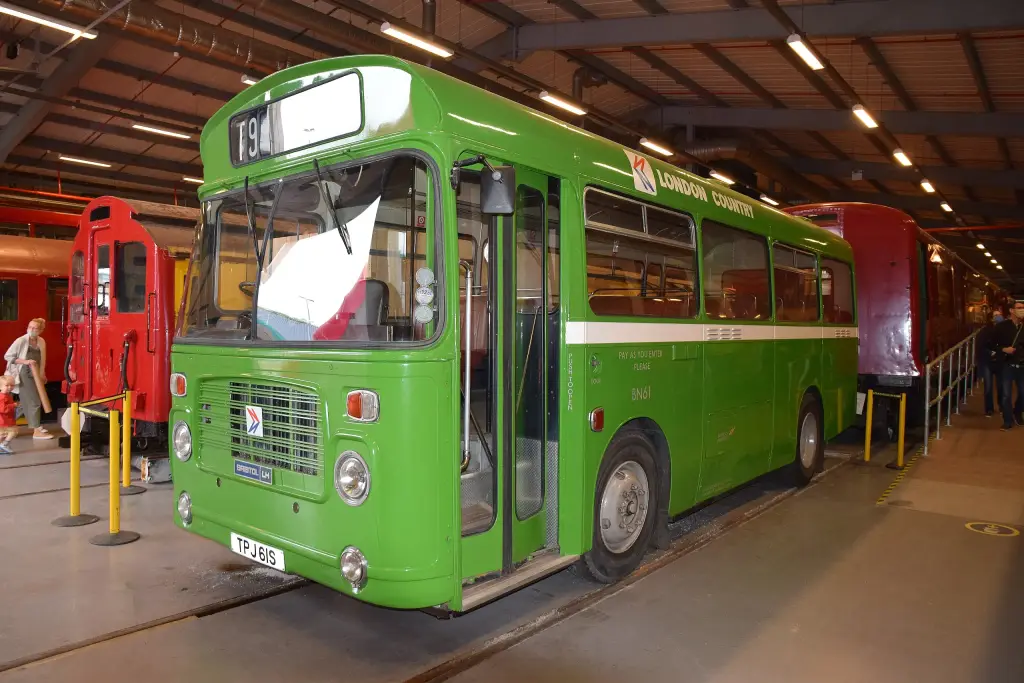
The Bristol LH was a single-decker bus chassis built by Bristol Commercial Vehicles between 1967 and 1982, with nearly 2,000 examples in a variety of sizes and body types, including some as goods vehicles. Its name stood for Lightweight chassis, Horizontal engine, and the short LHS version appears in the old records for this page.
Bristol LH at a glance
| Maker | Bristol Commercial Vehicles |
|---|---|
| Production | 1967–1982 |
| Name | Lightweight chassis, Horizontal engine |
| Standard length | 30 ft (9.1 m), also 26 ft LHS and 36 ft LHL |
| Chassis width | 7.5 ft (2.3 m), bodies up to 8.17 ft |
| Engines | Leyland O.400 or O.401, Perkins H6.354 |
| Power | 101 bhp (Perkins), 125 bhp (O.400), 138 bhp (O.401) |
| Gearbox | Turner-Clark five-speed with overdrive top |
| Seats | 26 to 35 in the LHS, up to 55 in the LHL as a bus |
| Built | 1,505 LH, 174 LHL and 308 LHS |
The record filed here was a Bristol LHS, the short version of the LH covered by the English Wikipedia article.
History of the Bristol LH
The LH was built by Bristol Commercial Vehicles in Bristol and replaced the Bristol SU, while the larger Bristol RE was in production at the same time for operators needing bigger or more robust vehicles. The LH was later succeeded by the Leyland National B Series for operators wanting a small or lightweight bus.
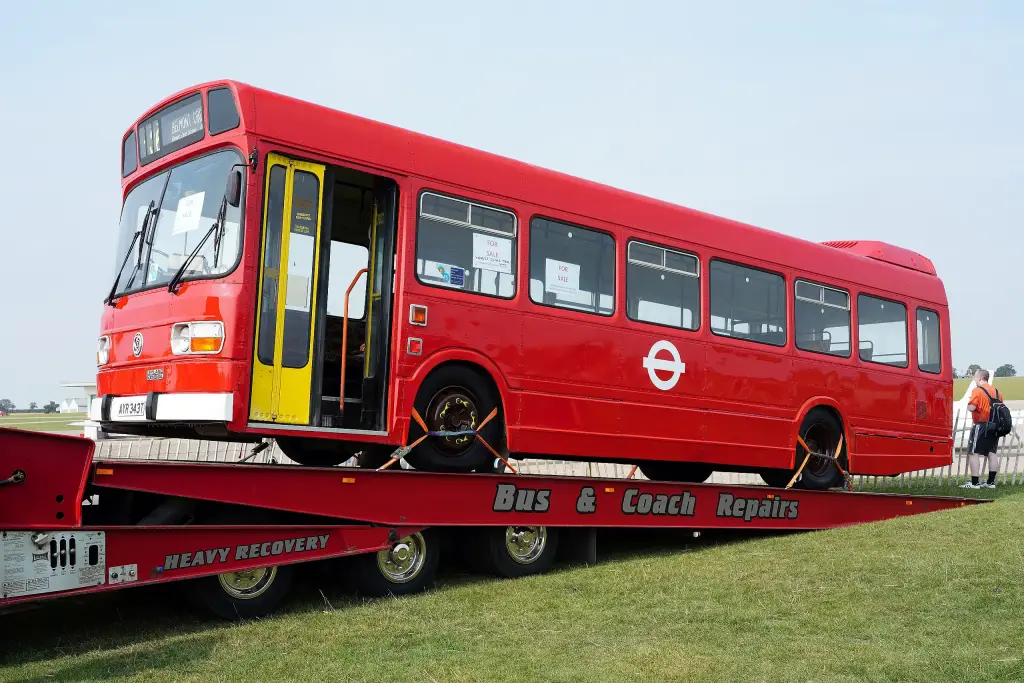
The standard LH was 30 feet long, and the same design was offered as the 26-foot LHS (LH Short) and the 36-foot LHL (LH Long). The chassis was 7.5 feet wide, but bodies up to 8.17 feet — the maximum width of the time — could be fitted, so wide-bodied LHs have their wheels slightly inset in the wheelarches.
Mechanical layout
Buyers could choose between six-cylinder diesels: the Leyland O.400, later replaced by the O.401, or the Perkins H6.354. The 5.8-litre Perkins produced 101 bhp, the 6.54-litre O.400 peaked at 125 bhp and the O.401 from 1971 at 138 bhp. The usual gearbox was a Turner-Clark synchromesh five-speed with an overdrive top gear, and the front and rear axles came from Leyland’s Bathgate factory. Some buses had a Self-Changing Gears semi-automatic transmission and power steering.
The engine sat in the centre of the chassis, but its relatively high position meant several steps at the entrance. It was arranged in the overhang ahead of the front wheels so that the driver could both drive and take fares as passengers boarded. A small number of LHs for Lancashire United Transport, Hants & Dorset and the Midland General group also had a central exit doorway. The radiator was at the front of the chassis and suspension was by half-elliptical leaf springs, though BCV had offered pneumatic suspension on heavier buses since 1962.
Bodies and operators
Bodies came from several manufacturers who adapted them to different operators’ needs, and could be fitted out as buses, coaches or dual-purpose vehicles. Bus bodies usually came from Eastern Coach Works, owned by the same Transport Holding Company, while Plaxton bodies were preferred for coaches. Alexander, Duple, East Lancashire, Marshall, Northern Counties, Weymann and Willowbrook also bodied LHs. The only Weymann body went on the first LHS6L built, for Western Welsh; Weymann had closed in 1965, so the body was transferred from an Albion Nimbus delivered in 1961, with its wheelbase extended and a Lodekka-style grille added for cooling. That bus, Western Welsh’s LHS 1 registered MBO1F, later passed to Thornes of Selby and is preserved.
For the standard LH the 41-seat Plaxton coach and 43-seat ECW bus were most widely used, while Alexander bodies for Ulsterbus had 45 seats. The LHS appeared as both bus and coach with 26 to 35 seats, and the LHL took up to 53 as a coach or 55 as a bus. Between 1975 and 1982 Vanplan built eight with delivery van bodies. Altogether nearly 2,000 LHs were built: 1,505 LH, 174 LHL and 308 LHS.
Operators
Alexander Midland ran 41 LHs with Alexander Y-type bodies and Perkins engines in Scotland, all but the last three as coaches. Bristol Omnibus received six LH buses with semi-automatic gearboxes in 1971 and a further 110 with manual gearboxes between 1975 and 1980. Crosville bought 16 Perkins-engined vehicles in 1969 and 40 with Leyland engines from 1975, and Eastern Counties took 50 LH and 5 LHS buses between 1968 and 1972.
Design and features
- Three lengths: the 30 ft LH, 26 ft LHS and 36 ft LHL on one design.
- Horizontal engine: mounted centrally and ahead of the front wheels for driver-only operation.
- Engine choice: Leyland O.400 and O.401 or Perkins H6.354 diesels of 101 to 138 bhp.
- Many bodybuilders: ECW buses, Plaxton coaches and bodies by Alexander, Duple and others.
Bristol LH versions
- LH (1967–1982): the 30-foot standard chassis, 1,505 built.
- LHS: the 26-foot short version, 308 built, 26 to 35 seats.
- LHL: the 36-foot long version, 174 built, up to 55 seats as a bus.
- Vanplan vans: eight chassis with delivery van bodies, 1975–1982.
The LH filled the gap below the rear-engined Bristol RE and replaced the SU, while the bigger Bristol VR covered double-deck work. More Bristol buses are in the Bristol collection.
Video: VOD88K – BRISTOL LHS – DEVON GENERAL – 88
Video by james19742000 on YouTube.
Sources
- Bristol LH, English Wikipedia: models, engines, bodies, operators