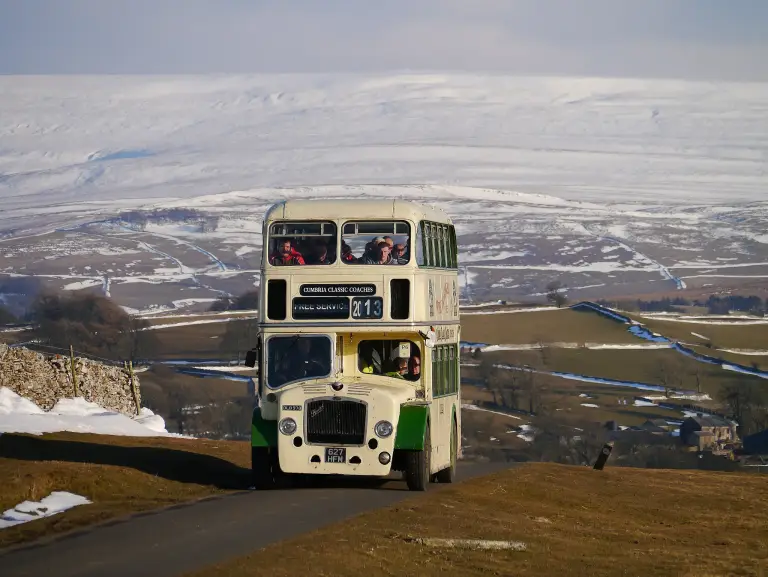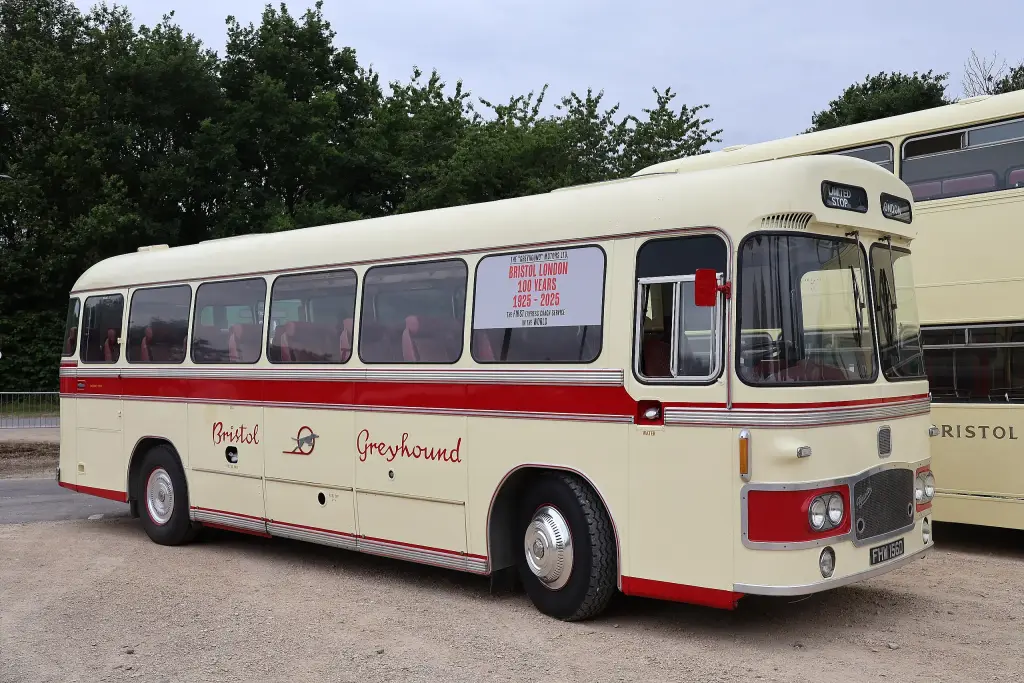
The Bristol MW, whose letters stand for Medium Weight, was a bus and coach chassis designed and built between 1956 and 1966 by Bristol Commercial Vehicles at Brislington. Its horizontal engine under the floor between the axles allowed a flat floor for the entire length, and an entrance ahead of the front axle made it suitable for one-man operation.
Bristol MW at a glance
| Maker | Bristol Commercial Vehicles, Brislington |
|---|---|
| Production | 1956–1966 |
| Name | Medium Weight |
| Engine | Gardner 5HLW or 6HLW, horizontal, under the floor |
| Chassis codes | MW5G for five cylinders, MW6G for six |
| Gearbox | five-speed manual of Bristol make |
| Rear axle ratios | 5:1, 5.5:1 and 6:1 |
| Size | 8 ft wide, 30 ft long, the legal maximum of the time |
| Suspension | multi-leaf springs, air springs optional from 1962 |
| Built | 1,965 chassis |
This page is based on the English Wikipedia article on the Bristol MW.
History of the Bristol MW
The MW had a horizontally mounted engine under the floor between the two axles, which allowed an entrance ahead of the front axle and a flat floor for the whole length, making the bus suitable for one-man operation. A bodybuilder then mounted either a bus or a coach body on the chassis. The MW replaced the earlier LS, which had been designed as an integral bus or coach for the sister company Eastern Coach Works at Lowestoft only, preventing the sale of the mechanical underframe to other bodybuilders once a change of company control allowed that to happen. A few chassis went to Alexander at Falkirk for bodies to Scottish Bus Group specifications.
Engines and transmission
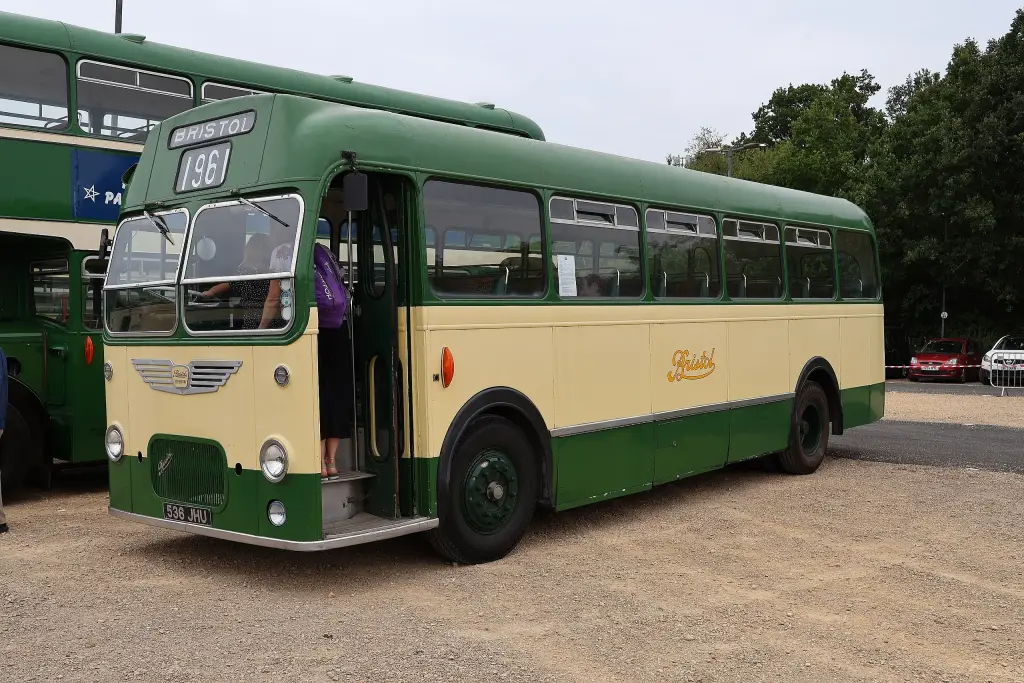
Unlike the earlier LS, which experimentally housed AEC and Rootes TS3 engines, all MW chassis used Gardner 5HLW five-cylinder or 6HLW six-cylinder engines, the chassis type being MW5G or MW6G. In horizontal form these engines were deep, so the finished vehicle’s floor was high and the entrance steps steep. Transmission was a Bristol-made five-speed manual with synchromesh cones that did not wear well, so drivers still had to match engine and road speed when changing gear. The rear axle came in three ratios of 5:1, 5.5:1 and 6:1, of which 5.5:1 was by far the most popular, while 6:1 was standard for bus versions built for Bristol Omnibus Company.
Size and suspension
The vehicle was built to the legal maximum limits of its day, 8 feet wide and 30 feet long. When longer 36-foot and wider 8 ft 2½ in vehicles were allowed, BCV did not extend this chassis and moved instead to a new rear-engined concept. Even so, as late as 1962 an option was designed to fit air springs instead of the traditional multi-leaf springs. The air-sprung version was popular for chassis intended for coach bodywork just before the 36-foot model arrived on the RE chassis, though few customers specified it for buses; Bristol Omnibus was the main one, reasoning that gentler suspension reduced stress and damage to chassis and body and cut lifetime costs. Its chief engineer, Mr E Hardy, was sorely displeased when the option was withdrawn for the last year of production.
Refinements and production
Later in production came options to improve fuel consumption and heating, including a front-mounted radiator with Varivane wax-capsule shutters and a thermostatically controlled electric fan in place of the underfloor radiator and its constantly driven fan. An exhaust boiler was also available, with a temperature-controlled valve that diverted exhaust gas through a heat exchanger in the cooling system to warm the engine faster and keep passengers comfortable in cold weather. Some chassis had an exhaust brake, though many had it removed later.
Chassis production was authorised by the BCV board in tranches called sanctions, each vehicle carrying a cast plate such as 135.001 for the first vehicle of the 135 sanction. The sanctions ran from 135 in December 1956 to 233 in 1966, and a total of 1,965 Bristol MW chassis were built. Those bodied by ECW were driven by road to Lowestoft by weather-swept crews of drivers, while chassis going to Alexander travelled by rail.
Design and features
- Flat floor: an underfloor horizontal engine gave level flooring along the whole bus.
- One-man operation: the entrance ahead of the front axle let the driver collect fares.
- Gardner power: five- or six-cylinder Gardner 5HLW and 6HLW diesels only.
- Air spring option: offered from 1962 and favoured for coach chassis.
Bristol MW versions
- MW5G: chassis with the five-cylinder Gardner 5HLW.
- MW6G: chassis with the six-cylinder Gardner 6HLW.
- Air-sprung MW: optional from 1962, mainly for coach bodies.
- Alexander-bodied MW: a few chassis bodied for Scottish Bus Group companies.
The MW replaced the LS and was itself replaced by the rear-engined Bristol RE. Double-deck Bristol buses are covered by the Bristol Lodekka and Bristol VR; more are in the Bristol collection.
Video: Bristol MW CUG27 Cab ride Skipton Oct2009
Video by Kevin Jagger (Superkev6969) on YouTube.
Sources
- Bristol MW, English Wikipedia: design, engines, options, production