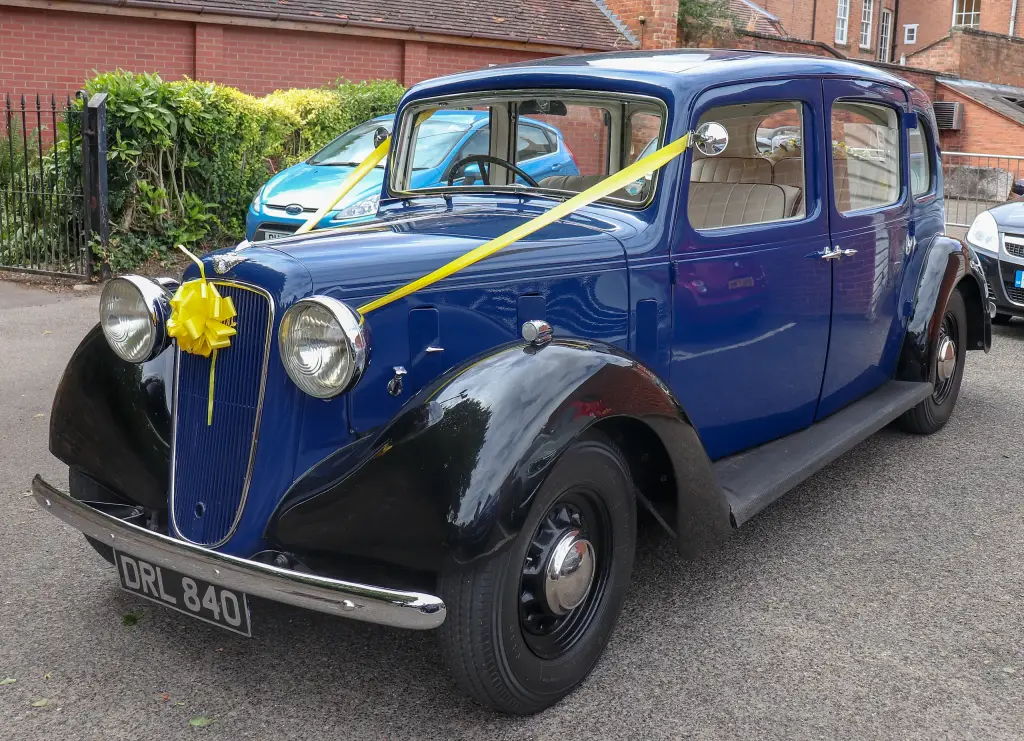
The Austin Eighteen is a large saloon car, supplied in two different wheelbases to carry five or seven passengers, introduced by Austin on 14 July 1937. Its engine and front seat were mounted nine inches further forward than on the old York Sixteen that it replaced.
Austin 18 (York and Windsor) at a glance
| Introduced | 14 July 1937 |
|---|---|
| Replaced | the York Sixteen (18 hp York) |
| Body | five- or seven-passenger saloon on two wheelbases |
| Layout changes | engine and front seat 9 inches (230 mm) further forward; chassis 3 inches (76 mm) longer; 12 inches (300 mm) more passenger space |
| Engine | carried forward from the 18 hp York, with small improvements; 1938 season higher compression, bigger valves and an aluminium head with thermostat |
| Gearbox | Austin four-speed with synchromesh on 2nd, 3rd and top |
| Brakes | Girling rod brakes |
| Steering | Marles-Weller, adjustable column |
This page is based on English Wikipedia only (a trusted source), so the facts were not cross-checked against a second source.
History of the Austin 18 (York and Windsor)
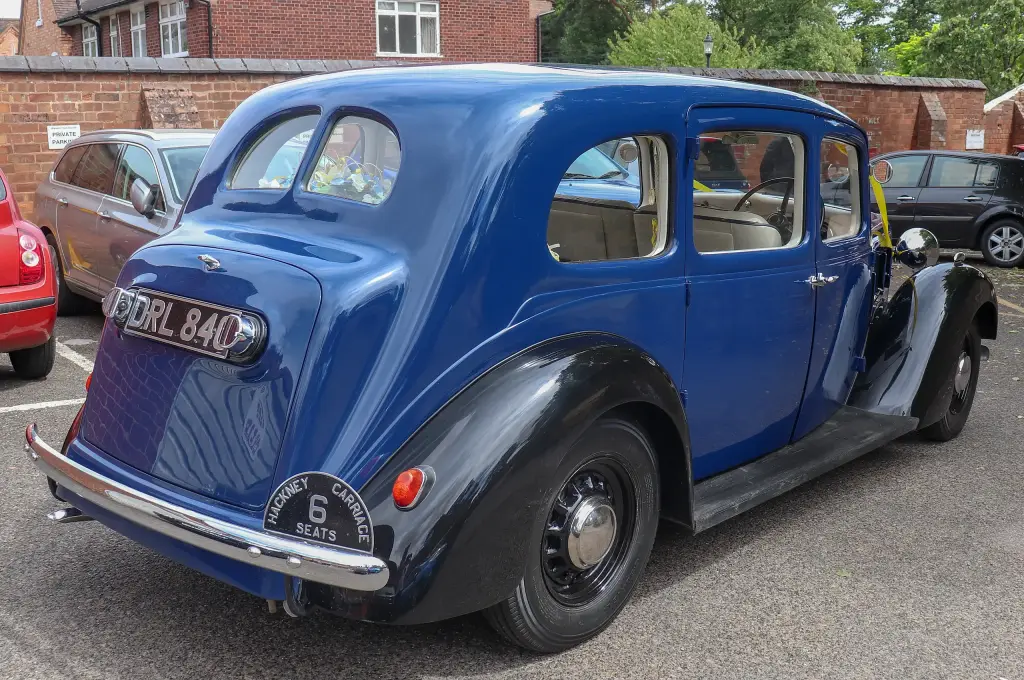
The chassis extended three inches and the engine and front seat moved nine inches forward, providing a total of twelve inches more passenger space. One result was a relatively short bonnet and a good driving position. The new shape followed the lines of the other Austin cars introduced the previous autumn, and the car was remarkable for a completely flat floor in both front and rear passenger compartments, exceptionally wide doors and draught-free ventilation.
Chassis
The engine and gearbox unit had four live rubber mountings, and the silencer and exhaust pipe were similarly insulated. The frame was rigidly cross-braced with the deep side members dropped to give a low body mounting; where the cross-bracings met the side members they were welded to form a box section for stiffness.
Engine, gearbox and running gear
The engine, carried forward from the 18 hp York model of the Sixteen, had small improvements that increased its output, and it benefited from improvements made to the 12 hp engine in the new Ascot of 1936. The crankshaft ran on four bearings with shell main and big-end bearings. The 1938 engine had higher compression, bigger valves and an aluminium cylinder head with thermostat, which often cracked on removal. The gearbox was Austin’s own four-speed with synchromesh on 2nd, 3rd and top, with a Borg and Beck dry-plate clutch and a two-piece propshaft with a rubber-mounted central bearing.
Braking was by Girling rod brakes, similar to the Austin 14 Goodwood. The steering column was adjustable for length and the Marles-Weller steering system had been improved; because the engine had moved forward, the track rod was now forward of the front axle. The suspension used low-periodicity half-elliptical springs, zinc interleaved, with oilite self-lubricating discs at the ends of the main leaves.
Road test
A contemporary road test of the Windsor car called it roomy and well-proportioned, with unusually wide and deep side windows, two good-sized suitcases in the boot above a separate compartment for the spare wheel, and generous seating.
Design and features
- Layout: engine and front seat moved forward for a short bonnet and more space.
- Floor: a completely flat floor front and rear.
- Engine: the York 18 hp unit with small improvements.
- Gearbox: four-speed with synchromesh on 2nd, 3rd and top.
Austin 18 (York and Windsor) versions
- Eighteen five-seater and seven-seater (1937): two wheelbases.
- Windsor: the saloon described in the road test.
More Austin cars are in our Austin collection, for example the Austin 16 that it replaced, the Austin 12/6 and the Austin Twenty.
Austin 18 (York and Windsor) questions and answers
When was the Austin Eighteen introduced?
On 14 July 1937.
What did it replace?
The York Sixteen.
What was new about the layout?
The engine and front seat were moved nine inches forward, giving twelve inches more passenger space and a flat floor.
What gearbox did it have?
An Austin four-speed with synchromesh on 2nd, 3rd and top.
What brakes did it have?
Girling rod brakes.
Sources
- Austin 18, English Wikipedia: introduction, chassis, engine, road test