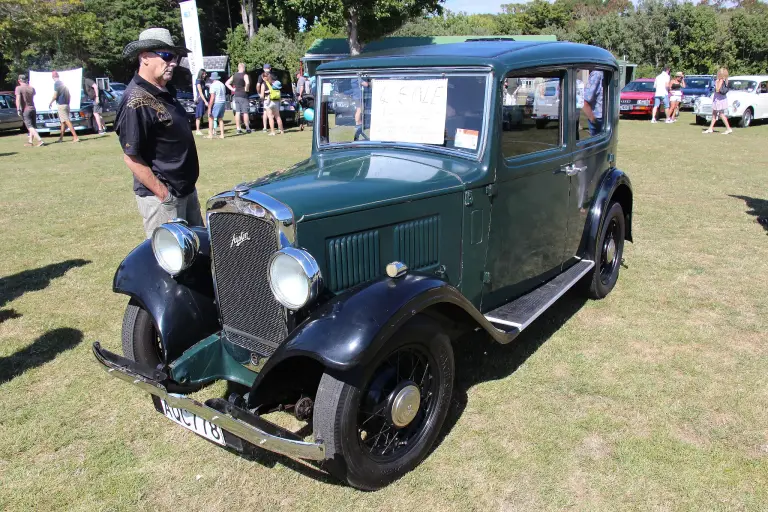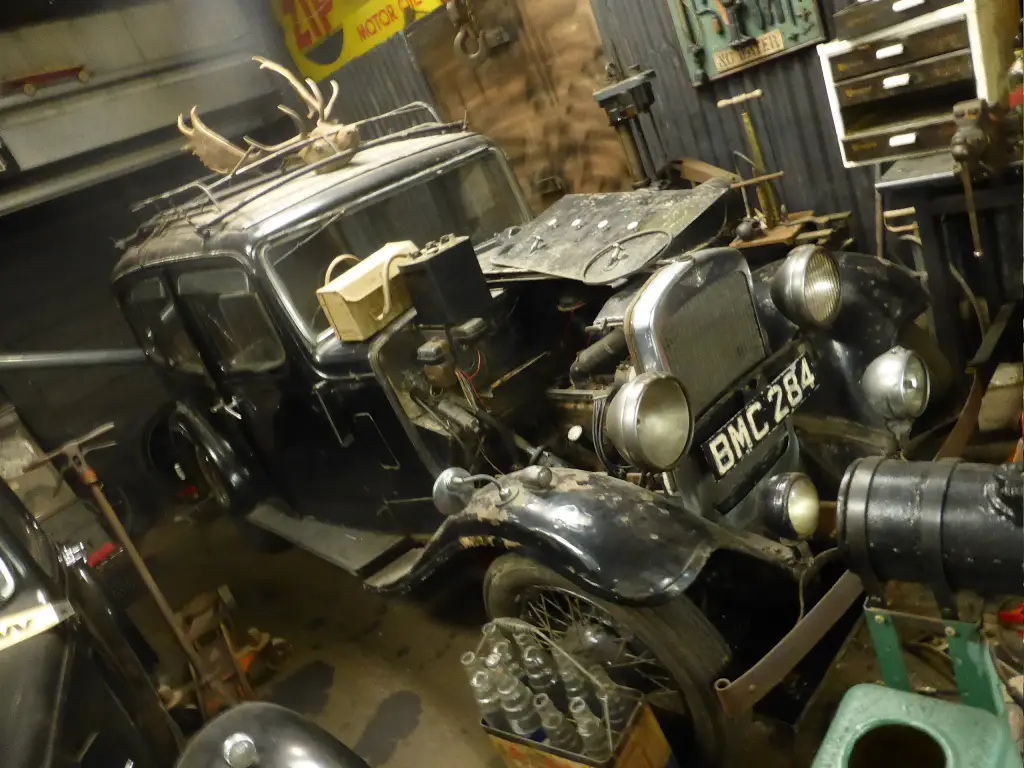
The Austin Light Twelve-Six is a 14 tax horsepower car with a 1,496 cc engine, introduced by Austin in January 1931. It was named Light Twelve to separate it from the well-established Austin Twelve, which the public then dubbed the Heavy Twelve, though Austin never used that name. It remained in production until 1936.
Austin 12/6 and Goodwood at a glance
| Introduced | January 1931 |
|---|---|
| Produced | until 1936 |
| Tax rating | 14 tax horsepower |
| Engine | new side-valve six-cylinder, 1,496 cc; a 65.5 mm bore 1,711 cc option from August 1933 |
| Gearbox | three-speed at first; four-speed Twin-Top from 1932, standard in 1933; synchromesh from August 1933 |
| Chassis | semi-elliptic springs and rigid axles; a new dropped, cross-braced frame in August 1933 |
| Electrics | 12-volt |
| Replaced by | the Austin Goodwood 14 (16 tax horsepower) saloon in August 1936 |
This page is based on English Wikipedia only (a trusted source), so the facts were not cross-checked against a second source.
History of the Austin 12/6 and Goodwood
There was a vogue among British car makers in the early 1930s for small-capacity six-cylinder engines, and the Light Twelve-Six was Austin’s version. The side-valve engine was new and initially of 1,496 cc. Thermostatic control of the cooling system was added in September 1932, and a larger 1,711 cc option with a 65.5 mm bore was available at no extra charge from August 1933.
Gearbox and chassis
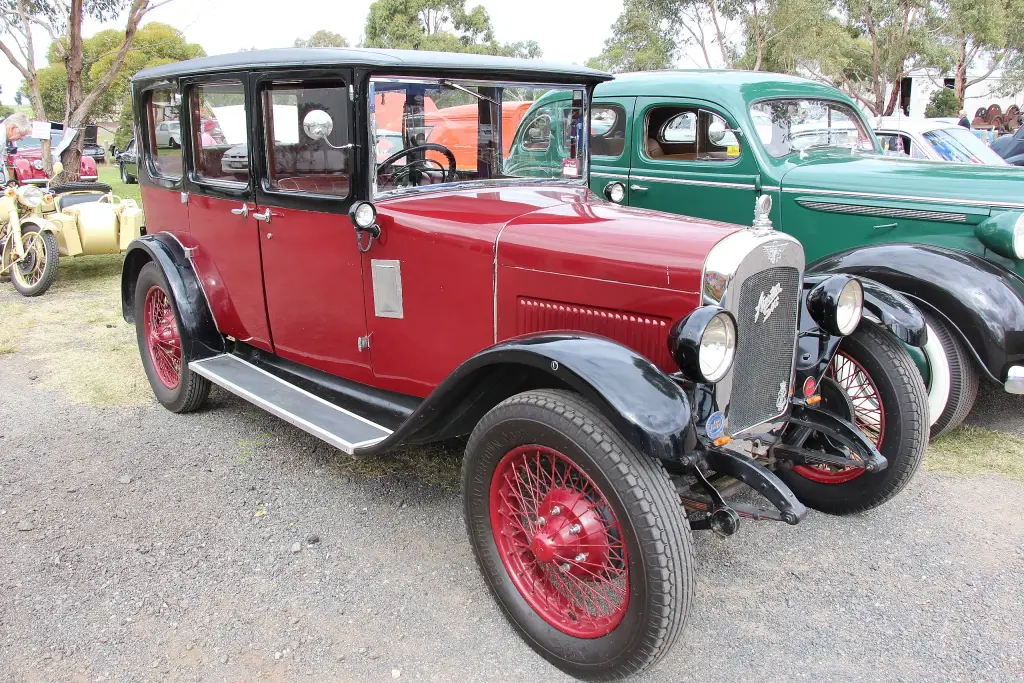
A three-speed gearbox was supplied at first, but a new four-speed Twin-Top version was an option from 1932 and became standard in 1933. A synchromesh gearbox was announced in August 1933 together with the larger engine and new chassis and bodywork. The chassis was very conventional, with semi-elliptic leaf springs on all wheels and rigid axles front and rear; the transmission brake was dropped in favour of brakes on the road wheels, and steering was by worm and wheel, changed in August 1935 to hour-glass worm and sector. The electrical system for lighting and starting was 12-volt.
From September 1932 the chassis was shared with the four-cylinder Light Twelve-Four as well as the original Austin Twelve. In August 1933 a newly designed chassis was introduced for the Twelve-Six and Twelve-Four, with a dropped and cross-braced frame under the new bodies, new axles and brakes, and a modified rear axle with combined load and thrust journals to reduce weight.
Goodwood 14
In August 1936 the Austin Goodwood 14, of 16 tax horsepower, with its “sound insulated coachwork”, took the place of the Twelve-Six saloons. The tourers remained available, and the Goodwood was also available as a separate chassis.
Equipment
Standard items included an air cleaner, an electric windscreen wiper, a large reflecting mirror, a clock and a petrol gauge, and a motometer.
Design and features
- Engine: a side-valve six of 1,496 cc, with a 1,711 cc option.
- Gearbox: a Twin-Top four-speed, with synchromesh from 1933.
- Chassis: conventional, with a dropped, cross-braced frame from August 1933.
Austin 12/6 and Goodwood versions
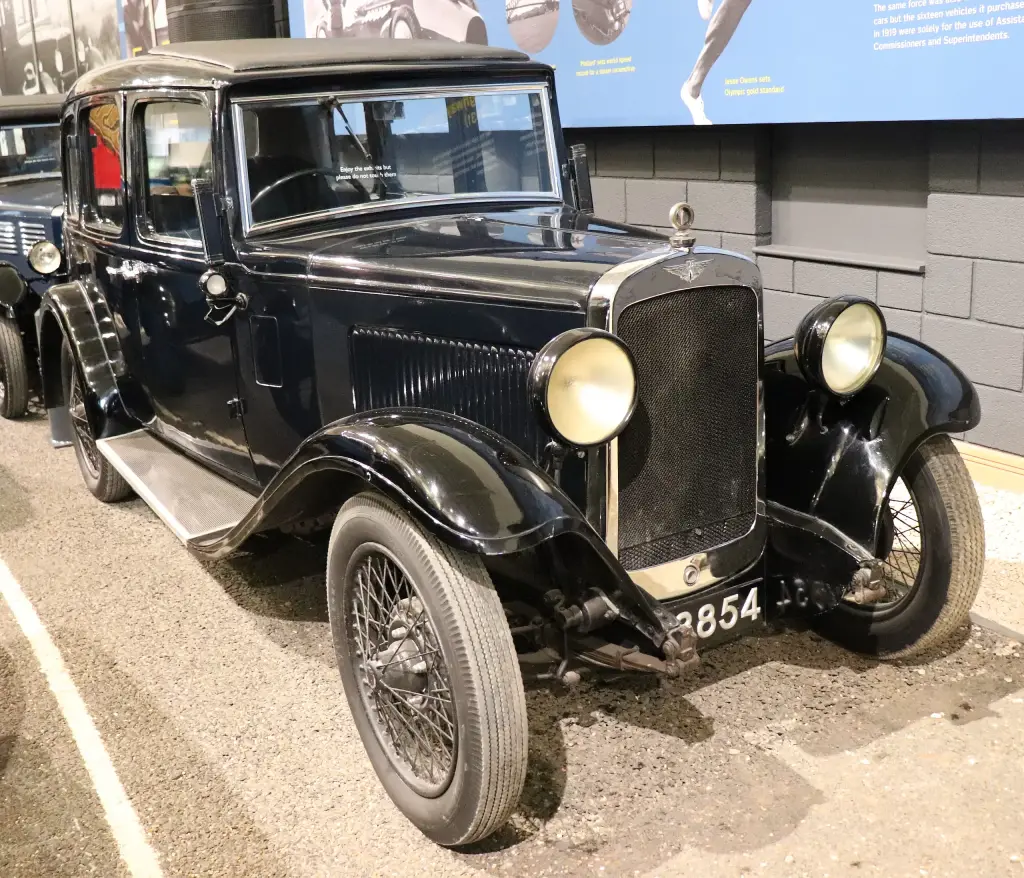
- Light Twelve-Six (1931–1936): the six-cylinder car.
- Light Twelve-Four: the four-cylinder sister model sharing the chassis from 1932.
- Goodwood 14 (from August 1936): the successor saloon.
More Austin cars are in our Austin collection, for example the Austin 12, the Austin 16 and the Austin 18.
Austin 12/6 and Goodwood questions and answers
What is the Austin Light Twelve-Six?
A 14 tax-horsepower car with a six-cylinder 1,496 cc engine, introduced in January 1931.
Why was it called Light Twelve?
To separate it from the established Austin Twelve.
When did it end?
In 1936; the Goodwood 14 replaced the saloons in August 1936.
Did it have a bigger engine option?
Yes, a 1,711 cc engine from August 1933.
What gearbox did it have?
Three-speed at first, a four-speed Twin-Top from 1932 and synchromesh from August 1933.
Sources
- Austin 12/6, English Wikipedia: overview, engine, chassis, Goodwood