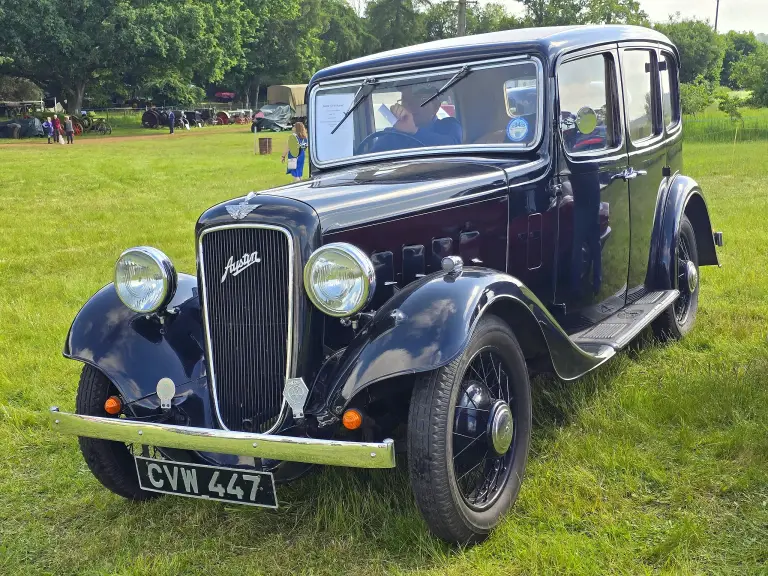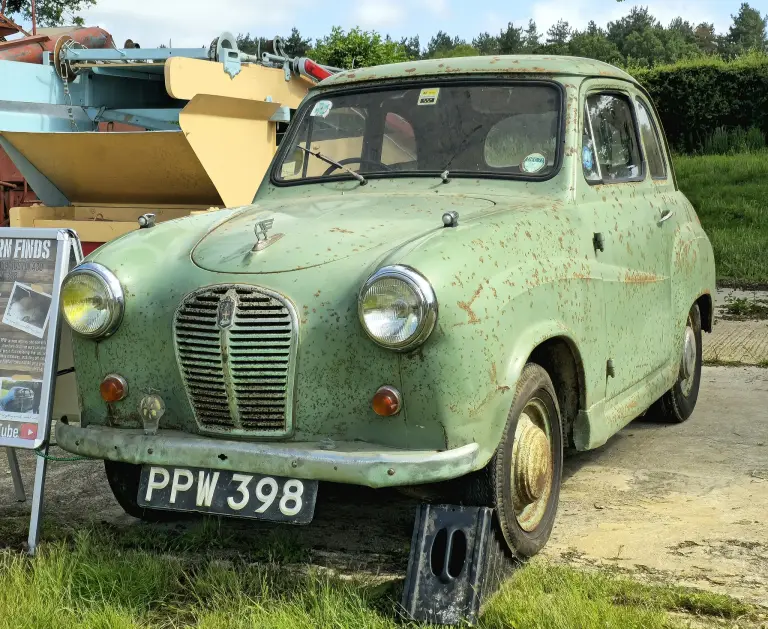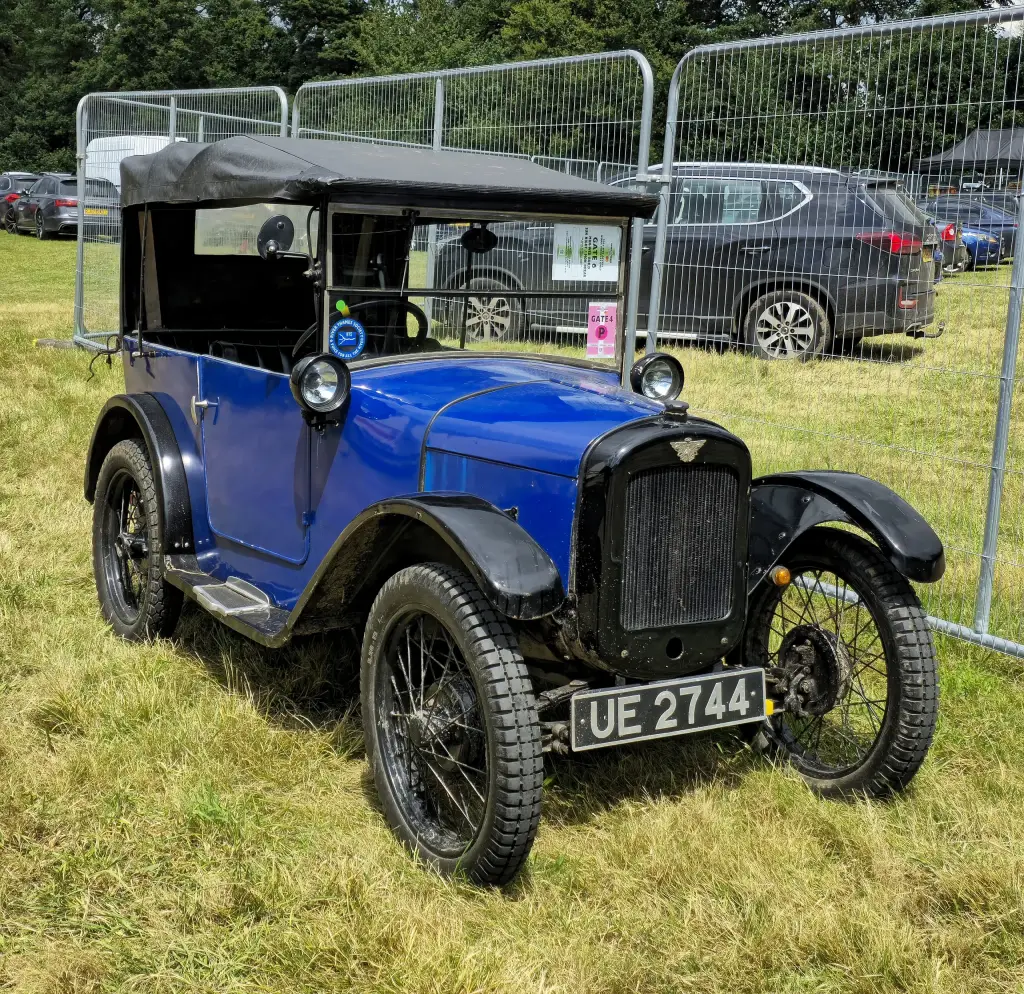
The Austin 7 is an economy car that was produced from 1922 until 1939 in the United Kingdom by Austin. It was nicknamed the “Baby Austin” and was at that time one of the most popular cars produced for the British market and sold well abroad. Its effect on the British market was similar to that of the Model T Ford in the US, replacing most other British economy cars and cyclecars of the early 1920s.
Austin 7 at a glance
| Produced | 1922–1939 |
|---|---|
| Designer | Sir Herbert Austin with 18-year-old draughtsman Stanley Edge |
| Original engine | 696 cc side-valve four-cylinder (55 by 77 mm), RAC rating 7.2 hp, on an aluminium crankcase |
| Gearbox | three-speed |
| Licensed or copied | BMW Dixi (Germany), Rosengart (France), American Austin Car Company (USA), early Nissan cars in Japan |
| Other uses of the name | early A30 (1951) and Mini (1959) |
| Sports versions | Ulster, named after the 1929 RAC Tourist Trophy at Ards |
| Coachbuilt | Austin Seven Swallow of 1927 |
This page is based on English Wikipedia only (a trusted source), so the facts were not cross-checked against a second source.
History of the Austin 7
Until the First World War Austin built mainly large cars; in 1909 it sold a single-cylinder small car built by Swift of Coventry called the Austin 7 hp. In 1920 Sir Herbert Austin began work on a smaller car, mainly for young families wanting an affordable motor car, spurred by the Horsepower Tax introduced in 1921. His concept was a departure from the company’s conservative past and met considerable opposition from his board and creditors. Because the company was in receivership, Austin carried out the project himself and in 1921 hired an 18-year-old draughtsman, Stanley Edge, from the Longbridge factory to help draw the detailed plans, working in the billiard room of Austin’s Lickey Grange home.
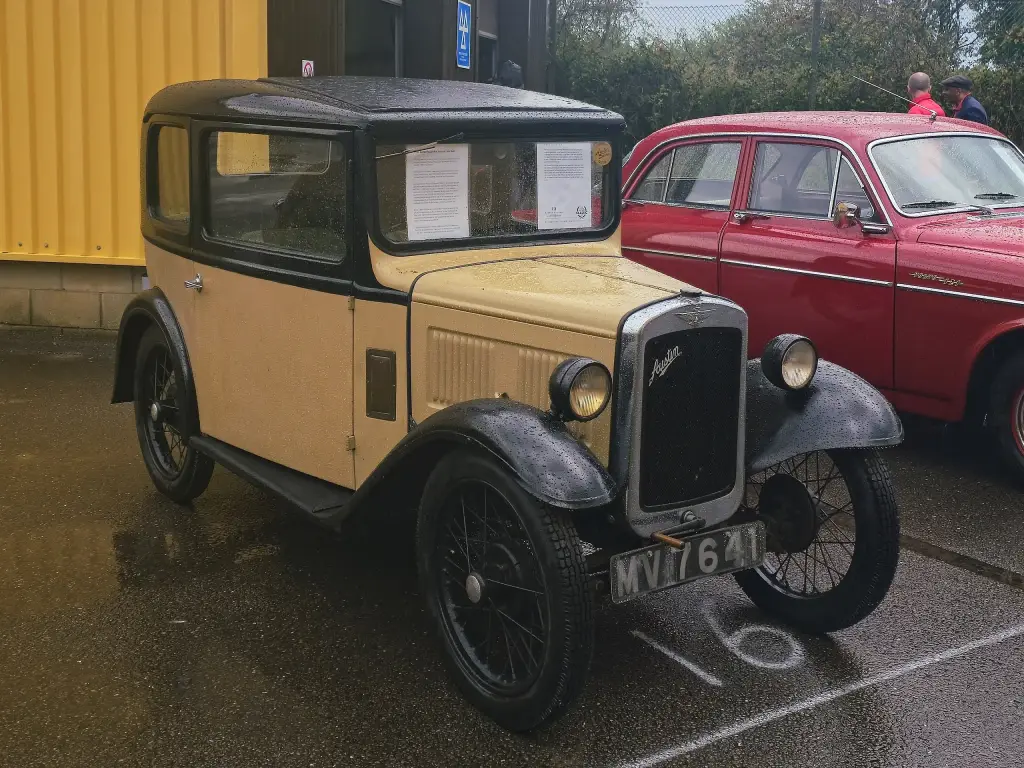
Edge later claimed to have convinced Austin to use a small four-cylinder engine. The original side-valve design had a capacity of 696 cc (55 mm by 77 mm), giving a RAC rating of 7.2 hp, with a cast block with detachable head on an aluminium crankcase. Austin was largely responsible for styling the Seven, reportedly influenced by the Peugeot Quadrilette.
Licensed and copied worldwide
The Austin 7 was licensed and copied by companies all over the world. The first BMW car, the BMW Dixi, was a licensed Austin 7. In France they were made and sold as Rosengarts, and in the United States they were built by the American Austin Car Company. In Japan Nissan used the 7 design as the basis for its first cars, although not under licence, which led to a 1952 agreement for Nissan to build and sell Austins under the British Motor Corporation in Japan.
Body styles and sports cars
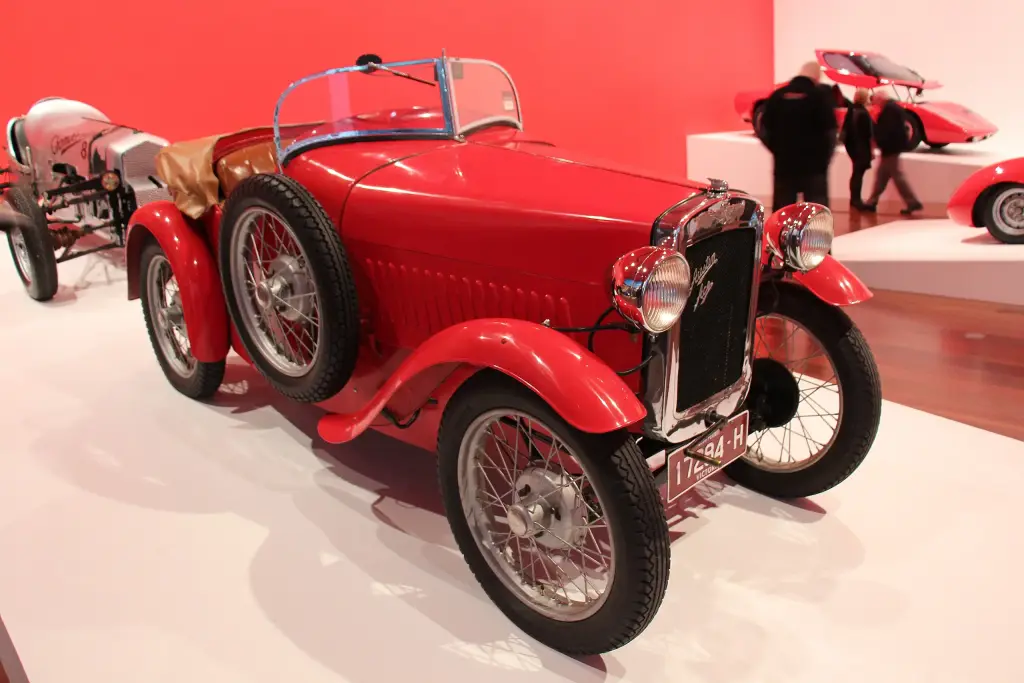
The Seven was made as tourers, saloons, cabriolets, sports cars, coupés and vans. The Ulster sports version gained its name from a strong performance in the 1929 RAC Tourist Trophy held at the Ards circuit in County Down, where Archie Frazer-Nash finished third and S. V. Holbrook fourth. In 1927 William Lyons, co-founder of the Swallow Sidecar Company, saw commercial potential in re-bodying the Austin 7 and commissioned coachbuilder Cyril Holland to produce a distinctive open tourer, the Austin Seven Swallow. The Gordon England fabric “de luxe” saloon stayed in the catalogue into the early 1930s at a £20 premium.
Specials and legacy
Many Austin 7s were rebuilt as “specials” after the Second World War, including the first race car built by Bruce McLaren and the first Lotus, the Mark I. Companies such as Speedex in Luton thrived in the late 1950s producing race-proven bodies and engine parts for the Seven chassis. The power of the name was such that Austin re-used it for early versions of the A30 in 1951 and the Mini in 1959.
Design and features
- Engine: a 696 cc side-valve four on an aluminium crankcase.
- Chassis: an “A” frame chassis.
- Controls: the first mass-market car with a “conventional” control layout, according to the page.
Austin 7 versions
- Tourer, saloon, cabriolet, coupé, van: the standard body styles.
- Ulster: the sports version named after the 1929 Tourist Trophy.
- Swallow (1927): the open tourer coachbuilt for William Lyons.
- Specials: home- and race-built cars on the Seven chassis.
More Austin cars are in our Austin collection, for example the Austin 10 and the Austin 12 above it, the A30 that revived its name and the Mini.
Austin 7 questions and answers
When was the Austin 7 built?
From 1922 to 1939.
Why is it called the Baby Austin?
It was the small economy car nicknamed the “Baby Austin”, as popular in Britain as the Model T in America.
Which cars were based on it?
The BMW Dixi, the French Rosengart, the American Austin and early Nissans.
Why is the sports model called Ulster?
After a strong performance in the 1929 RAC Tourist Trophy at Ards.
Who started with an Austin 7 special?
Bruce McLaren built his first race car on one, and the first Lotus, the Mark I, was an Austin 7 special.
Video: Austin 7 video review by autocar.co.uk
Video by Autocar on YouTube.
Sources
- Austin 7, English Wikipedia: history, licensing, body styles, specials