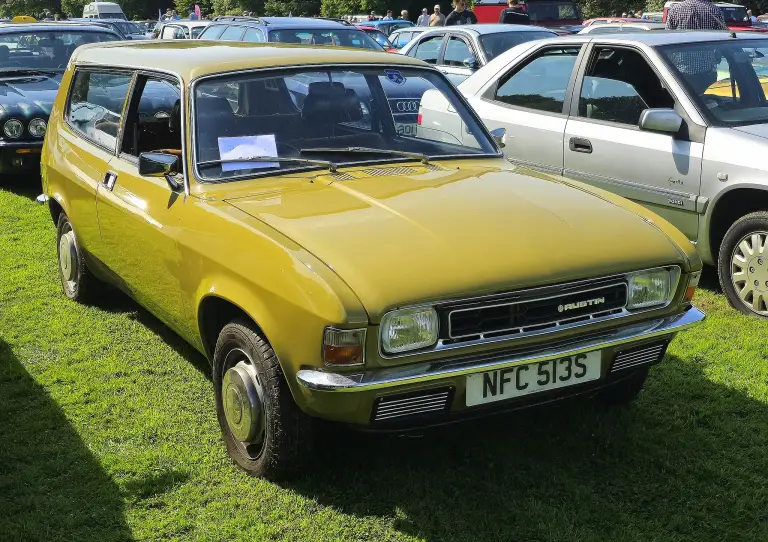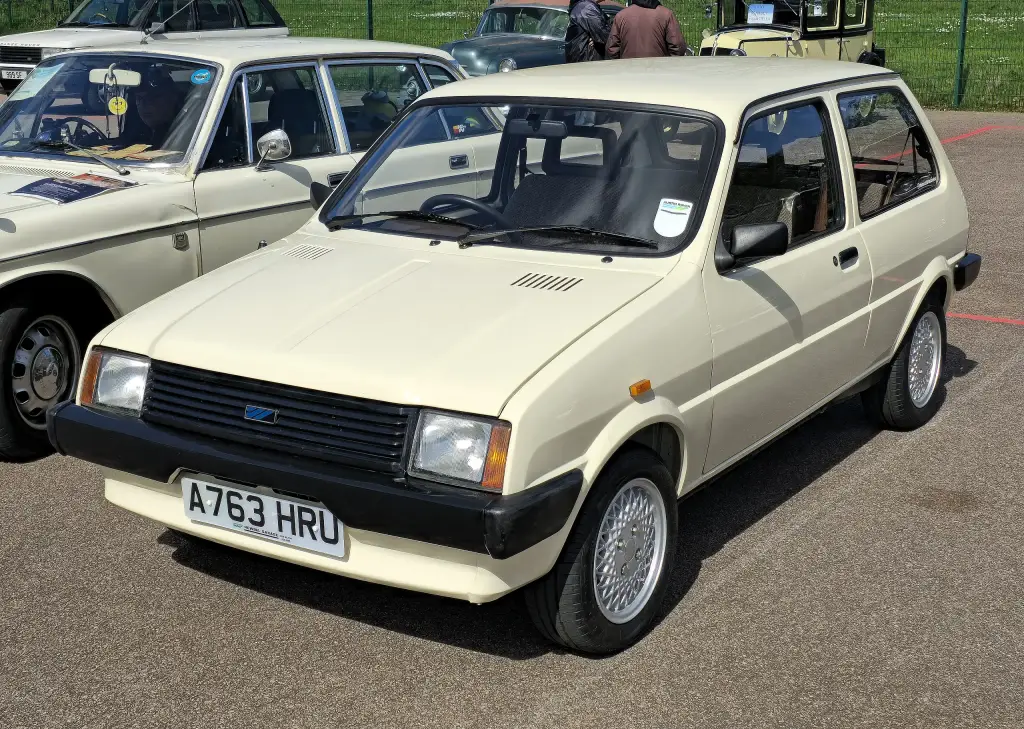
The Metro is a supermini car, later a city car, that was produced from 1980 to 1997, first by British Leyland and later by its successor the Rover Group. The Metro was intended to complement and eventually replace the original Mini. It was launched as the Austin Mini Metro sold under the Austin badge, and in 1982 sportier MG versions were made available.
Austin Metro at a glance
| Produced | 1980 to 1997 |
|---|---|
| Built | 2,078,218 Metros of all types |
| Launched as | Austin Mini Metro |
| MG versions | from 1982 |
| Name change | sold simply as “Metro” from 1987 after the end of the Austin brand |
| Redesign | 1990, under the Rover brand; sold as the Rover 100 abroad |
| Van | sold under the Morris badge and later as the Metrovan |
| Ended | 23 December 1997, as the Rover 100 |
This page is based on English Wikipedia only (a trusted source), so the facts were not cross-checked against a second source.
History of the Austin Metro
British Leyland’s last all-new mass-produced car before the Metro was the 1976 Rover SD1. Plans for a replacement for the Mini had been afoot within BL since the early 1970s, but none of the concepts got beyond the initial design stages, largely due to a shortage of funds and the company’s bankruptcy and government bailout in 1975. Meanwhile the modern supermini market had evolved into two-box hatchbacks, beginning with the Fiat 127 in 1971 and the Renault 5 in 1972, followed by cars such as the Ford Fiesta and Volkswagen Polo.
The roots of the Metro lay in an earlier project denoted ADO88 (Austin Drawing Office, 88-inch wheelbase), intended as a direct replacement for the Mini. By 1977 the ADO88 was in an advanced state of development with running prototypes, but poor reception of its styling at customer clinics led to a change of direction.
Success and renaming
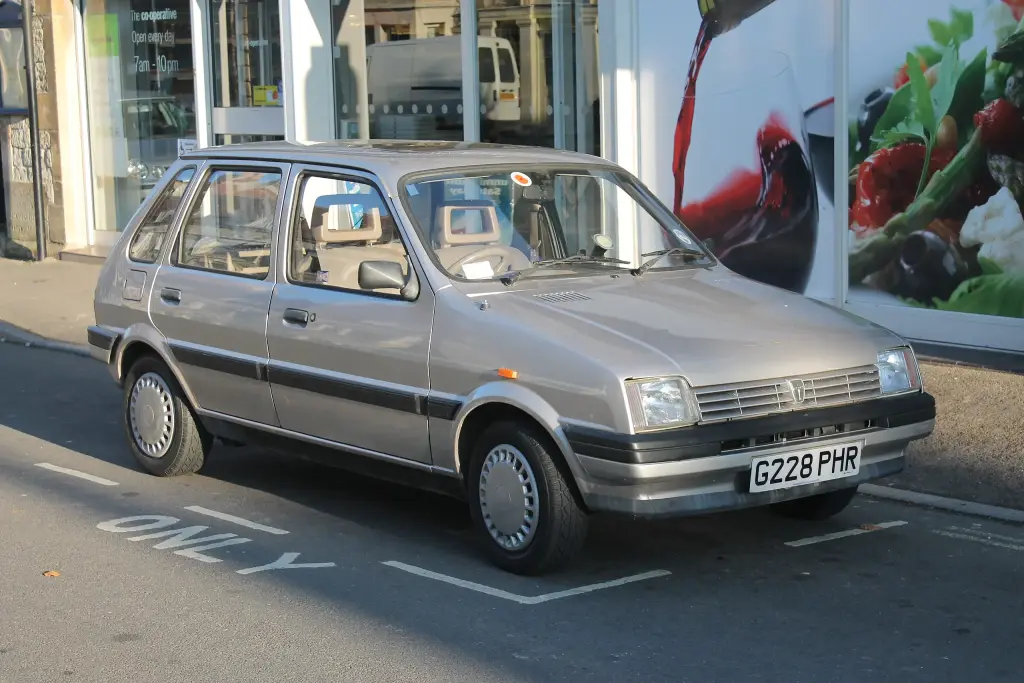
The Metro quickly proved popular and became Britain’s best-selling car for some time. From 1987 the car was sold simply as the “Metro” after the cessation of the Austin brand. In 1990 it was redesigned and sported the Rover brand name, sold as the Rover 100 abroad, which also replaced the Metro nameplate in Britain from 1995. The R3-generation Rover 200 introduced in 1995 had originally been designed as a replacement for the Metro, but was not marketed as such. The Metro finally ceased production on 23 December 1997, outliving by three years the original Mini it had been meant to replace.
Design and features
- Class: a supermini, later a city car.
- Role: to complement and eventually replace the Mini.
- Van: a Morris-badged version, later the Metrovan.
Austin Metro versions
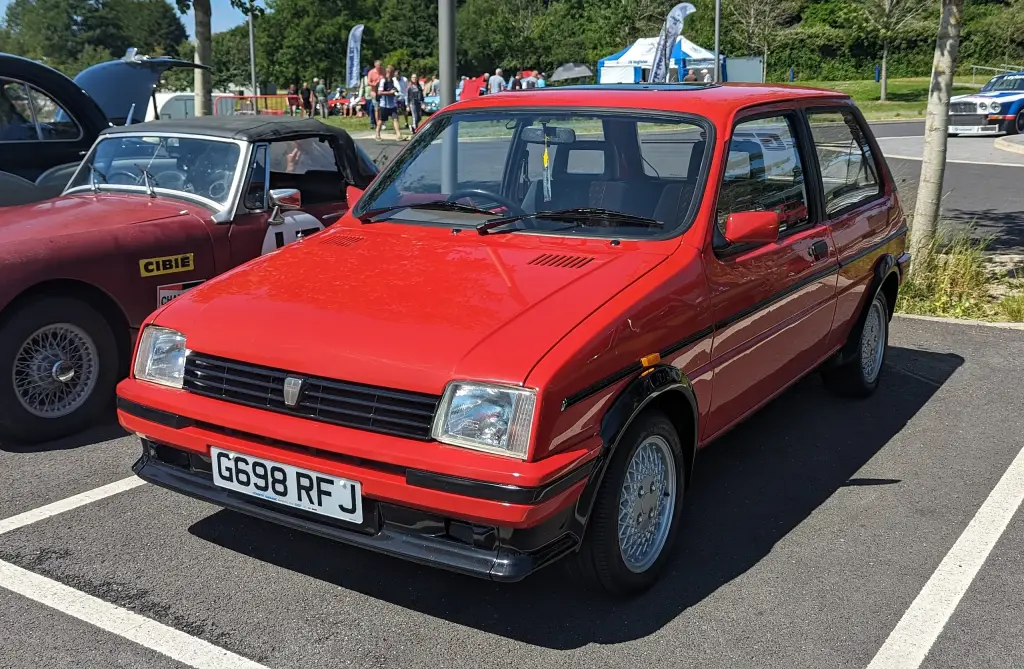
- Austin Mini Metro (1980).
- MG Metro (from 1982): the sportier versions.
- Metro and Rover 100 (1987–1997).
- Metrovan.
More Austin cars are in our Austin collection, for example the Mini it was meant to replace, the Maestro and the Montego.
Austin Metro questions and answers
When was the Austin Metro built?
From 1980 to 1997.
Was it first called the Mini Metro?
Yes, it was launched as the Austin Mini Metro.
How many were built?
2,078,218 of all types.
What happened in 1990?
It was redesigned and carried the Rover name, sold abroad as the Rover 100.
When did production end?
On 23 December 1997.
Video: Austin Metro Review (Top Gear 1991)
Video by kazimann on YouTube.
Sources
- Austin Metro, English Wikipedia: development and history