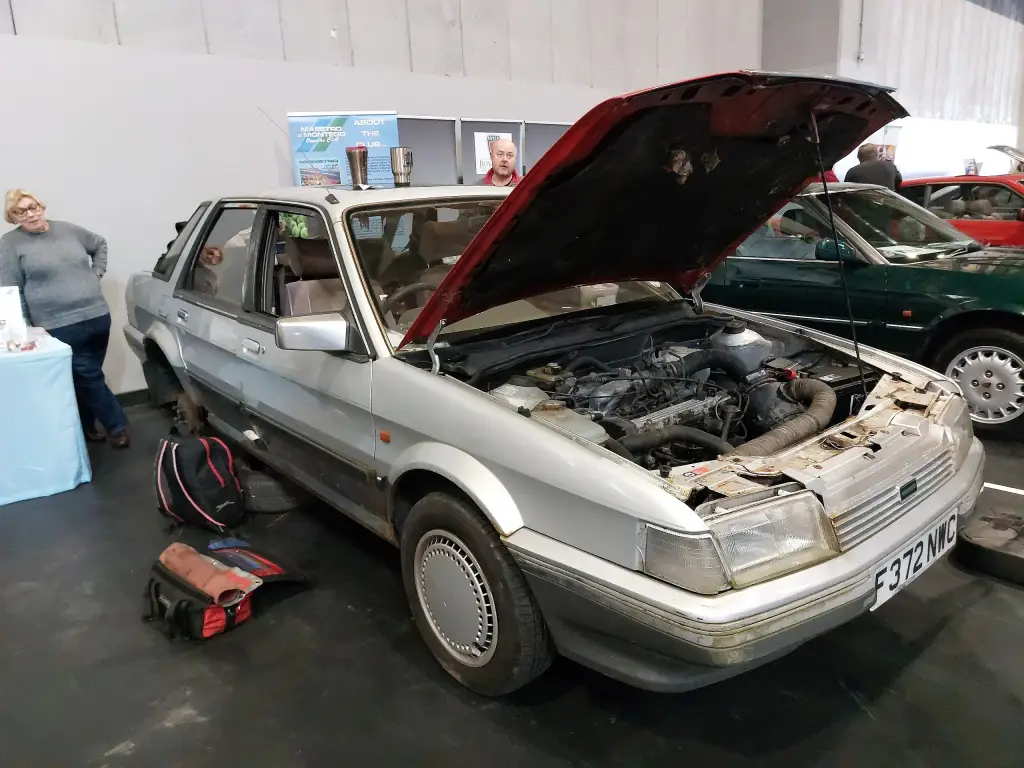
The Austin Montego is a British family car that was produced from 1984 to 1994, first by British Leyland and then by its successor the Rover Group. The Montego was the replacement for both the rear-wheel drive Morris Ital and the front-wheel drive Austin Ambassador ranges, giving British Leyland an all-new competitor for the Ford Sierra and Vauxhall Cavalier.
Austin Montego at a glance
| Produced | 1984 to 1994 |
|---|---|
| Saloon ended | 1993, after the Rover 600 Series arrived |
| Estate ended | December 1994 |
| Project | LM11, a four-door notchback of LC10 |
| Replaced | Morris Ital and Austin Ambassador |
| Rivals | Ford Sierra and Vauxhall Cavalier |
| New engine | S-series SOHC |
| Marque | the last car launched as an Austin; sold without a marque after the 1989 model year facelift |
This page is based on English Wikipedia only (a trusted source), so the facts were not cross-checked against a second source.
History of the Austin Montego
The Montego started life as a four-door notchback variant of project LC10. Development of the new model, intended to succeed both the Morris Marina and the Princess ranges by the turn of the 1980s, had begun in 1977, but the car was not launched until seven years later; meanwhile the Marina was updated as the Morris Ital in 1980 and the Princess as the Austin Ambassador in 1982. The Honda-based Triumph Acclaim, introduced in 1981, was a stop-gap to keep buyers interested until the Montego and Rover 200 arrived in 1984.
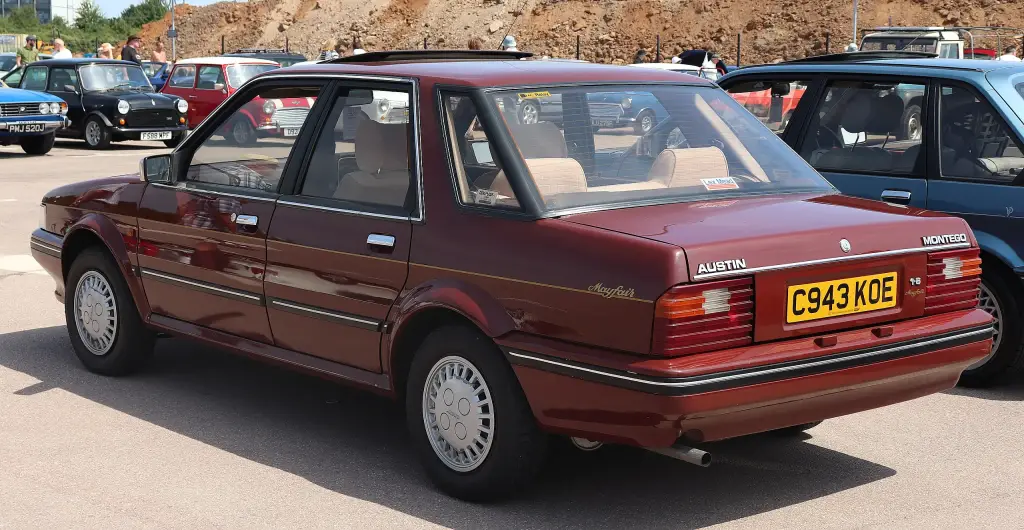
The Austin Maestro emerged as the five-door hatchback variant. When the designs diverged the Montego became project LM11 (the Maestro being LM10), and stayed based on a lengthened version of the LC10 chassis with a Golf-style front MacPherson strut and rear twist beam. The Montego received different front and rear styling after designer David Bache was replaced by Roy Axe, and it featured body-coloured bumpers and front wipers that hid under the bonnet when parked.
Improvements and variants
The Montego offered many improvements over the Maestro, several later incorporated into it, such as the new SOHC S-series engine and a more robust dashboard, which included a rally-style tachometer, a service indicator and a representation of the car showing open doors and lights left on. As with the Maestro there was a high-performance MG version with a solid-state instrument cluster, trip computer and synthesised voice. An estate followed, with larger luggage capacity than its rivals.
Rover badge
On its launch it was sold as both an Austin and a performance-enhanced MG. It was the last car launched under the Austin marque, which was used until a facelift introduced for the 1989 model year; afterwards the Montego was sold without a marque as the Austin name was phased out. Saloon production ended in 1993 after the Rover 600 Series arrived, while the estate remained in production until December 1994.
Design and features
- Chassis: a lengthened Maestro platform with MacPherson struts and a rear twist beam.
- Engine: the new S-series SOHC.
- Dashboard: rally-style tachometer and a car graphic for open doors and lights.
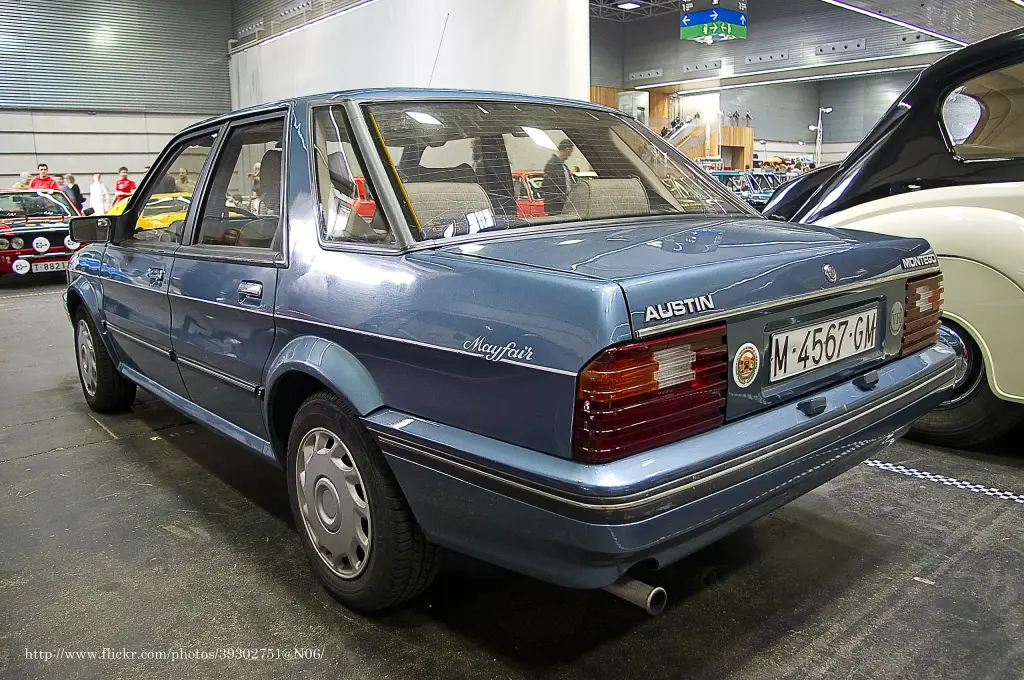
Austin Montego versions
- Austin Montego saloon (1984–1993).
- Estate (1984–1994).
- MG Montego: the performance version.
More Austin cars are in our Austin collection, for example the Maestro it was developed with, the Ambassador it replaced and the Marina.
Austin Montego questions and answers
When was the Austin Montego built?
From 1984 to 1994.
What did it replace?
The Morris Ital and the Austin Ambassador.
What were its rivals?
The Ford Sierra and the Vauxhall Cavalier.
Was there an MG version?
Yes, a high-performance MG version.
When did it lose the Austin name?
After the facelift for the 1989 model year it was sold without a marque.
Video: Rover Montego Countryman TD Estate Austin MG Maestro
Video by Eddiebear’s Cave on YouTube.
Sources
- Austin Montego, English Wikipedia: design and development