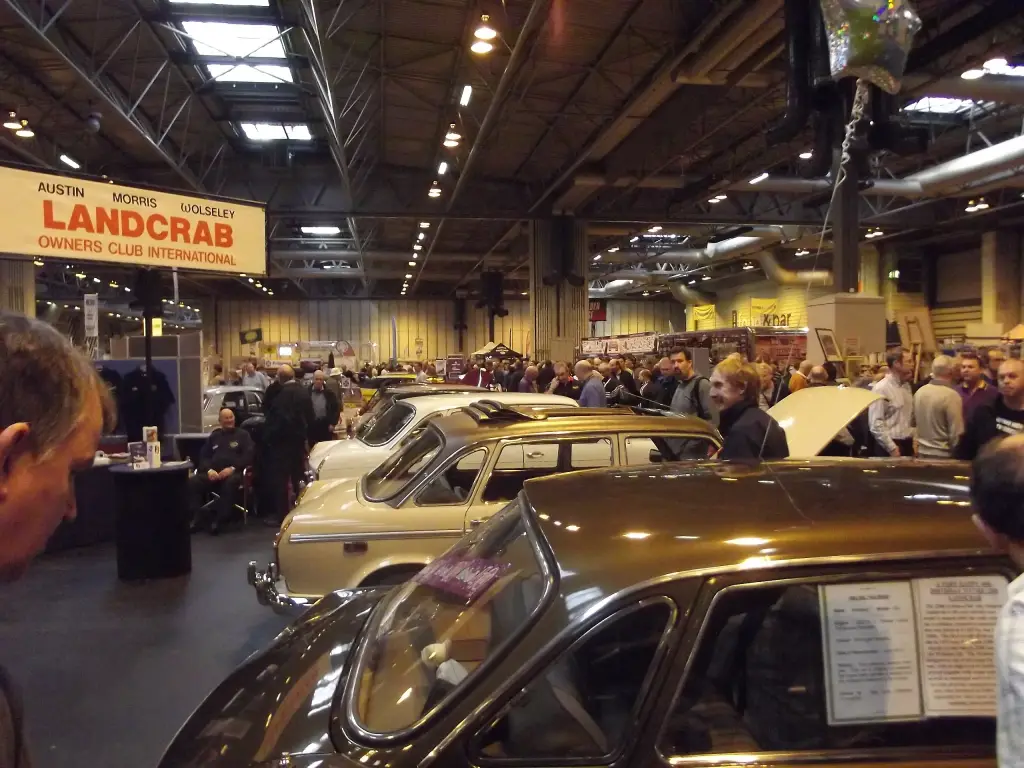
BMC ADO17 is the model code used by the British Motor Corporation for a range of front-wheel-drive cars in the European “D” market segment of larger family cars, manufactured from September 1964 to 1975. The car was initially sold under the Austin marque as the Austin 1800, then by Morris as the Morris 1800 and by Wolseley as the Wolseley 18/85.
Austin 1800 (ADO17) at a glance
| Produced | September 1964 to 1975 |
|---|---|
| Names | Austin 1800 (1964), Morris 1800 (1966), Wolseley 18/85 (1967); later Austin, Morris 2200 and Wolseley Six |
| Nickname | “Landcrab”, after its exceptional width and appearance |
| Honour | European Car of the Year 1965 |
| Designers | Alec Issigonis and Pininfarina worked on the exterior |
| Suspension | Hydrolastic |
| Brakes | inertia-controlled brake-force distribution by a valve moving braking force between axles |
| Later engine | 2.2 L, used in the Austin 2200 and in the Austin Kimberley and Tasman |
This page is based on English Wikipedia only (a trusted source), so the facts were not cross-checked against a second source.
History of the Austin 1800 (ADO17)
The Austin 1800 was developed at BMC as a larger follow-up to the successful Mini and Austin 1100 under the ADO17 codename (ADO stood for Austin Drawing Office). The badge-engineered Morris 1800 and Wolseley 18/85 variants were launched in 1966 and 1967 to serve the BMC dealerships selling those marques; the 18/85 name had been used before on the Wolseley 18/85 of 1938 to 1948.
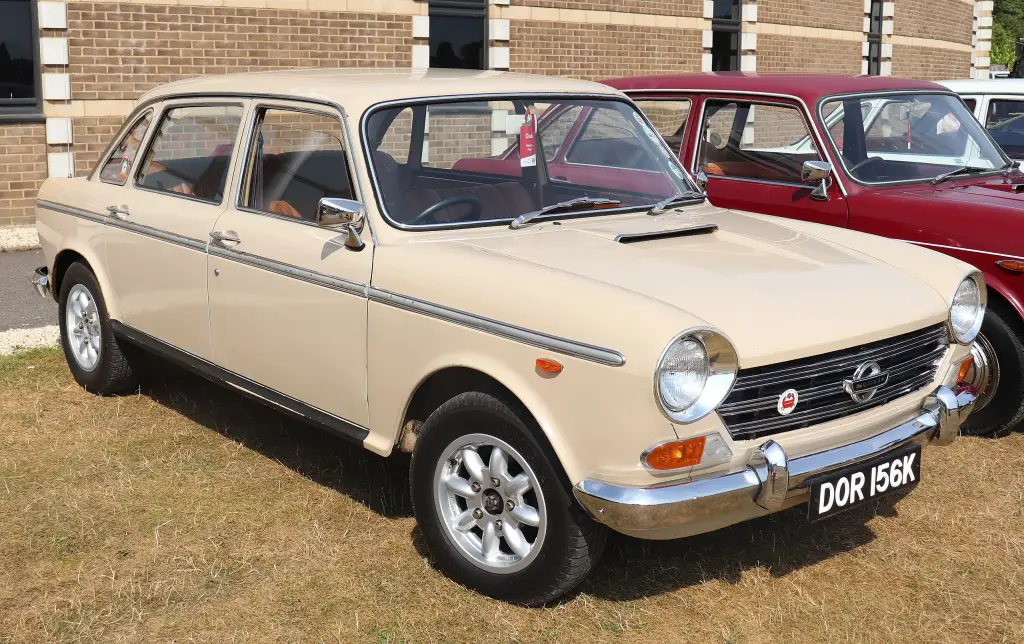
The car was unconventional in appearance in 1964, with a large glasshouse and a spacious, minimalist interior including leather, wood and chrome features and an unusual instrument display with a ribbon speedometer and a green indicator light on the end of the indicator stalk. There was a chrome “umbrella handle” handbrake under the dashboard parcel shelf, and the two front seats met in the middle and could be used on occasion as a bench seat. Alec Issigonis and Pininfarina both worked on its exterior.
Technology
Its internals were also unconventional and ahead of their time, including Hydrolastic suspension and inertia-controlled brake-force distribution by means of a valve that transferred braking force between front and rear axles as a function of sensed deceleration rather than fluid pressure. An interesting feature was a tail/brake/indicator night dipping system using a resistance circuit.
Later years
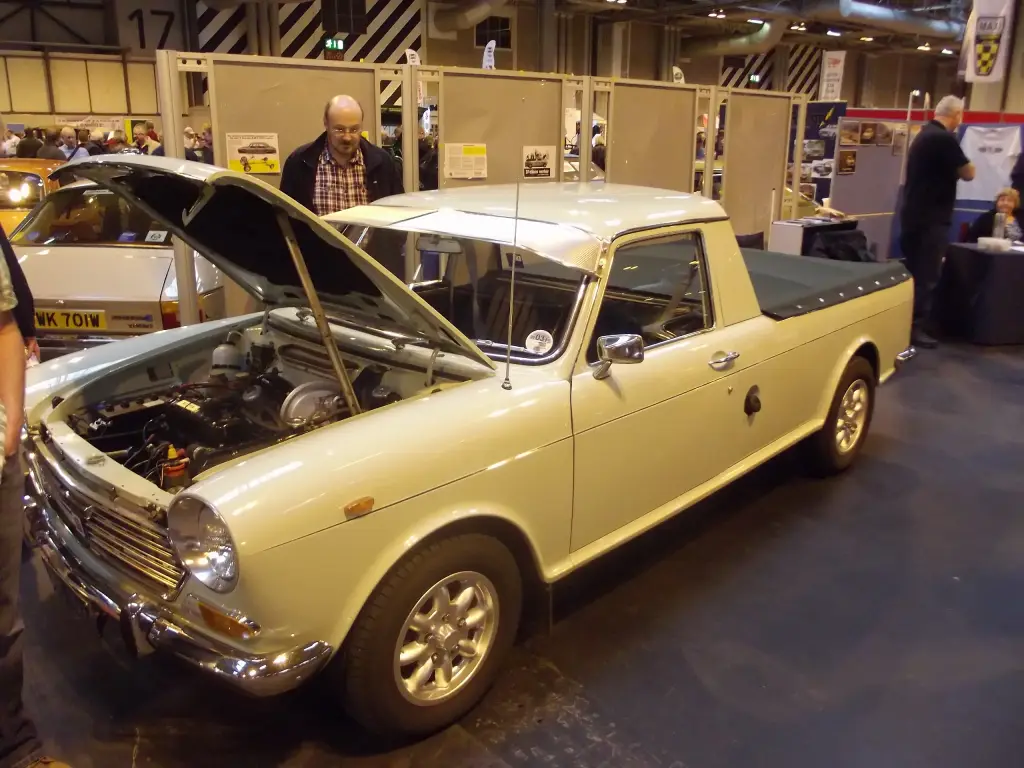
Later the car was marketed with a 2.2 L engine as the Austin 2200, Morris 2200 and Wolseley Six. The 1800 was voted European Car of the Year for 1965. Informally, because of the car’s exceptional width and overall appearance, these cars became widely known by the nickname “Landcrab”. Owners’ clubs and a pickup (Austin 1800 Utility) survive.
Design and features
- Layout: front-wheel drive, a larger follow-up to the Mini and 1100.
- Suspension: Hydrolastic.
- Interior: a spacious cabin with a ribbon speedometer and a bench-like front seat.
Austin 1800 (ADO17) versions
- Austin 1800 (1964): the first.
- Morris 1800 (1966) and Wolseley 18/85 (1967).
- Austin, Morris 2200 and Wolseley Six: the 2.2 L cars.
- Austin 1800 Utility: a pickup version.
More Austin cars are in our Austin collection, for example the 1100 it followed, the Kimberley and Tasman built on its platform and the Princess that replaced it.
Austin 1800 (ADO17) questions and answers
Why is the Austin 1800 called the Landcrab?
The nickname came from the car’s exceptional width and overall appearance.
When was it built?
From September 1964 to 1975.
What honour did it win?
European Car of the Year for 1965.
What suspension did it have?
Hydrolastic.
What replaced it?
The Princess of 1975.
Sources
- BMC ADO17, English Wikipedia: development and Mark I