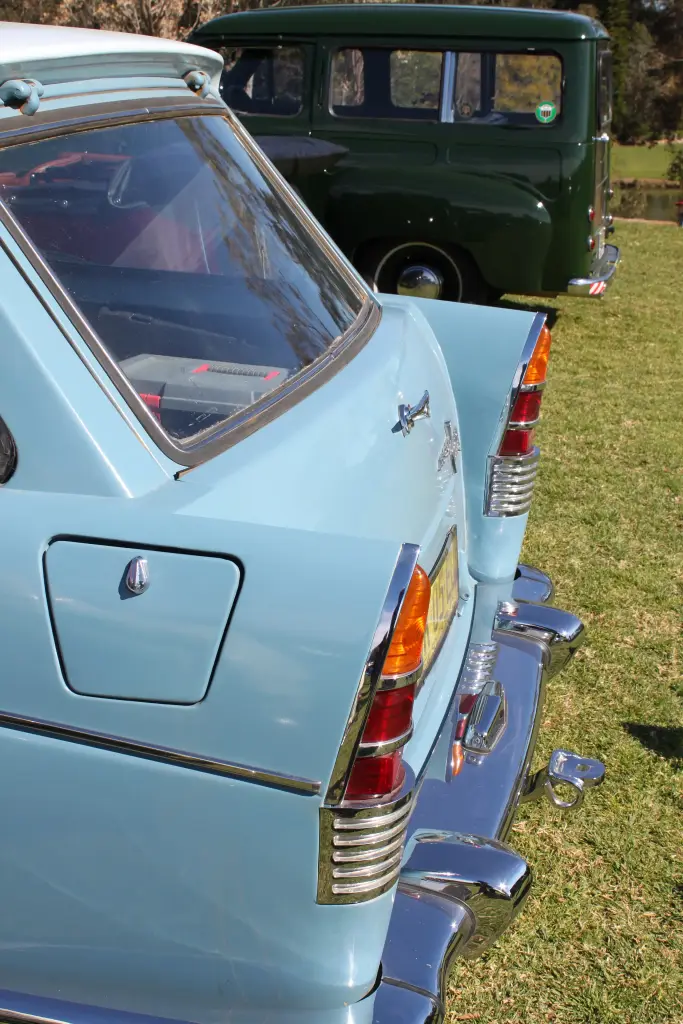
The Austin Freeway is an automobile developed by BMC Australia, based on the British Austin A60 Cambridge. Introduced in 1962, it was marketed under the Austin name in both four-door sedan and five-door station wagon body styles.
Austin Freeway at a glance
| Introduced | 1962 |
|---|---|
| Built | about 27,000 until September 1965 |
| Base | the British Austin A60 Cambridge |
| Engine | 2,433 cc six-cylinder “Blue Streak”, a development of the 1,622 cc B-series |
| Designations | ADO40 original; Freeway Mk II (YDO3) from October 1964 with a more powerful engine, power brakes, better rear suspension and seats |
| First-year sales | 3,090 |
| Upmarket variant | Wolseley 24/80 |
| Replaced by | the Austin 1800, Australian production from 1966 |
This page is based on English Wikipedia only (a trusted source), so the facts were not cross-checked against a second source.
History of the Austin Freeway
Using the locally built 2,433 cc six-cylinder “Blue Streak” engine, the Freeway represented the first attempt by BMC to challenge the dominant Holden and Ford Falcon models in the lucrative six-cylinder family car class with a locally developed vehicle. The engine was a direct development of the company’s 1,622 cc B-series unit, the cylinder dimensions in the six being identical to those of the four-cylinder. An upmarket variant, the Wolseley 24/80 sedan, was also offered.
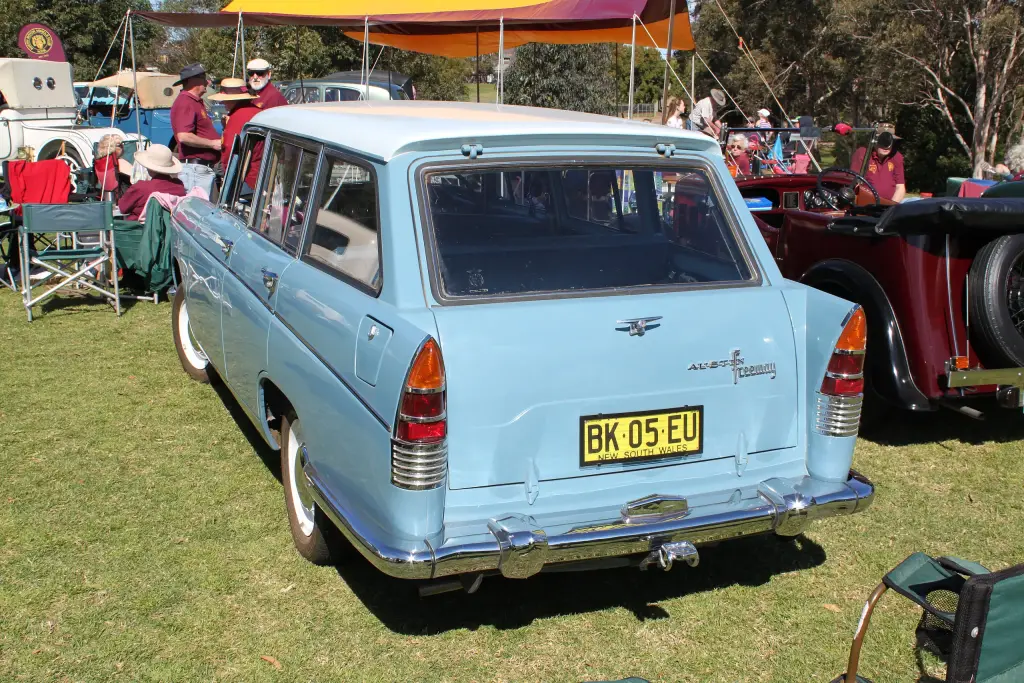
Although more expensive than its opposition, the Freeway was well equipped by the standards of the time, offering features such as windscreen washers and a fresh-air heater/demister. The sedan combined a new full-width grille with the rear-end styling of the British MG Magnette and Riley 4 models, and the station wagon used the Austin A60 Cambridge rear-end styling.
Sales and end
3,090 units were sold in the first year, but volumes fell well short of those of the Holden and Ford Falcon rivals and of the much more powerful six-cylinder Chrysler Valiant, introduced in Australia earlier the same year. The original Freeway (ADO40) was replaced by the Freeway Mk II (YDO3) in October 1964, with a more powerful engine, power brakes and improved rear suspension and seating. Declining sales saw it discontinued in 1965, with production ceasing in September of that year after approximately 27,000 cars had been built; it was replaced by the Austin 1800, with Australian production commencing in 1966.
New Zealand
The Freeway was marketed in New Zealand as both the Austin Freeway and the Morris Freeway, allowing the separate Austin and Morris dealerships in that country to sell the model; the Freeway name was later used on the New Zealand market for the BMC ADO17.
Design and features
- Engine: the Blue Streak six of 2,433 cc.
- Body: a four-door sedan with MG Magnette-style rear and a five-door station wagon.
- Equipment: windscreen washers and a fresh-air heater/demister.
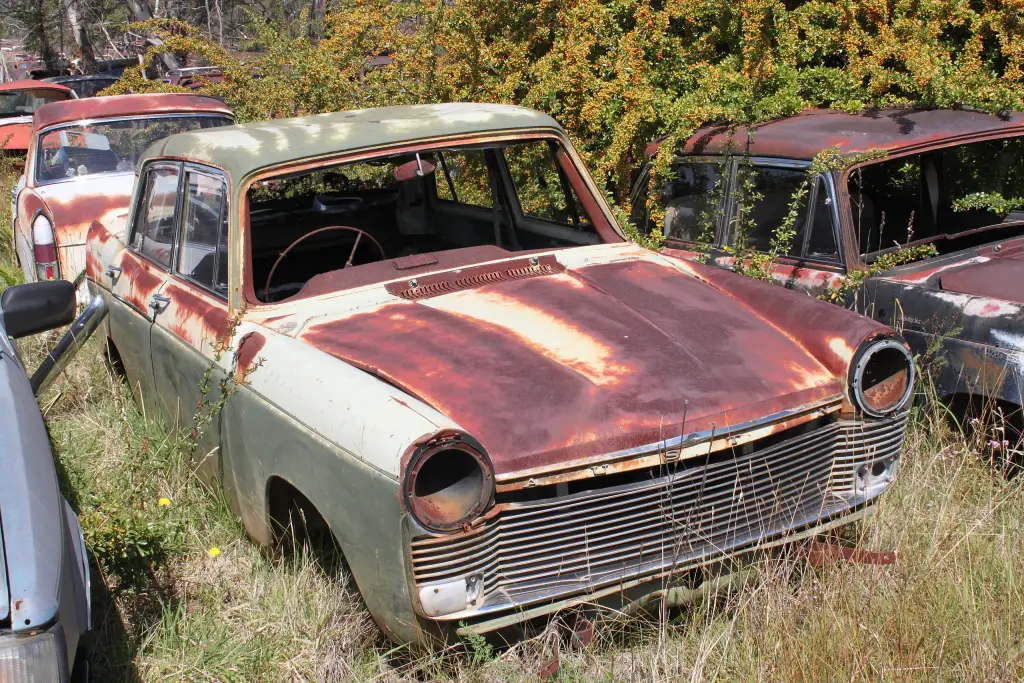
Austin Freeway versions
- Freeway (ADO40, 1962–1964): sedan and wagon.
- Freeway Mk II (YDO3, 1964–1965): with a more powerful engine.
- Wolseley 24/80: the upmarket sister.
More Austin cars are in our Austin collection, for example the A60 Cambridge on which it was based, the Austin 1800 that replaced it and the Kimberley and Tasman.
Austin Freeway questions and answers
What is the Austin Freeway?
An Australian BMC six-cylinder sedan and wagon based on the A60 Cambridge, introduced in 1962.
What engine did it use?
The locally built 2,433 cc Blue Streak six-cylinder.
How many were built?
About 27,000.
When did it end?
Production ceased in September 1965; the Austin 1800 followed.
Was it sold in New Zealand?
Yes, as the Austin Freeway and the Morris Freeway.
Sources
- Austin Freeway, English Wikipedia: history, sales and New Zealand