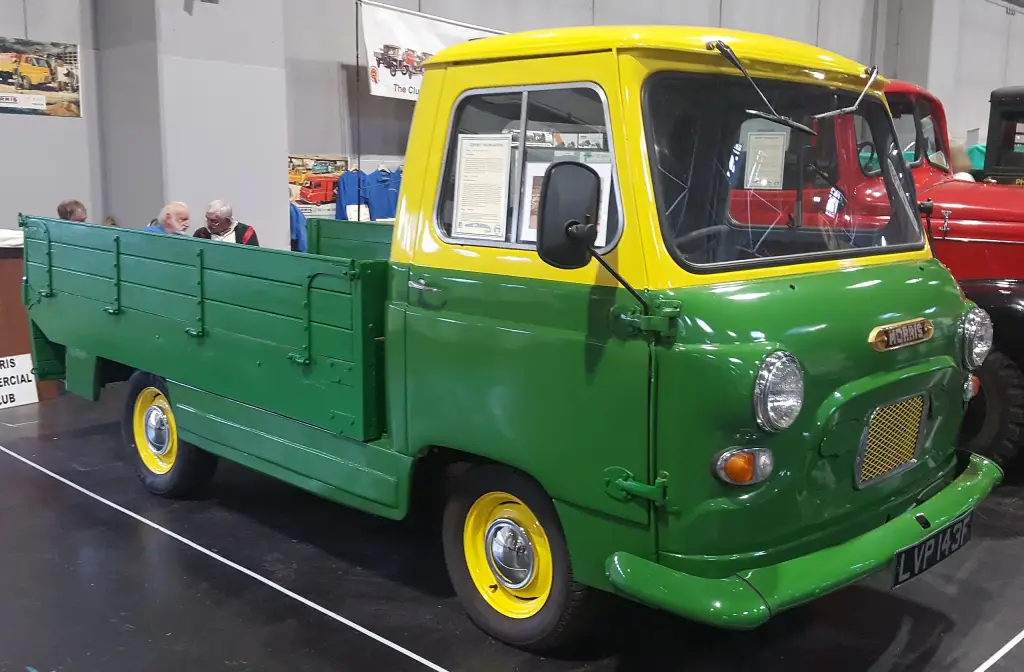
The Morris Commercial J4 is a 10 cwt (0.5 ton) forward-control van, with the driver’s controls in front of the front wheels, launched by Morris Commercial in 1960 and produced with two facelifts until 1974. It was marketed first as both the Morris J4 and the Austin J4.
Morris J4 (Austin J4) at a glance
| Produced | 1960 to 1974, with two facelifts |
|---|---|
| Capacity | 10 cwt (0.5 ton); often called Morris 10/12 cwt |
| Layout | forward control |
| Engine | B-series petrol 1,622 cc or optional 1,500 cc diesel |
| Brakes | drum brakes all round, no servo |
| Suspension | front coil springs and lever arm dampers; rear semi-elliptic leaf springs |
| Names | Morris J4 and Austin J4; BMC J4 after the formation of British Leyland in 1968 |
| Autocar test (1967) | J4-based motor caravan: 63 mph, 0–50 mph in 20.2 s, 22.7 mpg |
This page is based on English Wikipedia only (a trusted source), so the facts were not cross-checked against a second source.
History of the Morris J4 (Austin J4)
The van was available with the familiar B-series petrol engine in 1,622 cc form or, at extra cost, with a 1,500 cc diesel. Stopping power came from drum brakes all round with no servo assistance. The suspension was similar to that of the Austin Cambridge and Morris Oxford of the time, with independent front suspension on coil springs and hydraulic lever arm shock absorbers and semi-elliptic leaf springs at the rear. In the 1960s light vans were often named simply by load capacity, and it was often called the Morris 10/12 cwt.
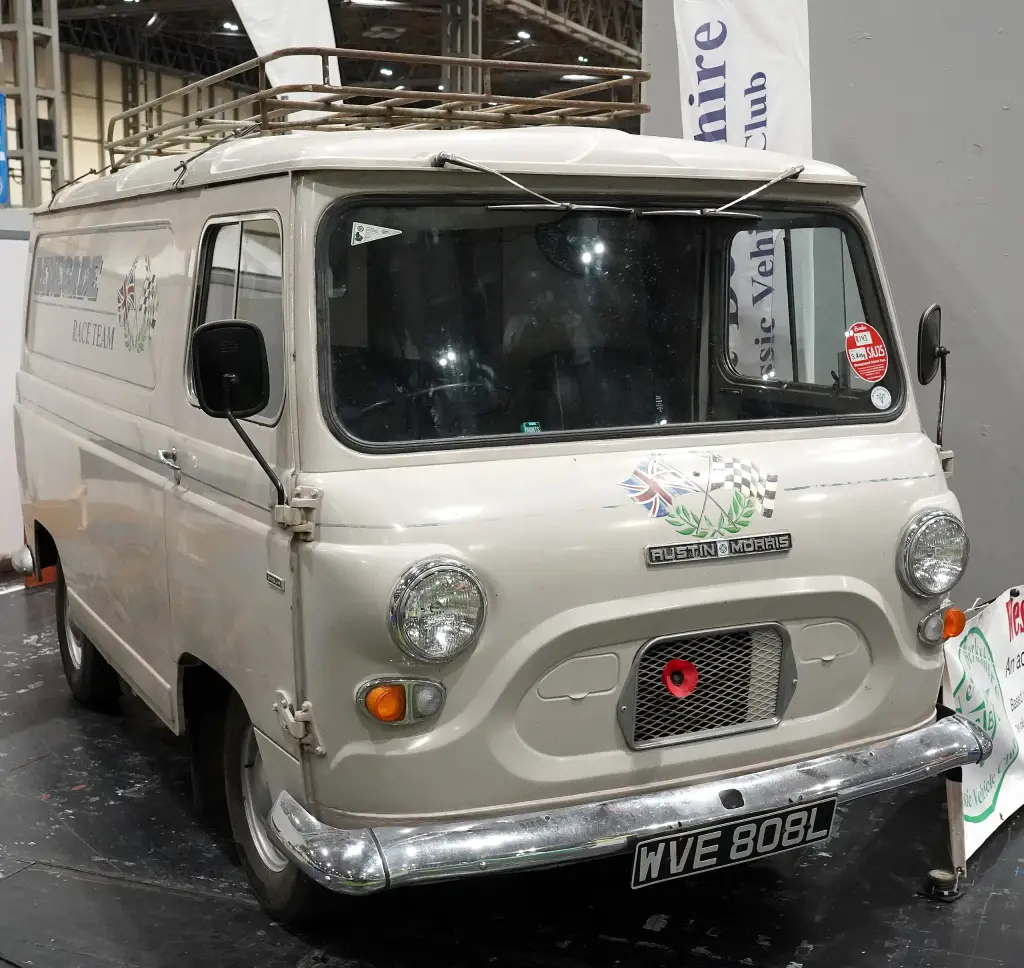
Following the formation of the British Leyland Motor Corporation in 1968 the van was branded the BMC J4. During its life it received minor improvements under the metal, but even in 1967 it was still shipped with synchromesh on the top three forward gears only. The engine lived in the cab between the two seats, and the van was considered unusually noisy even by 1960s standards.
On the road
The J4 became a familiar sight collecting and delivering mail in Post Office Royal Mail livery. Although quite a successful light commercial, it sold mainly through keen pricing to large fleets, and after 1965 it lived in the shadow of the front-engined Ford Transit, as did the Standard Atlas, Commer FC and Bedford CA. Whilst competent as a van, it offered a rather poor driving experience even by the standards of the day.
Design and features
- Layout: forward control with the engine in the cab.
- Engines: 1,622 cc petrol or 1,500 cc diesel.
- Role: fleet and Post Office van.
Morris J4 (Austin J4) versions
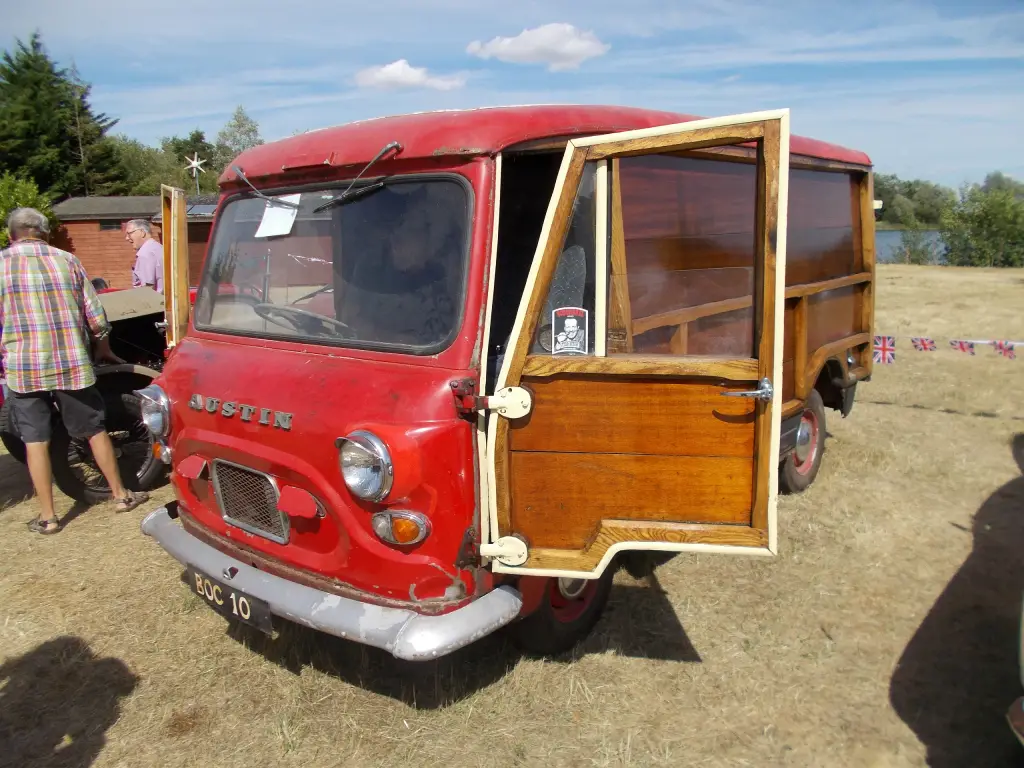
- Morris J4 and Austin J4 (1960).
- Two facelifts.
- BMC J4 (from 1968).
- Motor caravan conversions.
More Austin cars are in our Austin collection, for example the Cambridge whose suspension it echoed, the Loadstar and the FX4.
Morris J4 (Austin J4) questions and answers
What was the J4?
A 10 cwt forward-control van made by Morris Commercial from 1960 to 1974.
Was there an Austin version?
Yes, it was sold as the Morris J4 and the Austin J4.
What engine did it use?
A 1,622 cc B-series petrol, or a 1,500 cc diesel at extra cost.
Where did people see it?
Often as a Royal Mail van.
Why did sales fade?
It lived in the shadow of the Ford Transit after 1965.
Sources
- Morris Commercial J4, English Wikipedia: description and development