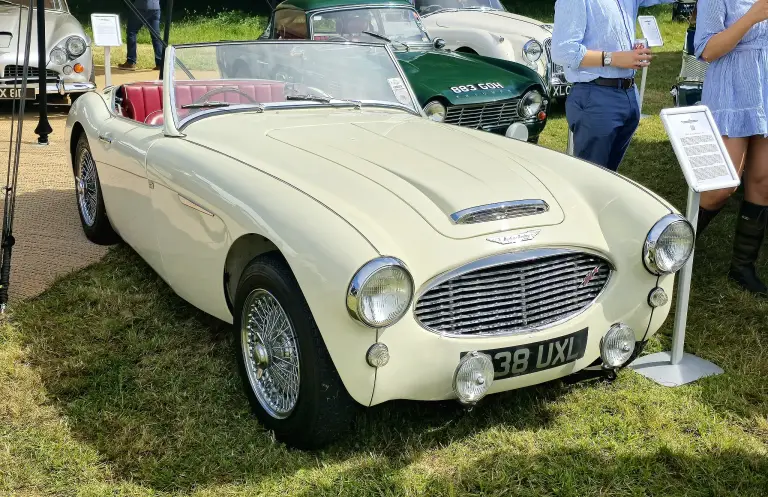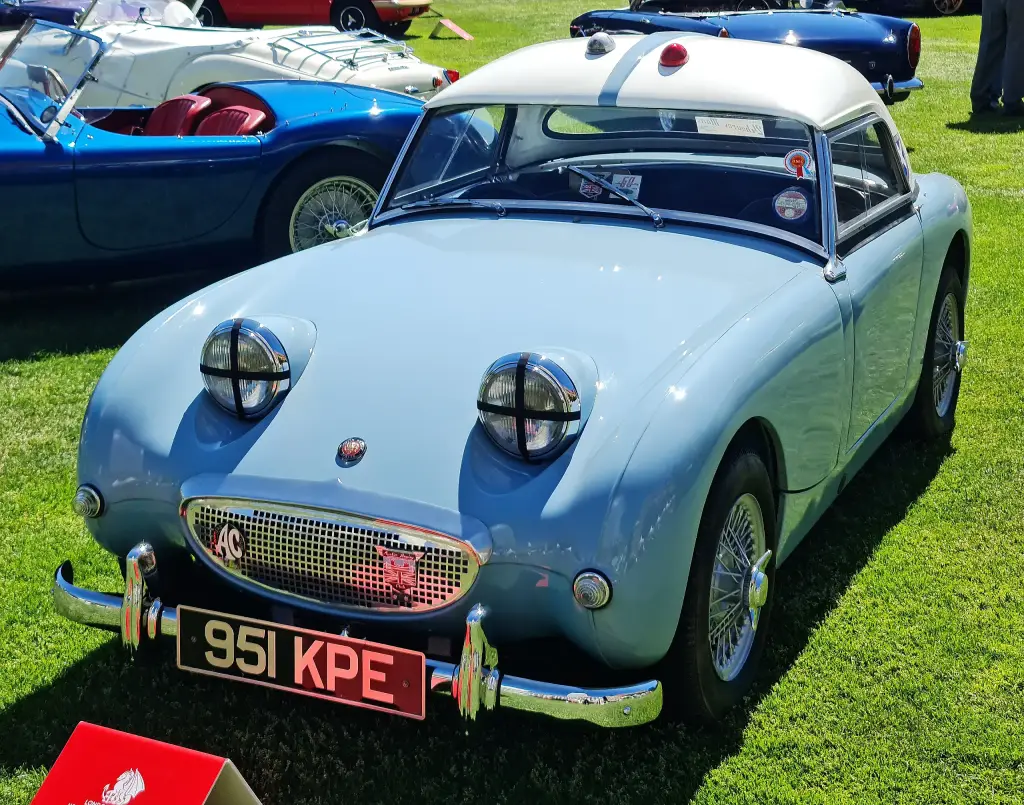
The Austin-Healey Sprite is a small open sports car produced in the United Kingdom from 1958 to 1971. It was announced to the press in Monte Carlo by BMC on 20 May 1958, two days after the Monaco Grand Prix. It was intended as a low-cost model that “a chap could keep in his bike shed”, yet be the successor to the sporting versions of the pre-war Austin Seven.
Austin-Healey Sprite at a glance
| Produced | 1958 to 1971 |
|---|---|
| Announced | 20 May 1958, Monte Carlo |
| Price | £669 at launch |
| Designer | Donald Healey Motor Company; built at the MG factory, Abingdon |
| Engine | tuned Austin A-Series, with as many existing parts as possible |
| Mark I | “frogeye” (UK) or “bugeye” (US); 48,987 made; styled by Gerry Coker |
| Structure | first volume-production sports car with unitary construction, by Barry Bilbie |
| MG twin | Midget from the Mk. II of 1961; together the “Spridgets” |
This page is based on English Wikipedia only (a trusted source), so the facts were not cross-checked against a second source.
History of the Austin-Healey Sprite
The Sprite quickly became affectionately known as the “frogeye” in the UK and the “bugeye” in the US, because its headlights were prominently mounted on top of the bonnet. The designers had intended the headlights to retract, lenses skyward when not in use, an arrangement used many years later on the Porsche 928; cost-cutting by BMC deleted the mechanism, leaving them permanently upright. The body was styled by Gerry Coker, with later alterations by Les Ireland after Coker emigrated to the US in 1957. A total of 48,987 frogeye Sprites were made.
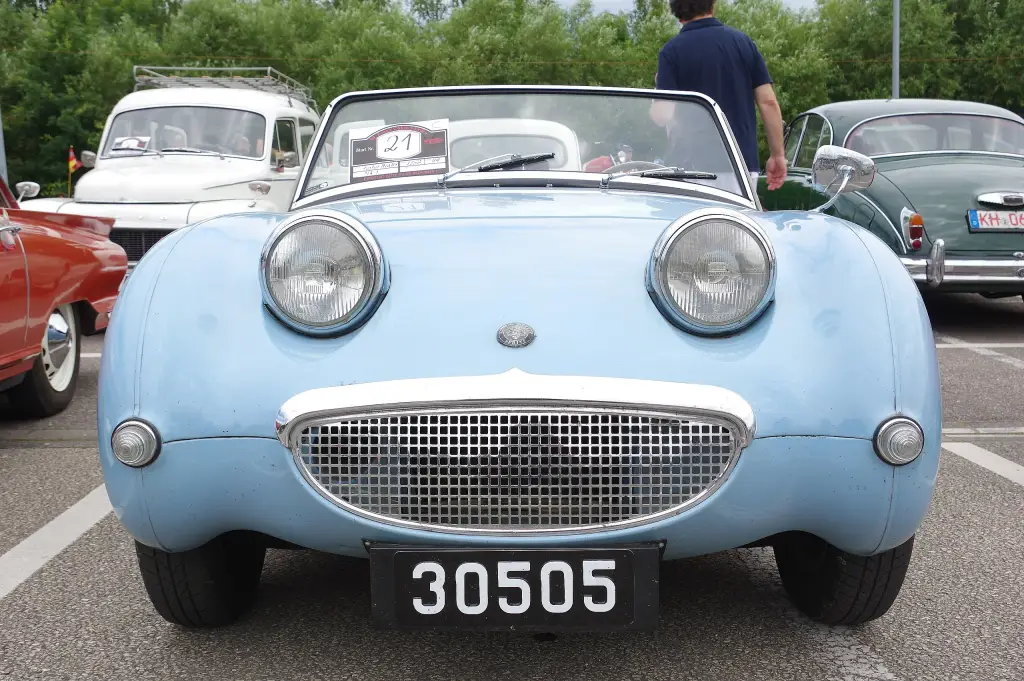
The problem of providing a rigid structure for an open sports car was solved by Barry Bilbie, Healey’s chassis designer, who adapted an idea from the Jaguar D-type, routing rear suspension forces through the bodyshell floor pan. The Sprite’s design was the world’s first volume-production sports car to use unitary construction, with the body panels, apart from the bonnet, taking many of the structural stresses.
Midget and Spridgets
When the Mk. II Sprite was introduced in 1961 it was joined by a badge-engineered MG version, the Midget, reviving a model name MG had used from the late 1920s to the mid-1950s. Enthusiasts often call these later Sprites and Midgets collectively “Spridgets”. The MG-badged version continued for several years after the Austin-Healey brand ceased to exist.
Design and features
- Engine: a tuned Austin A-Series.
- Structure: unitary body, a first for volume sports cars.
- Look: fixed headlights on top of the bonnet.
Austin-Healey Sprite versions
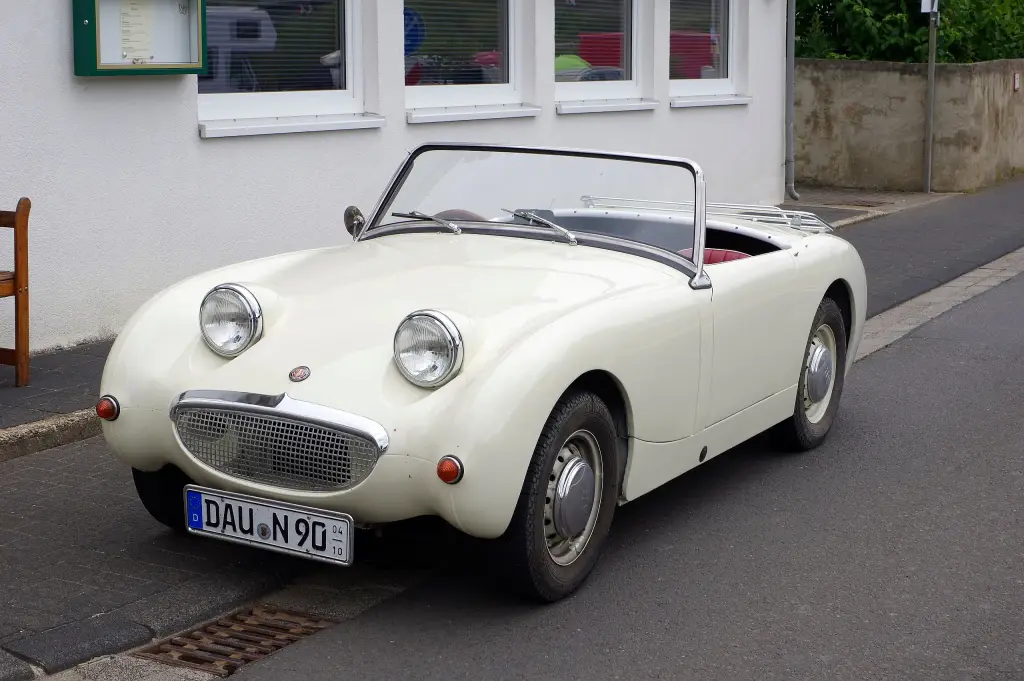
- Mark I “frogeye” (1958–1961).
- Mark II and later (from 1961).
- MG Midget: the badge-engineered twin.
More Austin cars are in our Austin collection, for example the Austin-Healey 3000, the Austin Seven it succeeded in spirit and the A35.
Austin-Healey Sprite questions and answers
When was the Sprite built?
From 1958 to 1971.
Why “frogeye”?
Its headlights sit on top of the bonnet.
How many frogeyes were made?
48,987.
What is a Spridget?
A collective name for the later Sprites and MG Midgets.
Who designed it?
The Donald Healey Motor Company; it was built at MG Abingdon.
Video: Austin Healy Sprite
Video by Motorvision International on YouTube.
Sources
- Austin-Healey Sprite, English Wikipedia: history and Mark I