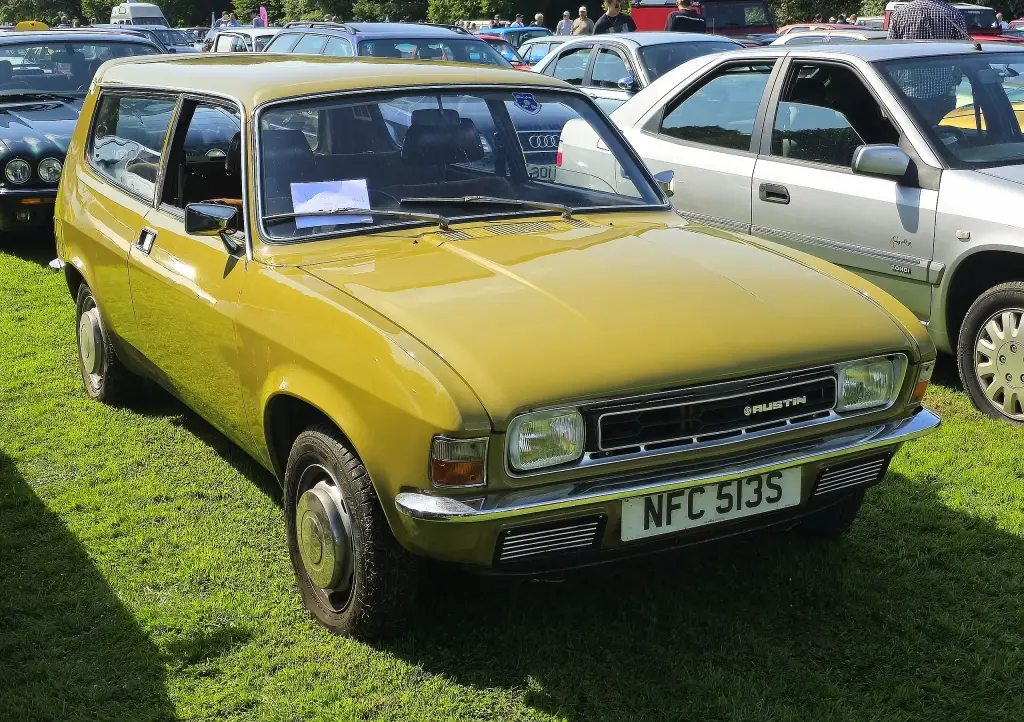
The Austin Allegro is a small family car that was manufactured by the Austin-Morris division of British Leyland (BL) from 1973 until 1982. The same vehicle was built in Italy by Innocenti between 1974 and 1975 and sold as the Innocenti Regent. The Allegro was designed as a replacement for the Austin 1100 and 1300 models.
Austin Allegro at a glance
| Produced | 1973–1982 |
|---|---|
| Built | 642,350 Austin Allegros |
| Innocenti | Regent, 1974–1975 |
| Layout | front-wheel drive; A-Series engine with sump-mounted transmission |
| Bigger engines | SOHC E-Series from the Maxi, 1,500 and 1,750 cc |
| Suspension | Hydragas, derived from Hydrolastic |
| Body | two-box saloon; no hatchback, to protect the Maxi |
| Replaced by | the Austin Maestro in 1983 |
This page is based on English Wikipedia only (a trusted source), so the facts were not cross-checked against a second source.
History of the Austin Allegro
In total 642,350 Austin Allegros were produced in a ten-year production life, most of them sold on the home market, less than a third of the 2.1 million 1100s and 1300s sold in the previous 11 years. It was built and sold by British Leyland alongside the hatchback Austin Maxi (launched in 1969) and the 1971 rear-wheel-drive Morris Marina, and all three were eventually replaced by the Austin Maestro in 1983.
Design
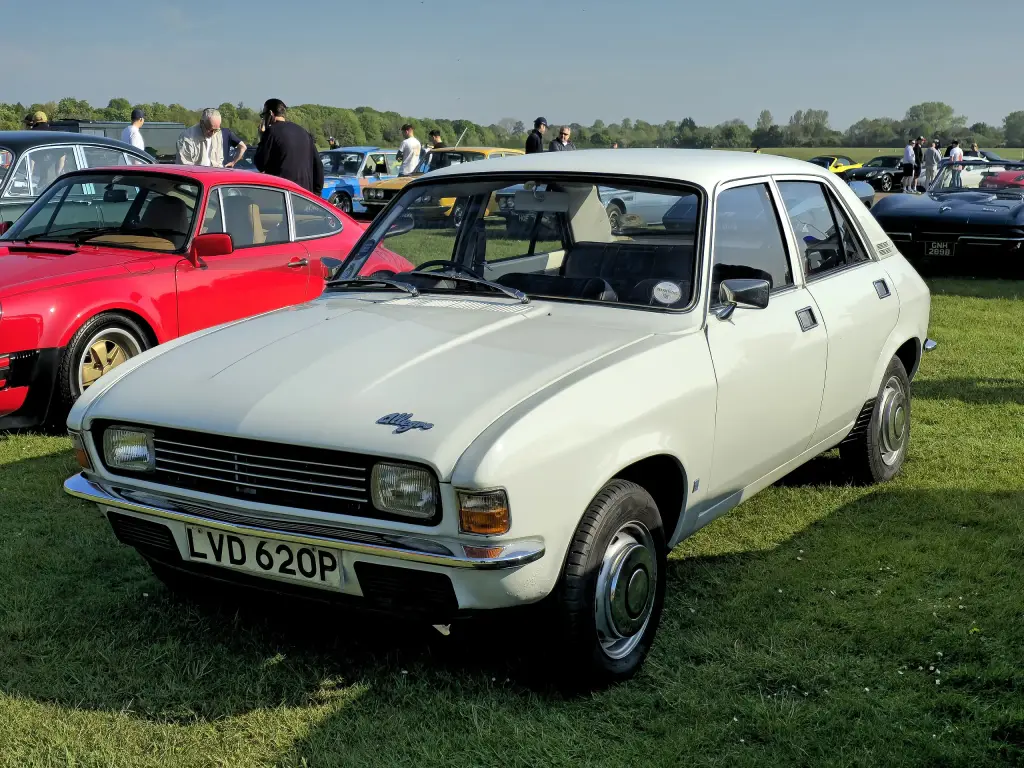
British Leyland used a saloon design for the Allegro rather than a hatchback, since the company had decided that the Maxi should have a hatchback as its unique selling point. The Allegro used front-wheel drive with the familiar A-Series engine and a sump-mounted transmission; the higher-specification models used the SOHC E-Series engine from the Maxi in 1,500 and 1,750 cc. The two-box saloon bodyshell was suspended using the new Hydragas system, derived from the previous Hydrolastic system.
Stylistically it went against the sharp-edged cues led by Giorgetto Giugiaro that were becoming fashionable, and featured rounded panel work. The original styling proposal by Harris Mann had the same sleek, wedge-like shape as the Princess, but BL management, keen to control costs, wanted to install the existing E-Series engine and bulky heating system from the Marina. It became impossible to keep the low bonnet line and the bodyshell began to look bloated and tubby, which was acceptable to BL, which wanted to follow the Citroën approach of combining advanced technology with styling that eschewed mainstream trends.
Design and features
- Suspension: Hydragas.
- Engines: A-Series, or the Maxi’s E-Series in higher trims.
- Body: a rounded two-box saloon.
Austin Allegro versions
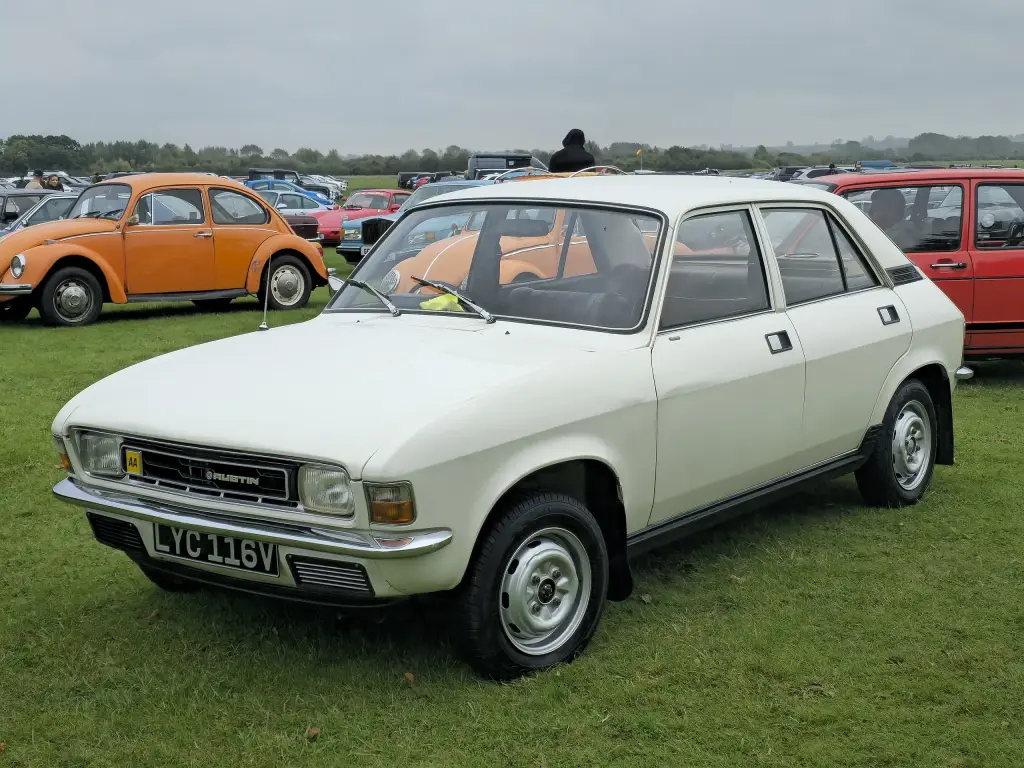
- Allegro 1100, 1300, 1500 and 1750: the range.
- Innocenti Regent (1974–1975): the Italian-built version.
More Austin cars are in our Austin collection, for example the 1100 and 1300 that it replaced, the Maxi and the Maestro.
Austin Allegro questions and answers
When was the Austin Allegro built?
From 1973 to 1982.
What did it replace?
The Austin 1100 and 1300.
How many were made?
642,350.
What suspension did it have?
Hydragas, developed from Hydrolastic.
What replaced it?
The Austin Maestro in 1983.
Video: Austin Allegro: The Car’s the Star Part One
Video by rovamota on YouTube.
Sources
- Austin Allegro, English Wikipedia: design and production