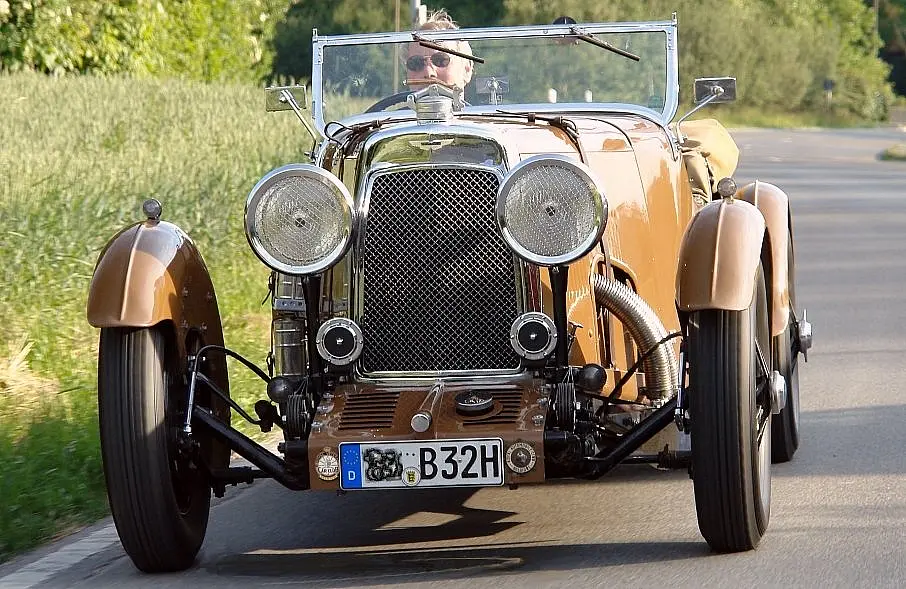
The Aston Martin International was a car made by Aston Martin from 1929 to 1931, derived from the 1928 LM and shown at the London Motor Show of 1929. The Ulster, a sports car built from 1934 to 1936, took its name from the Ulster Tourist Trophy and was the racing derivative of the Mark II.
Aston Martin International and Ulster at a glance
| International | built 1929–1931 (the French page gives 1929–1932); shown at the London Motor Show in 1929 |
|---|---|
| International engine | 1.5-litre inline four-cylinder, dry-sump lubrication |
| International bodies | roadster and saloon |
| Ulster | built 1934–1936; two-seat spider |
| Ulster engine | cast-iron four-cylinder of 1,495 cc, 85 hp, front-mounted, rear-wheel drive, four-speed manual |
| Ulster frame and body | ladder frame with an aluminium body; rigid axles on semi-elliptic springs; Hartford lever dampers; mechanical drum brakes |
| Ulster performance | top speed 164 km/h; 0–100 km/h in 13.8 s |
| Designer of the range | Augustus Cesare “Bert” Bertelli, technical director 1926–1937 |
This page is based on Italian and French Wikipedia and the English Wikipedia history of the company; no single long source exists for these cars.
History of the Aston Martin International and Ulster
Between 1926 and 1937 Bertelli was both technical director and designer of all new Aston Martins, since known as “Bertelli cars”. They included the 1½-litre “T-type”, “International”, “Le Mans”, “MKII” and its racing derivative, the “Ulster”, and the 2-litre 15/98 and its racing derivative, the “Speed Model”. Most were open two-seater sports cars bodied by Bert Bertelli’s brother Enrico (Harry), with a small number of long-chassis four-seater tourers, dropheads and saloons also produced.
The 1½-litre line
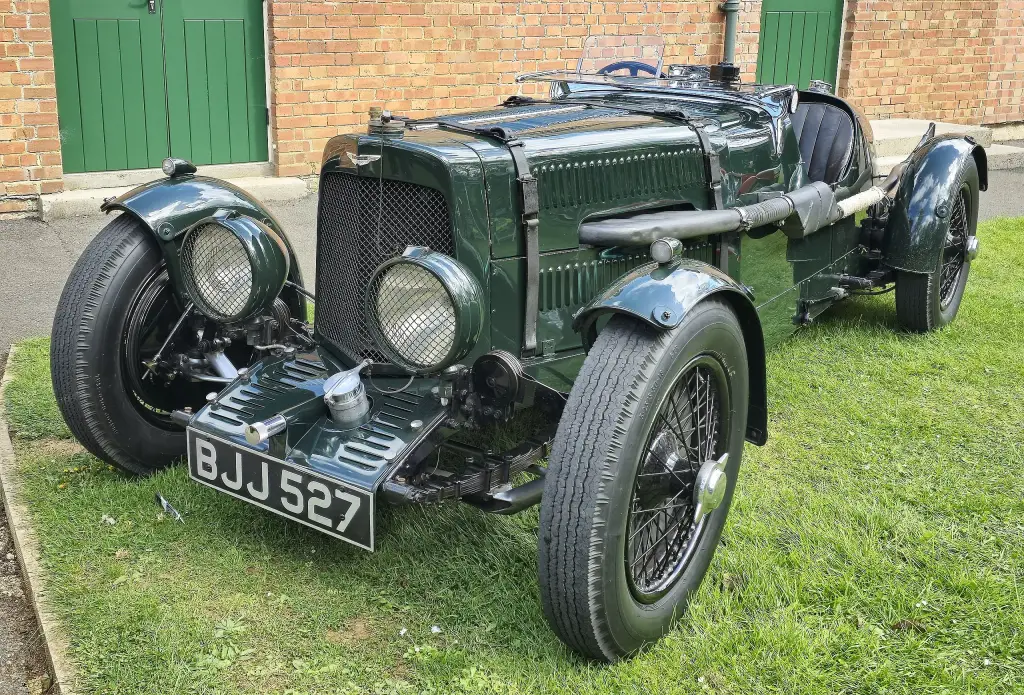
French Wikipedia describes the Aston Martin 1.5 litre as the first series of sports car of the maker, sold in a few dozen examples between 1913 and 1937. Lionel Martin and Robert Bamford, Singer dealers in Kensington, London, built their first racing prototype, the “Coal Scuttle”, in 1913, and founded the Aston Martin marque in 1914. The 1.5-litre family later included the Mk I (Type T and Type S, 1927), the International Le Mans (1929–1932), the Mk II (1932), the LM (Le Mans, 1932–1934) and the Mk III Ulster; Aston Martin 1.5 litre cars won the 1.5 L class at Le Mans in 1931, 1932, 1933, 1935 and 1937.
International, 1929–1931
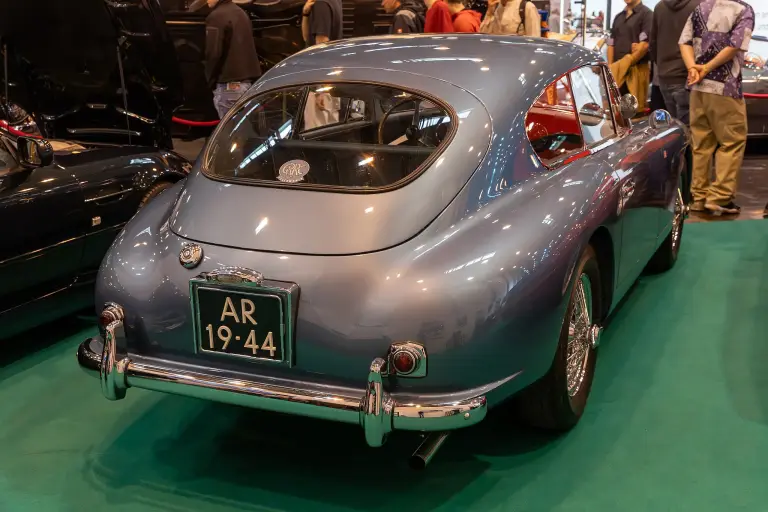
The International derived from the 1928 LM and was shown at the 1929 London Motor Show. It had a 1.5-litre inline four-cylinder engine with dry-sump lubrication and came in two body styles, roadster and saloon.
Ulster, 1934–1936
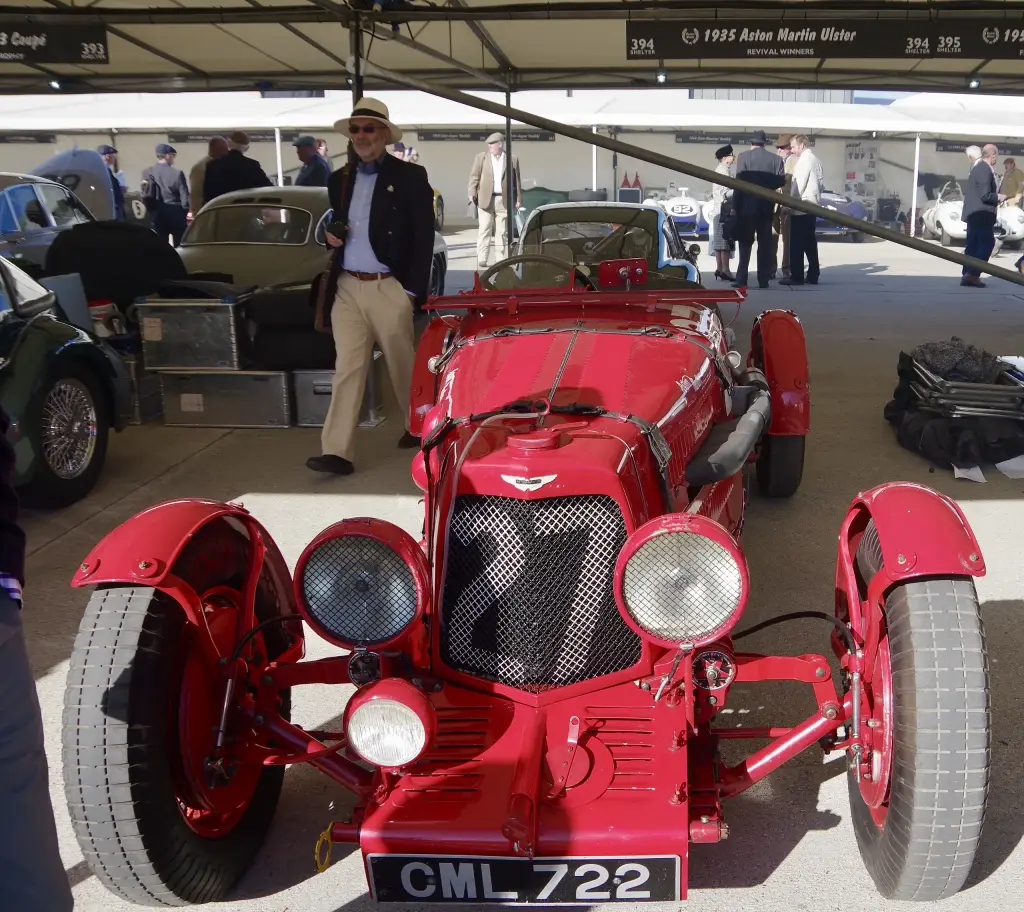
The Ulster was built after Aston Martin cars won at the Ulster Tourist Trophy, the famous race held in Northern Ireland, from which the new model took its name. Its engine is a cast-iron four-cylinder monoblock of 1,495 cc producing 85 hp, mounted at the front with rear-wheel drive and a four-speed manual gearbox. It is a two-seat spider on a ladder frame with an aluminium body. Front and rear axles are rigid, with semi-elliptic leaf springs, Hartford lever dampers and mechanically operated drum brakes. It reaches 164 km/h and 0–100 km/h in 13.8 seconds, and it was homologated to take part in events such as the 24 Hours of Le Mans and the Ulster TT.
Design and features
- Engine: a 1.5-litre four-cylinder; the International had dry-sump lubrication, the Ulster a cast-iron monoblock of 1,495 cc and 85 hp.
- Body: the International as roadster or saloon, the Ulster as an aluminium-bodied two-seat spider.
- Running gear: rigid axles on semi-elliptic springs, Hartford lever dampers and mechanical drum brakes (Ulster).
- Racing: approved for Le Mans and the Ulster TT.
Aston Martin International and Ulster versions
- International (1929–1931): roadster and saloon, derived from the 1928 LM.
- International Le Mans (1929–1932): the sports version in the 1.5-litre family.
- Mk II (1932): the car from which the Ulster was developed.
- Ulster (1934–1936): the racing derivative.
More Aston Martin cars are in our Aston Martin collection, for example the Atom, which showed Hill’s new ideas in 1939, the 2-Litre Sports (DB1) and the DB2.
Aston Martin International and Ulster questions and answers
What is the Aston Martin International?
A 1.5-litre sports car built from 1929 to 1931, derived from the 1928 LM.
Why is the Ulster called Ulster?
It was named after Aston Martin’s successes at the Ulster Tourist Trophy in Northern Ireland.
How powerful was the Ulster?
Its 1,495 cc four-cylinder produced 85 hp, for a top speed of 164 km/h.
Who designed these cars?
Bert Bertelli, technical director and designer of Aston Martin from 1926 to 1937.
Did they race at Le Mans?
Yes: the Ulster was homologated for Le Mans and the TT, and 1.5-litre Astons won their class at Le Mans in 1931, 1932, 1933, 1935 and 1937.
Video: On Board camera Aston Martin Ulster Mille Miglia 2011
Video by 328gts86 on YouTube.
Sources
- Aston Martin International, Italian Wikipedia: International, 1929–1931
- Aston Martin Ulster, Italian Wikipedia: Ulster, engine, chassis and performance
- Aston Martin 1.5 litre, French Wikipedia: the 1½-litre family and its Le Mans wins
- Aston Martin, English Wikipedia: Bertelli cars