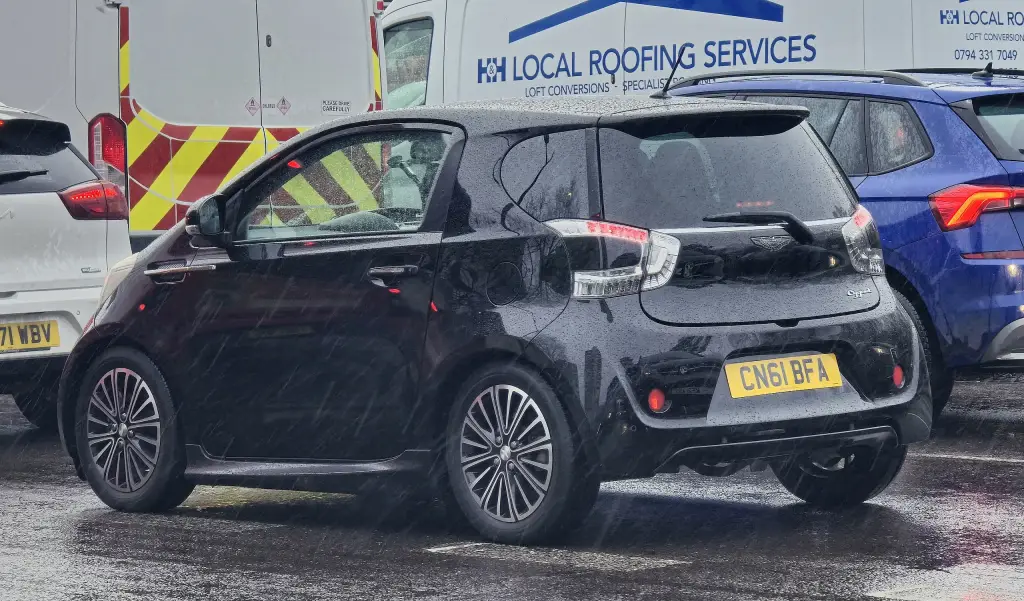
The Aston Martin Cygnet is a rebadged variant of the Toyota/Scion iQ marketed by Aston Martin beginning with the 2011 model year, which allowed Aston Martin to comply with the fleet average emissions regulations imposed by the European Union in 2012. It was developed under the codename P298.
Aston Martin Cygnet at a glance
| Sold | 2011–2013; sales began in January 2011 |
|---|---|
| Base | the Toyota iQ (Scion iQ), redesigned with Aston Martin grille, LED lights and a hand-finished interior |
| Engine | 1.3 L inline-four, 97 bhp (72 kW; 98 PS) |
| CO2 and fuel economy | 110 g/km; 58.9 mpg-US (3.99 L/100 km) according to English Wikipedia |
| Price | about £30,000, about three times the iQ |
| Gearboxes | six-speed manual or CVT |
| Target and result | 4,000 a year planned; about 150 in the UK and fewer than 600 across Europe |
| One-off V8 | a 4.7-litre 430 bhp V8 Cygnet announced in June 2018 for a customer |
History of the Aston Martin Cygnet
The Cygnet was marketed first only in the UK, with sales starting in January 2011, and the market coverage was expanded to other European countries the following year. Sales were not restricted, but demand from existing Aston Martin owners was expected to take priority. Aston Martin CEO Ulrich Bez announced shipping expectations of about 4,000 a year at a price of about £30,000, roughly three times the price of the iQ, and said the Cygnet showed the company’s commitment to innovation and integrity while respecting the need to satisfy demands of emissions and space.
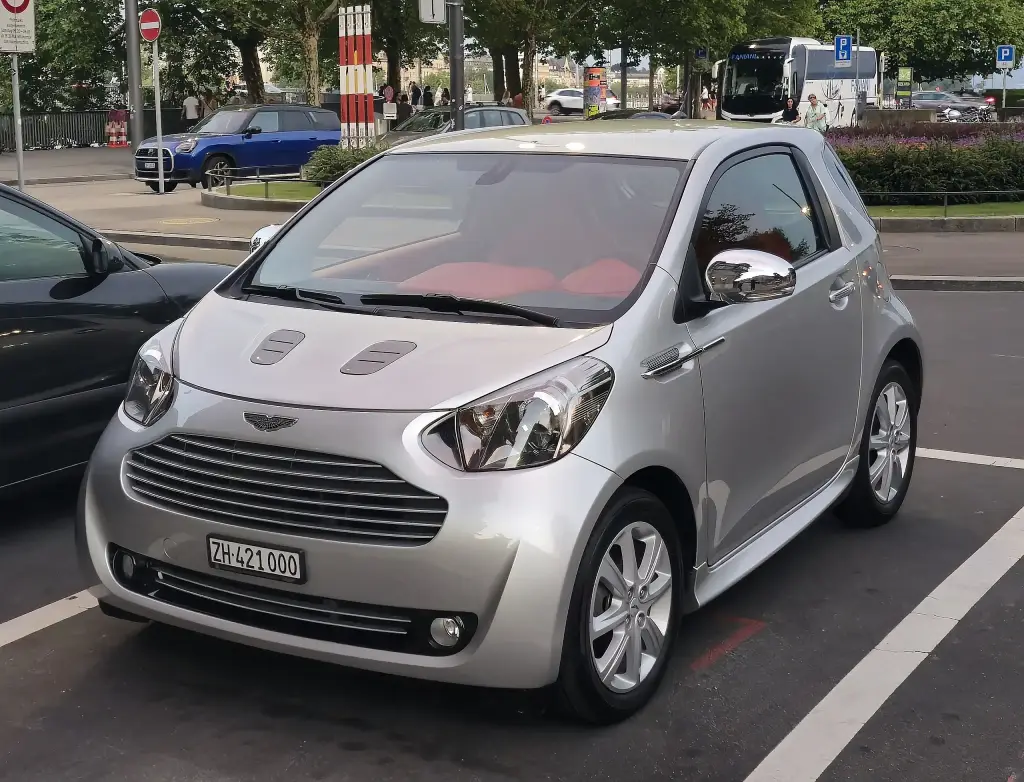
The Cygnet had revisions to the exterior and interior but shared other specifications with the iQ, with a 97 bhp 1.3-litre inline-four, producing 110 g of CO2 per km. French Wikipedia says that it was hand-assembled, that the standard equipment included Garmin navigation, a CD MP3 radio, automatic air conditioning, leather seats and steering wheel, an Alcantara roof lining and a leather-bag glove box, and that in 2011 it cost €38,250 with a six-speed manual and €39,705 with a CVT; Italian Wikipedia says the Italian price was €39,150 against about €12,000 for the Japanese original.
End of production
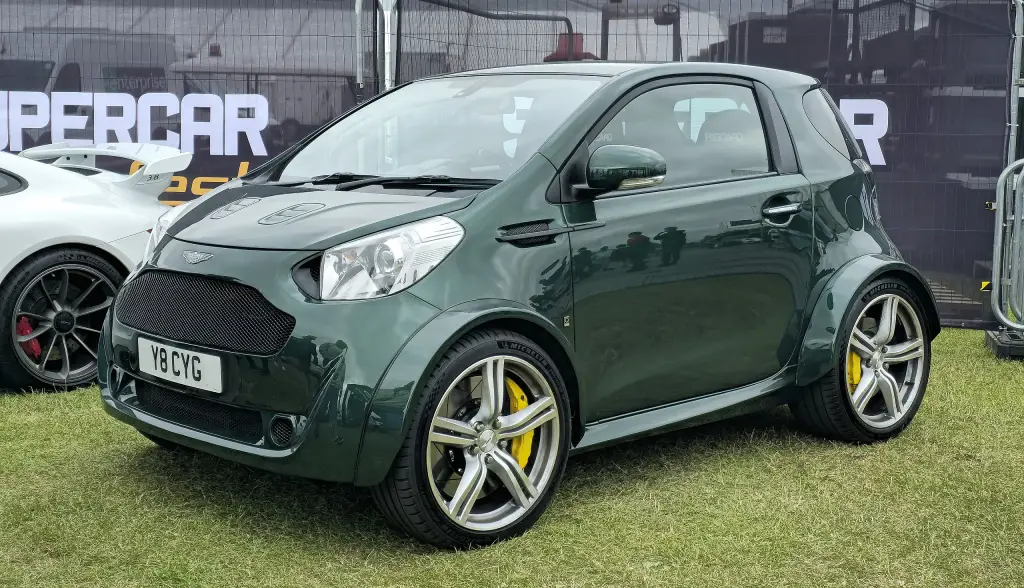
In September 2013, after just over two years, Aston Martin announced it would stop production of the Cygnet. It was the second-shortest-running production car in Aston Martin history after the 2012 Virage, which was produced for only a year. It was cancelled because of disastrously low sales, reaching only 150 units in the UK and fewer than 600 across Europe, against an annual target of 4,000. In June 2018 Aston Martin announced a one-off V8 edition for a customer, with a 4.7-litre 321 kW (430 bhp) V8.
Design and features
- Engine: a Toyota 1.3 L inline-four of about 98 hp.
- Body: Toyota iQ architecture with Aston Martin grille and LED lights.
- Interior: leather and Alcantara, a Garmin navigation system and a leather-bag glove box.
Aston Martin Cygnet versions
- Cygnet (2011–2013): the city car.
- Cygnet V8 (2018): a single one-off for a customer.
More Aston Martin cars are in our Aston Martin collection, for example the Virage, the only Aston to run shorter, the DB9 and the Vanquish.
Aston Martin Cygnet questions and answers
What is the Aston Martin Cygnet?
A rebadged Toyota iQ sold as a luxury city car from 2011 to 2013.
Why did Aston Martin build it?
To lower its fleet average emissions under the 2012 European rules.
How much did it cost?
About £30,000, roughly three times the price of the Toyota iQ.
Why did it end?
Disastrously low sales: about 150 cars in the UK and fewer than 600 across Europe.
Was there a V8 Cygnet?
Yes, a one-off with a 4.7 L V8 of 430 bhp announced in June 2018.
Video: Der Aston Martin Cygnet im Test – Abenteuer Auto
Video by Abenteuer Auto on YouTube.
Sources
- Toyota iQ, English Wikipedia: the Aston Martin Cygnet section
- Aston Martin Cygnet, French Wikipedia: equipment and prices
- Aston Martin Cygnet, Italian Wikipedia: context, price and engine