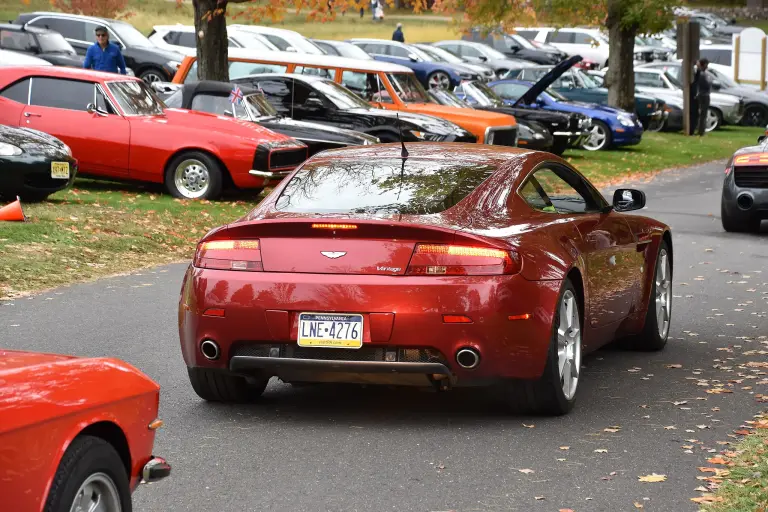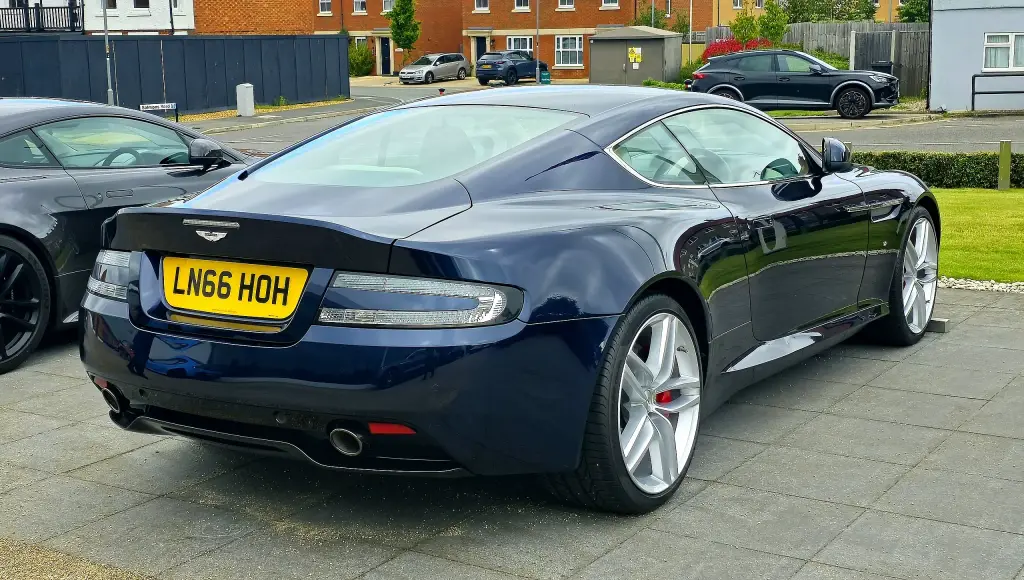
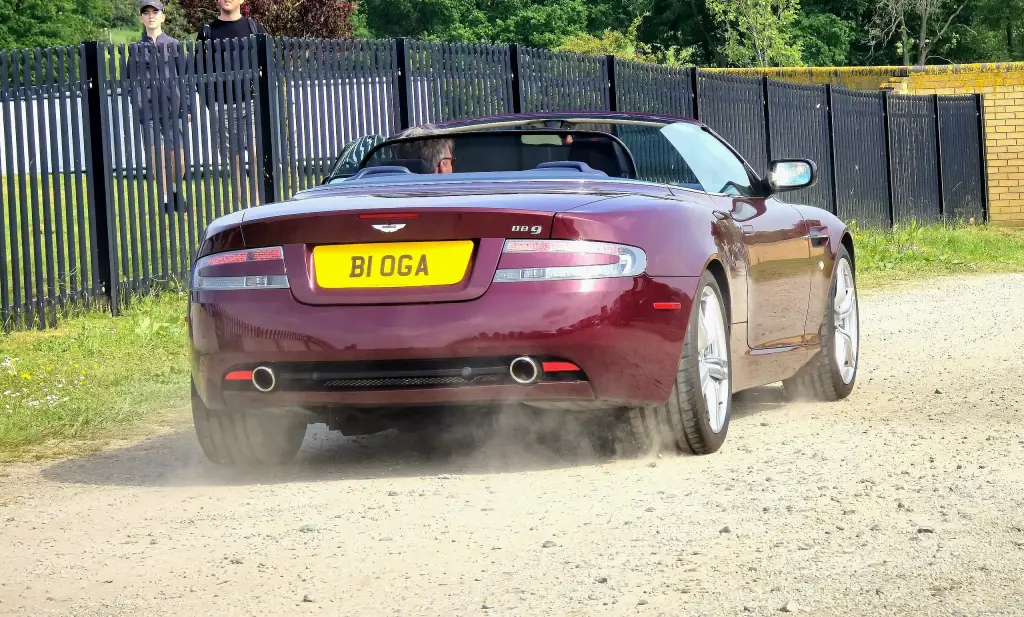
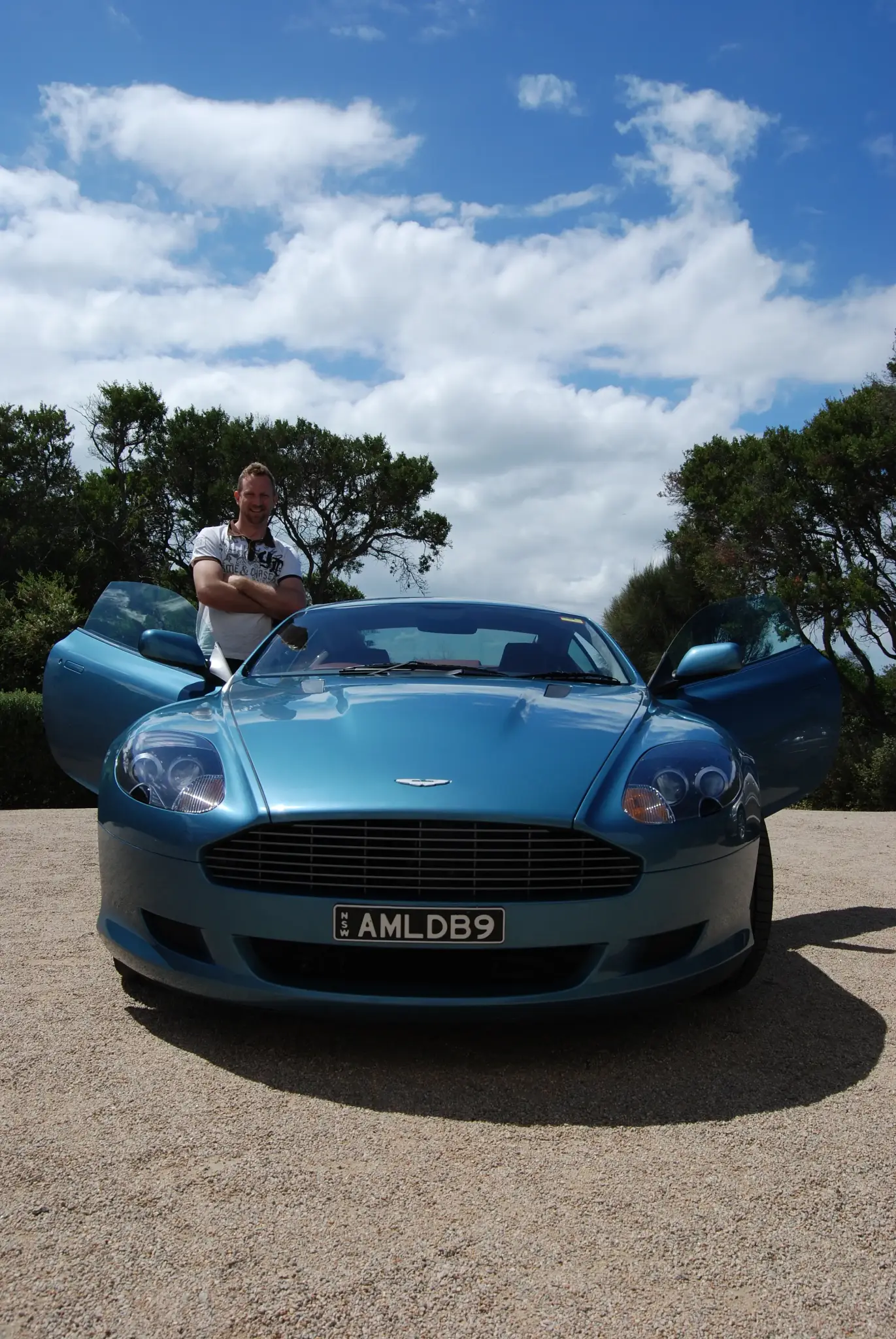
The Aston Martin DB9 is a two-door grand tourer produced by the British carmaker Aston Martin in Gaydon, Warwickshire. It was made as a coupé starting in 2004 and as a convertible known as the Volante from 2005, until their discontinuation in 2016.
Aston Martin DB9 at a glance
| Produced | coupé from 2004, Volante from 2005, until 2016 |
|---|---|
| Designers | Ian Callum and Henrik Fisker |
| Debut | Frankfurt Motor Show 2003; the Volante at the Detroit Auto Show in 2004 |
| Successor of | the DB7 |
| Platform | the aluminium vertical/horizontal (VH) platform, with aluminium and composite materials |
| Engine | V12 |
| Updates | 2008 and 2010 (headlights, tail-lights, engine, interior); 2012 restyled front fascia |
| Racing versions | DBR9 (FIA GT1) and DBRS9 (FIA GT3) |
| Special editions | DB9 LM, DB9 Zagato Spyder Centennial, DB9 GT |
This page is based on English Wikipedia only (a trusted source), so the facts were not cross-checked against a second source.
History of the Aston Martin DB9
The “DB” letters are the initials of David Brown, owner of Aston Martin from 1947 to 1972. Although the DB9 succeeded the DB7, Aston Martin did not call it the DB8 for fear that the name would suggest a V8 engine, since the DB9 has a V12; reports indicated the company also felt that “DB8” would suggest a progressive evolution when the DB9 marked an entirely new vehicle.
Background and development
In 1994 Aston Martin, then owned by Ford, began producing the DB7 as an entry-level grand tourer, the only Aston Martin to use steel monocoque construction, designed by Jaguar. In 1999 it began making the DB7 Vantage with a Ford-developed V12; it became so popular that it diverted sales from the six-cylinder model, which was dropped later that year. The DB7 remained in production until 2004 with about 7,000 built and was then the best-selling model in Aston Martin’s history until its successor, the DB9, surpassed it. In the late 1990s Aston Martin developed a model strategy to introduce new technologies, and Ford invested heavily in engine and structural technology for an entirely new platform, named “vertical/horizontal”, which would underpin most mass-produced Aston Martins between 2003 and 2016. The Vanquish of 2001 was the first car of this era.
In July 2000 Ford appointed Ulrich Bez chief executive and chairman of Aston Martin. The DB7’s replacement had the project codename AM802, a 2+2 grand tourer, while a third project, AM305, a smaller two-seater intended to rival the Porsche 911 and Ferrari 360, became the Vantage in 2005. Ian Callum was appointed lead designer for AM802, and the DB9 was designed by Callum and Henrik Fisker.
Production and updates
Aston Martin made a series of updates over production: the first two, in 2008 and 2010, involved minor changes to elements such as the headlights, tail-lights, engine and interior, and a 2012 update brought a completely restyled front fascia with largely redesigned headlights that gave the DB9 a design reminiscent of the 2011–2012 Virage.
Racing and special editions
Aston Martin Racing adapted the DB9 for sports car racing as the DBR9 and the DBRS9, for the FIA GT1 and FIA GT3 classes; they were extensively modified, with interiors stripped, aluminium panels replaced by carbon fibre and the engines tuned for more power and torque. Special editions included the DB9 LM, the DB9 Zagato Spyder Centennial and the DB9 GT. Reviewers praised the design as better than its competitors’ but criticised the handling and limited cargo capacity.
Design and features
- Platform: the VH platform with extensive use of aluminium and composites.
- Engine: a V12.
- Design: by Ian Callum and Henrik Fisker.
- Body styles: coupé and Volante convertible.
Aston Martin DB9 versions
- DB9 coupé (2004–2016) and Volante (2005–2016): the main cars.
- DB9 LM, DB9 Zagato Spyder Centennial and DB9 GT: special editions.
- DBR9 and DBRS9: the GT1 and GT3 racing versions.
More Aston Martin cars are in our Aston Martin collection, for example the DB7 it succeeded, the DBR9 racer and the DBS.
Aston Martin DB9 questions and answers
When was the Aston Martin DB9 built?
The coupé from 2004 and the Volante from 2005, until 2016.
Who designed it?
Ian Callum and Henrik Fisker.
Why was it not called DB8?
Aston Martin feared the name would suggest a V8 engine, while the DB9 has a V12.
What platform does it use?
The aluminium vertical/horizontal (VH) platform.
What racing cars came from it?
The DBR9 for FIA GT1 and the DBRS9 for FIA GT3.
Video: 2014 Aston Martin DB9 Volante (517hp) – DRIVE & SOUND (1080p FULL HD)
Video by Automann-TV on YouTube.
Sources
- Aston Martin DB9, English Wikipedia: name, background, development, racing