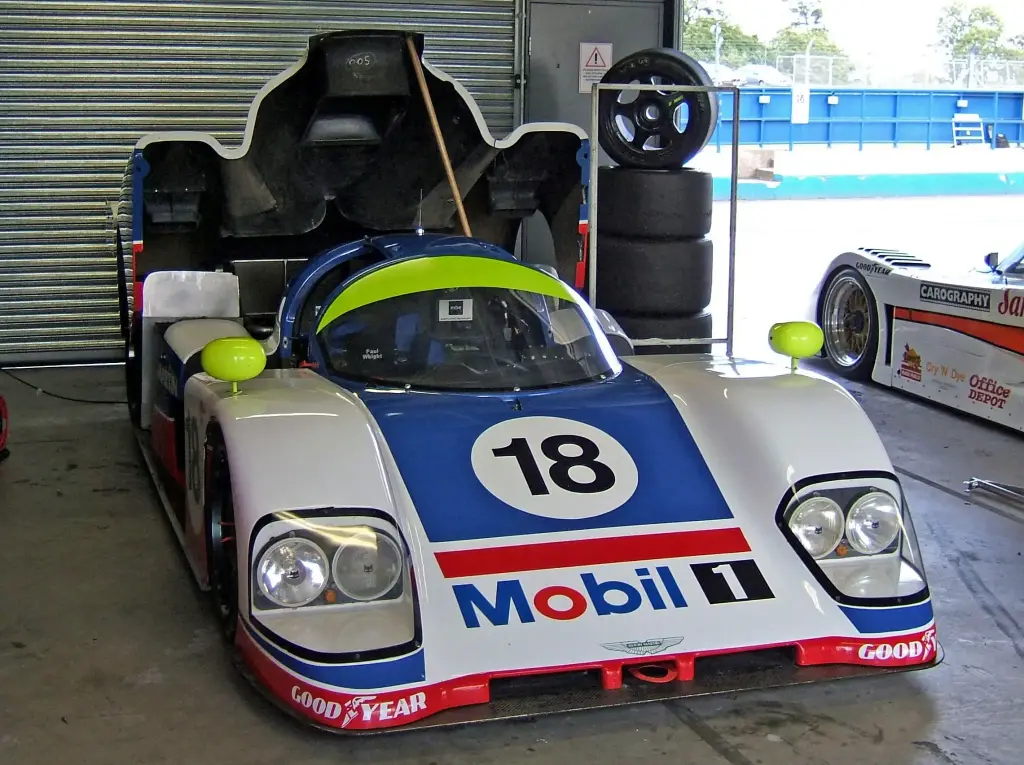
The Aston Martin AMR1 was a Group C racing car developed in 1989 for Aston Martin. It took part in the 1989 World Sports Prototype Championship and in the 1989 24 Hours of Le Mans.
Aston Martin AMR1 at a glance
| Year | 1989 |
|---|---|
| Category | Group C sports prototype |
| Developed by | Proteus Technology Ltd. (Protech), formed in late 1987 |
| Lead designer | Max Boxstrom; chassis and body built by Courtaulds |
| Engine | 6.0 L V8, 700 hp, called RDP87, built by Callaway from the 5.3 L V8 of the Virage |
| Later engine | 6.3 L Version II V8 with 720 hp |
| Chassis built | four AMR1 chassis finished in early 1989 |
| Best results | 4th at Brands Hatch; 11th overall at Le Mans 1989 |
| Teams championship 1989 | 6th |
This page is based on English Wikipedia only (a trusted source), so the facts were not cross-checked against a second source.
History of the Aston Martin AMR1
After engine-supply work for Nimrod Racing and EMKA Racing in the early 1980s, Aston Martin decided to build its own car for the World Sports Prototype Championship. In late 1987 Peter Livanos, Victor Gauntlett, Richard Williams and Ray Mallock, through his shareholding in Ecurie Ecosse, formed a company, Proteus Technology Ltd. (Protech), to develop and run the AMR1 from the 1989 season.
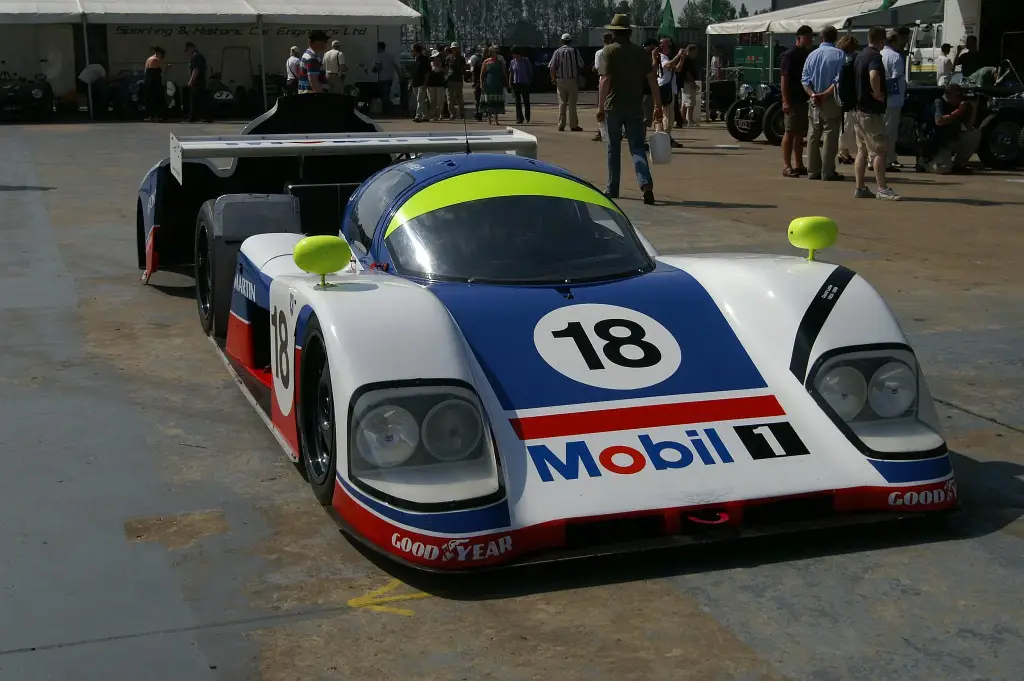
Richard Williams was managing director and team manager, Ray Mallock engineering director, Max Boxstrom lead designer, and Reeves Callaway of Callaway Cars built the engine. Callaway used 5.3 L V8 units from the newly launched Virage to make a 700 hp 6.0 L engine, the RDP87, fitted with a 100 litre fuel cell.
Racing in 1989
The first car, AMR1/01, crashed in testing at Donington Park and was damaged beyond repair, so Aston Martin missed the first round at Suzuka, which incurred a $250,000 fine, and started at Dijon-Prenois, finishing a disappointing 17th. At the 24 Hours of Le Mans two cars (#01 and #03) qualified 32nd and 40th in a field of 56; #03 retired with electrical problems and #01 finished 11th overall.
AMR1/04 then took 4th place at Brands Hatch and 8th at the Nürburgring; two cars finished 6th and 7th at Donington Park. At Spa chassis #05, now with a 720 hp 6.3 L V8, finished 7th, and in the last round in Mexico it was 8th. Aston Martin ended 6th in the Teams Championship, behind Mercedes-Benz, Porsche, Jaguar and Nissan but ahead of Toyota.
AMR2 and AMR3
Development of the AMR2, with a 6.3 L Version III V8 and a more aerodynamic body, began for 1990, but the FIA announced that from 1991 Group C engines would be 3.5 litre normally aspirated only, and Protech was closed in February 1990. AMR2/06 was later built from leftover parts with an AMR1 body. An AMR3 designed by Tony Southgate was planned for 1991, but Aston Martin left racing; it would have been the last racing car produced by the company in this period.
Design and features
- Engine: a 6.0 L V8 of 700 hp, later a 6.3 L Version II V8 of 720 hp.
- Chassis: designed by Max Boxstrom and built by Courtaulds.
- Fuel: a 100 litre fuel cell with a 6.5 litre reserve.
- Weakness: the cars were underpowered against their rivals at Le Mans.
Aston Martin AMR1 versions
- AMR1 (1989): four chassis raced in the 1989 season.
- AMR2: the planned 1990 car with a Version III engine; one chassis, AMR2/06, was built up afterwards.
- AMR3: a 1991 project that was not built.
More Aston Martin cars are in our Aston Martin collection, for example the Virage, whose engine started the AMR1 project, the DBR1 that won Le Mans in 1959 and the DBR9.
Aston Martin AMR1 questions and answers
When was the Aston Martin AMR1 built?
In 1989.
What engine did it use?
A 6.0 L V8 of 700 hp built by Callaway from the Virage V8, later a 6.3 L unit of 720 hp.
How did it do at Le Mans?
One car finished 11th overall in 1989; the other retired with electrical problems.
Who ran the AMR1 project?
Protech, a company formed in 1987 by Peter Livanos, Victor Gauntlett, Richard Williams and Ray Mallock.
Why did the programme end?
The FIA announced a switch to 3.5 litre engines for 1991, and there was no budget for a new engine.
Video: Laguna Seca hot lap: 1989 Aston Martin AMR1
Video by RM Sotheby’s on YouTube.
Sources
- Aston Martin AMR1, English Wikipedia: design, racing history, AMR2 and AMR3