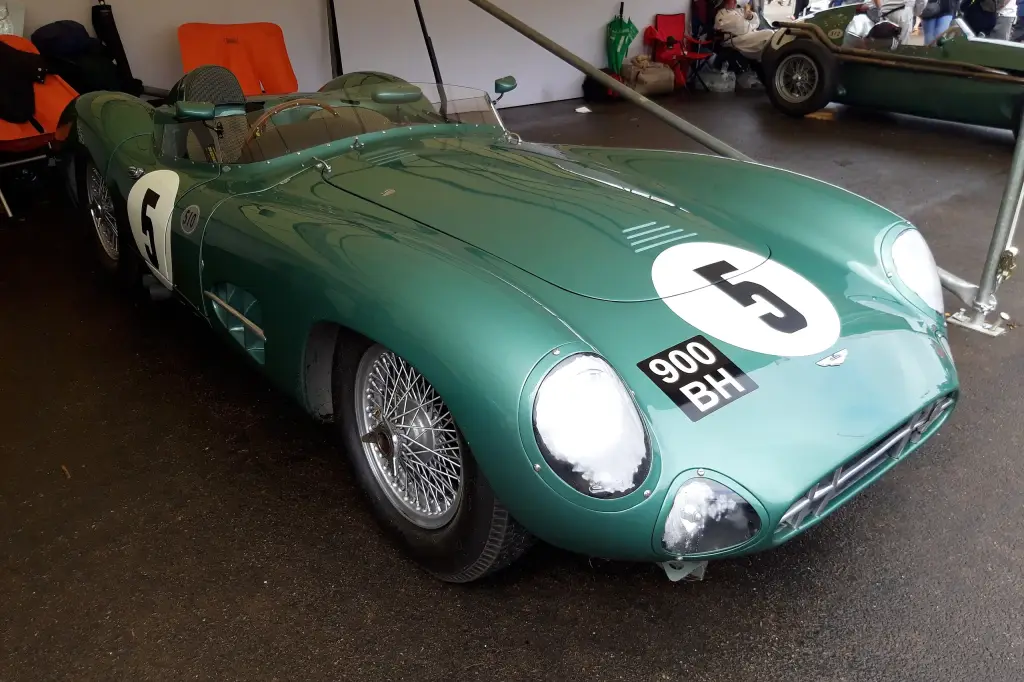
The Aston Martin DBR1 is a sports racing car built by Aston Martin starting in 1956, intended for the World Sportscar Championship as well as non-championship sports car races. It is most famous as the winner of the 1959 24 Hours of Le Mans, Aston Martin’s only outright victory at the endurance classic.
Aston Martin DBR1 at a glance
| Built from | 1956 |
|---|---|
| Chief designer | Ted Cutting |
| Engine, 1956 | 2.5 L (2,493 cc) all-alloy straight-six, RB6.250 |
| Engine, 1957 on | RB6.300 straight-six, 2,992 cc, 250 hp (186 kW) |
| Le Mans | won the 24 Hours in 1959, Aston Martin’s only outright win |
| Championship | six World Sports Car Championship victories, a 1950s record for a car; champion in 1959 |
| Record price | DBR1/1 sold in August 2017 for US$22,555,000, a record for a British-made car |
This page is based on English Wikipedia only (a trusted source), so the facts were not cross-checked against a second source.
History of the Aston Martin DBR1
Rule changes meant that entrants no longer had to use road-legal cars or cars based on them, such as the DB3S. With a clean sheet for 1956, Aston Martin created the DBR1 with Ted Cutting as chief designer. The body evolved from the DB3S shape with a much lower profile; the back of the front wheel well was closed, and the full bodywork had a large triangular vent on the side, a design trait that became standard on all later Aston Martins.
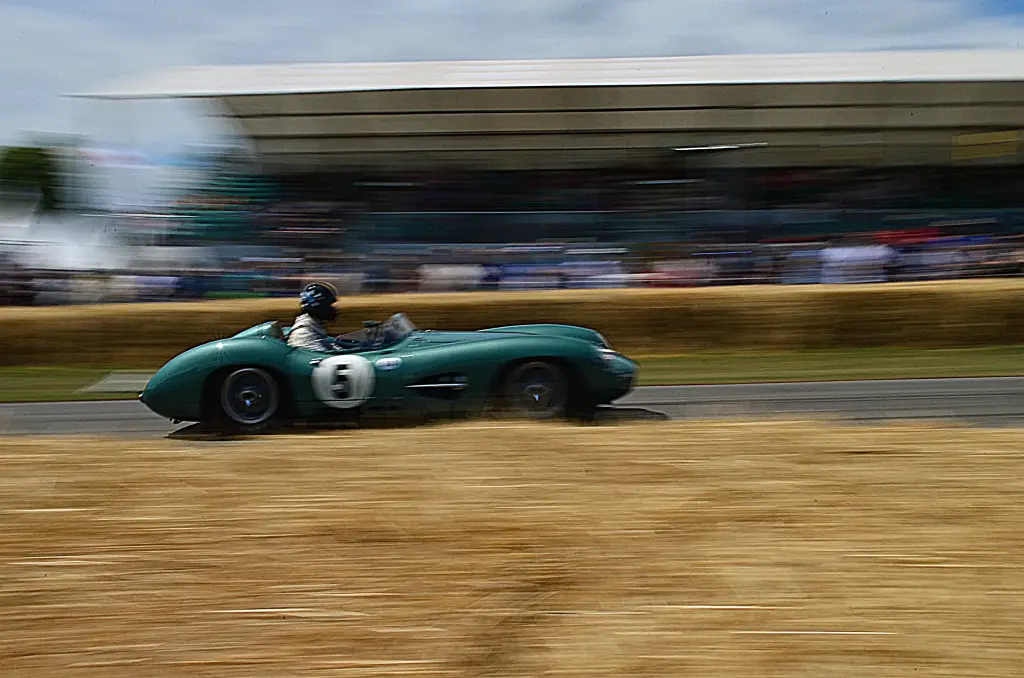
The DBR1 first had a smaller 2.5 L all-alloy racing engine, the RB6.250, very loosely derived from the racing version of the Lagonda straight-six, to comply with that year’s Le Mans regulations; the 3.0 L RB6.300, rated at 250 hp, was developed for 1957.
Racing, 1956–1957
The DBR1 debuted at the non-championship 1956 24 Hours of Le Mans with the 2.5 L DBR1/1 beside two older 2.9 L DB3S. It ran well against bigger-engined cars such as the winning Jaguar D-type, but suffered gearbox failure after 246 laps with Reg Parnell and Tony Brooks while seventh.
In 1957 DBR1/1 recorded its first finish, a second place for Roy Salvadori at the British Empire Trophy, and after an upgrade to 3.0 L and with the identical DBR1/2 it took the top two places at the Spa sports car race, Tony Brooks ahead of Salvadori. DBR1/2 then won the 1000 km Nürburgring with Brooks and Noël Cunningham-Reid, Aston Martin’s first World Championship win since the DB3S victory at the 1953 Tourist Trophy, against the full works Ferrari and Maserati teams. Both cars failed to finish at Le Mans in 1957, which ended the title hopes.
1959
The 1959 season brought three consecutive triumphs, at the Nürburgring, Le Mans and the Tourist Trophy, equalling the record set by the Ferrari 250TR in 1958. The DBR1 is one of only three cars in the 1950s to win both the World Sports Car Championship and Le Mans in the same year, the others being the Ferrari 375 Plus in 1954 and the Ferrari 250TR in 1958.
Design and features
- Body: low, full bodywork with a large triangular side vent, a trait later used on all Aston Martins.
- Engine: a straight-six of 2.5 L at first, then 3.0 L with 250 hp.
- Origin: a purpose-built racer freed from road-car rules, designed by Ted Cutting.
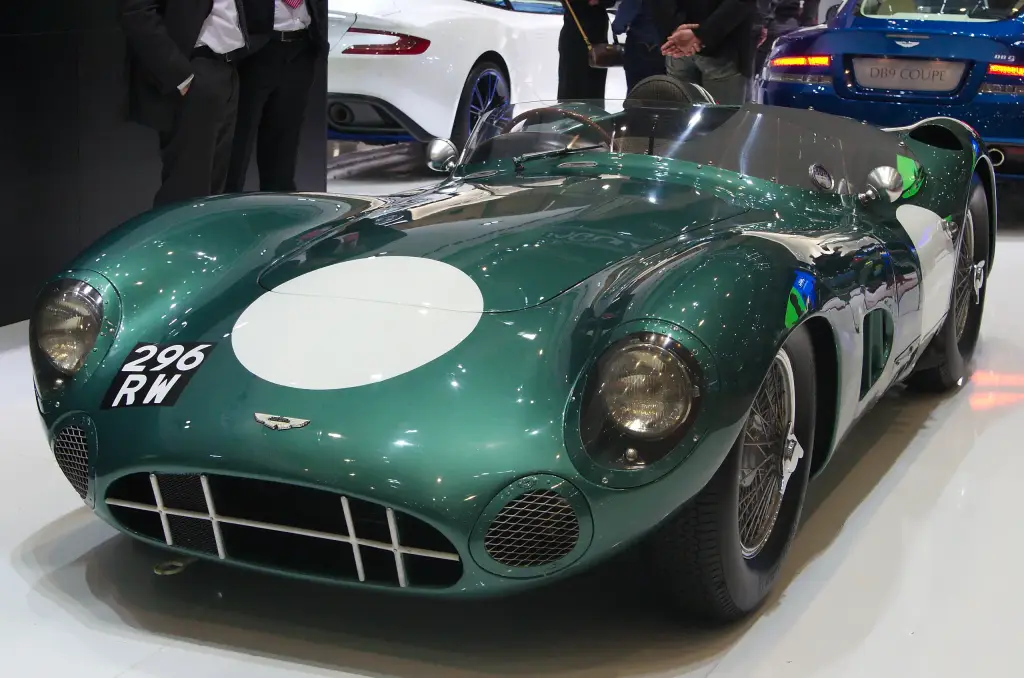
Aston Martin DBR1 versions
- DBR1 2.5 L (1956): DBR1/1 with the RB6.250 engine.
- DBR1 3.0 L (1957 on): DBR1/1 and DBR1/2 and later cars with the RB6.300.
More Aston Martin cars are in our Aston Martin collection, for example the DB3S that preceded it, the DBR2, the DBR4 Formula One car and the DBR9.
Aston Martin DBR1 questions and answers
What is the Aston Martin DBR1?
A sports racing car built from 1956 that won Le Mans and the World Sportscar Championship in 1959.
Who designed it?
Ted Cutting.
How much did one sell for?
DBR1/1 sold in August 2017 for US$22,555,000, a record for a British-made car.
What engine did it use?
A straight-six, 2.5 L at first and then 3.0 L with 250 hp.
Did it win Le Mans more than once?
No, the 1959 win is Aston Martin’s only outright victory at Le Mans.
Video: POV – Driving the Evanta Aston Martin DBR1
Video by Seb Delanney on YouTube.
Sources
- Aston Martin DBR1, English Wikipedia: design, racing history, record price