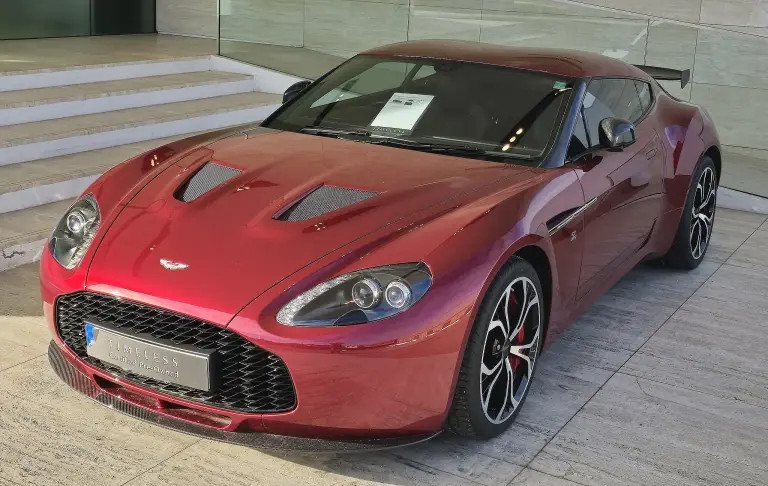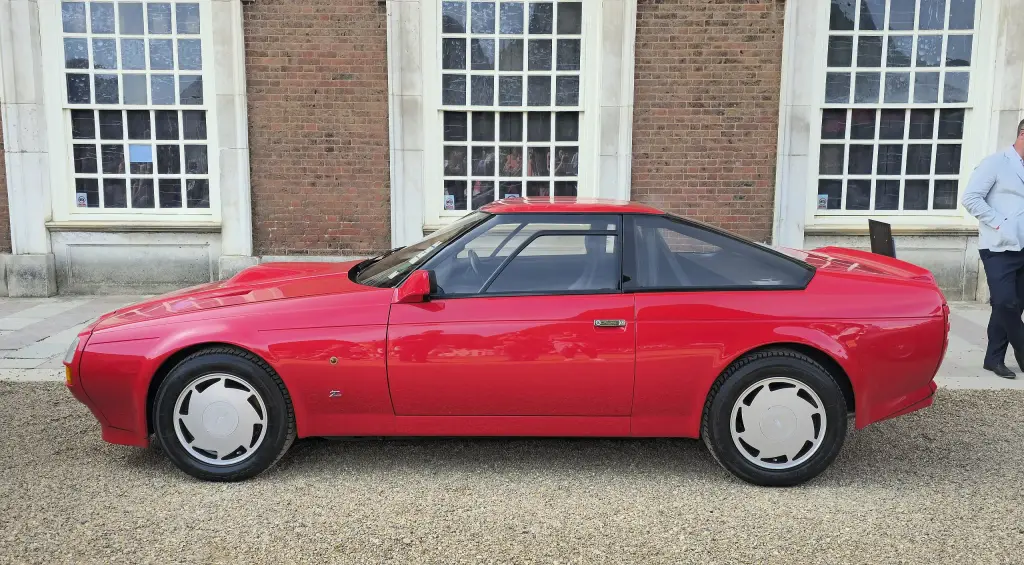
The Aston Martin V8 Zagato is a grand tourer manufactured by Aston Martin. Just 52 coupés and 37 convertibles were built between 1986 and 1990. The coupé was first unveiled at the 1986 Geneva Motor Show, and orders were quickly taken even though only a drawing of the car was shown.
Aston Martin V8 Zagato at a glance
| Built | 52 coupés and 37 convertibles, 1986 to 1990 |
|---|---|
| Unveiled | 1986 Geneva Motor Show |
| Base car | Aston Martin V8 Vantage |
| Body | all-alloy, by the coachbuilder Zagato |
| Engine | V8 with twin-choke Weber carburettors |
| Output | 430 bhp (321 kW; 436 PS) |
| Top speed | 300 km/h (186 mph) |
| Drag coefficient | 0.29 at first; 0.33 with the added spoilers |
| Price | $156,600 for the coupé; $171,000 for the convertible |
| Later values | cars were changing hands for £450,000 by the end of the decade |
History of the Aston Martin V8 Zagato
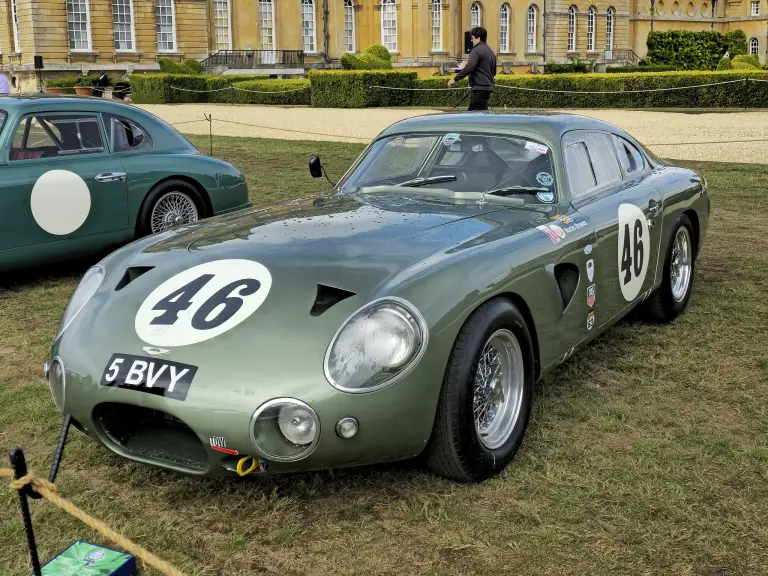
The V8 Zagato was based on the Aston Martin V8 Vantage but with a body by the coachbuilder Zagato. The two firms had worked together in the 1950s and 1960s, when Zagato clothed the DB4 into the DB4 GT Zagato of 1960, which became a classic. At the 1984 Geneva Motor Show they agreed to revive the tradition. The target was a top speed of 300 km/h, so only the drivetrain of the strongest V8, the V8 Vantage, was considered, and the weight and the aerodynamics were to be worked on.
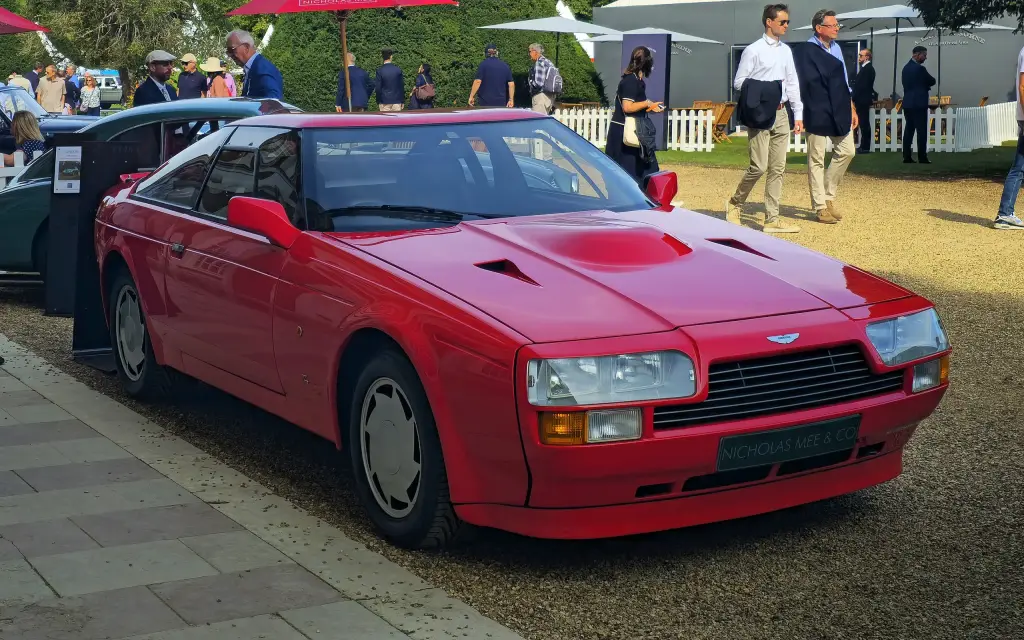
Zagato drew a smooth-surfaced modern coupé body that bore no resemblance to the current Aston Martins; it was an angular modern interpretation of the DB4 GT Zagato. Only the highly stylised grille quoted traditional Aston elements, and the squared-off grille was especially controversial. According to the German source the headlights sat behind glass covers, the windows were bonded in place, with the door windows opening only through a small cut-out, and the tail-lights came from the Aston Martin Lagonda.
Engineering
The body was initially very slippery, with a drag coefficient of 0.29, but wind-tunnel tests showed that it produced lift at both axles, so front and rear spoilers had to be added, raising the figure to 0.33. Aston Martin had planned to give the Vantage engine fuel injection exclusively for the Zagato, but the injection system harmed the exhaust emissions of the high-compression engine and could not meet American rules, so the car reverted to twin-choke Weber carburettors. It was unveiled in that form in Geneva in 1986. The V8 produced 430 bhp and the all-alloy car could reach 300 km/h. Aston delivered runnable chassis to Milan, where Zagato built the body and completed the car.
Coupé and convertible
Production began in the summer of 1986. The decision to build a convertible later was controversial: all 52 coupés had already been bought at the height of the supercar speculation market, and owners felt additional cars would lower the value of the coupés. The convertibles, which cost $171,000, consistently fetch higher prices than the roofed cars. The coupé cost $156,600 at the time, but because of its rarity and its release during the supercar price boom of 1987 to 1990, cars were changing hands for £450,000 by the end of the decade.
Design and features
- Body: an angular all-alloy shape by Zagato, with a squared-off grille.
- Engine: the Vantage V8 with four twin-choke Weber carburettors.
- Aero fix: spoilers added after wind-tunnel tests showed lift.
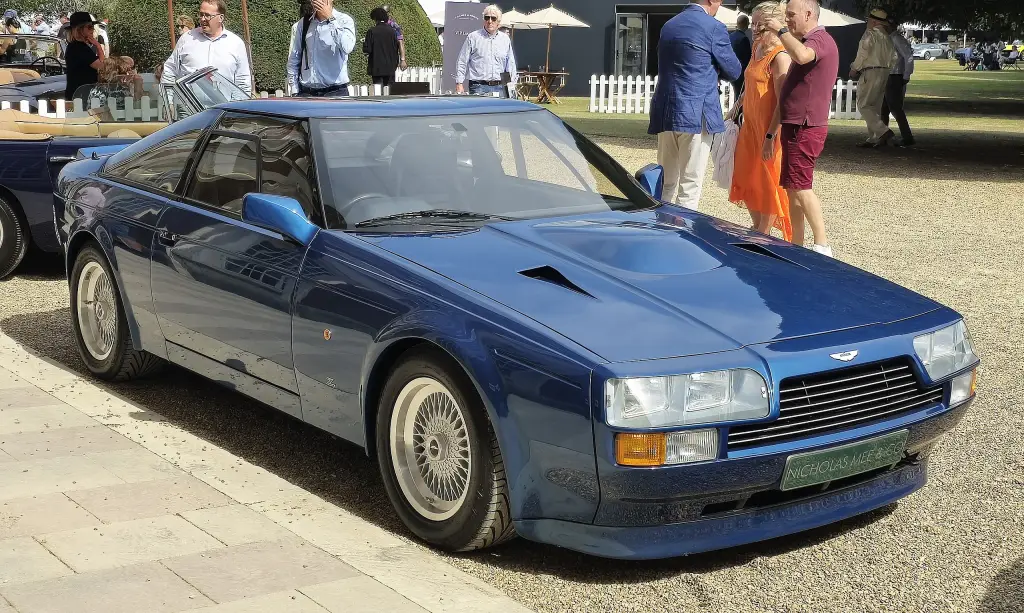
Aston Martin V8 Zagato versions
- V8 Zagato coupé: 52 built, unveiled in Geneva in 1986.
- V8 Zagato convertible: 37 built, added later and controversial among coupé owners.
Its inspiration was the Aston Martin DB4, and its mechanical base was the V8 line that included the Aston Martin AMV8. More cars are in our Aston Martin collection.
Sources
- Aston Martin V8 Zagato, English Wikipedia: production, design, price
- Aston Martin V8 Zagato, German Wikipedia: development, aerodynamics, carburettors