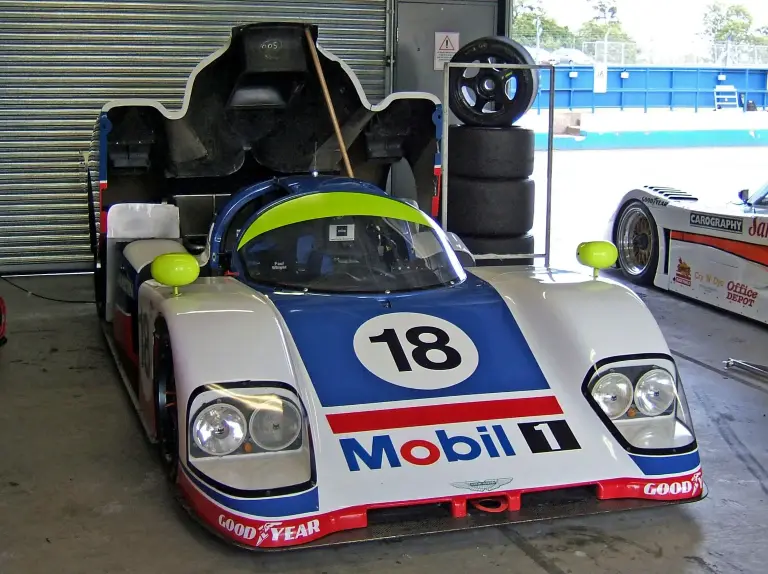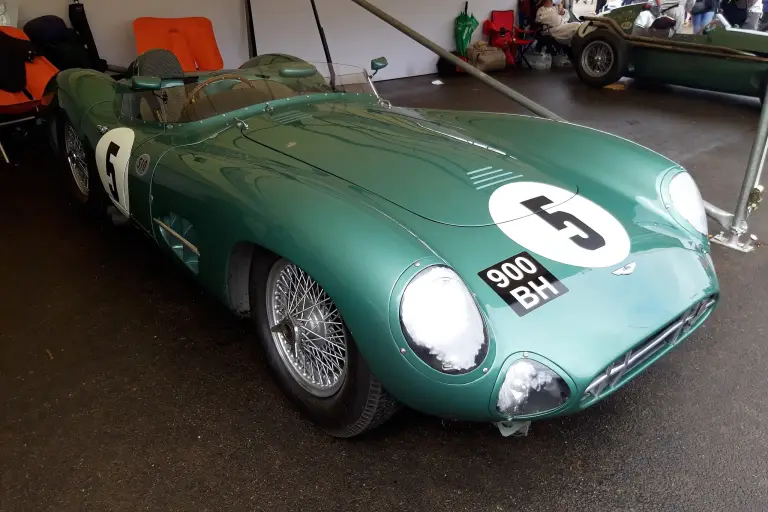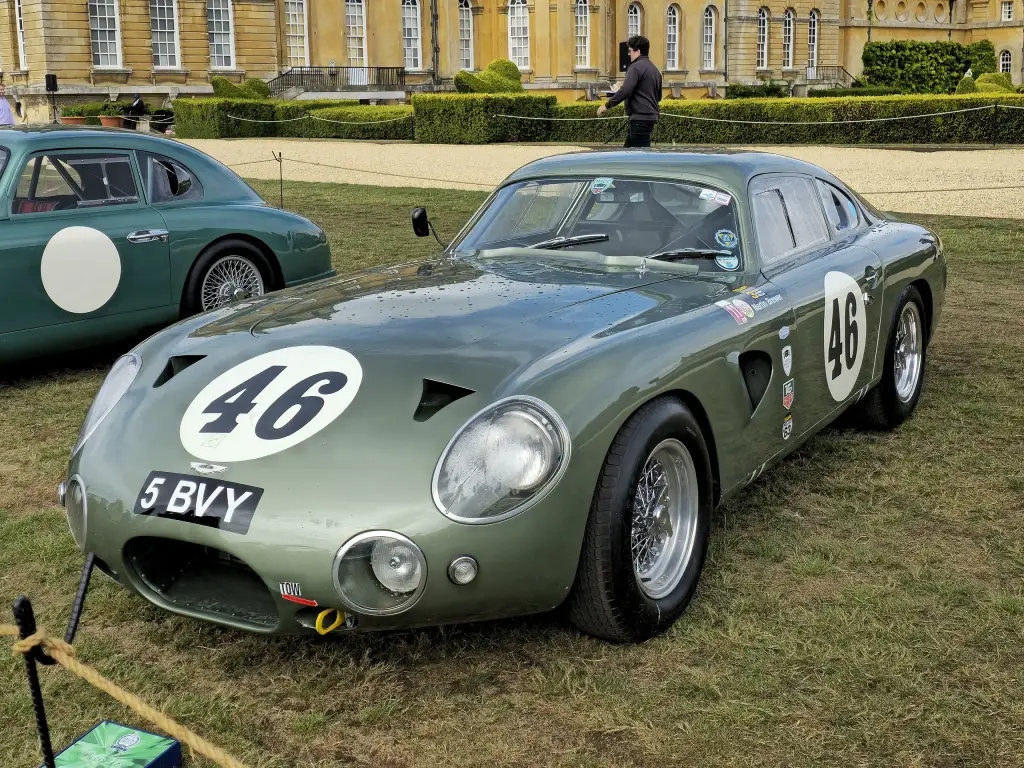
The Aston Martin DP214 was a prototype sports car developed by Aston Martin for use in grand touring-style racing, including the 24 Hours of Le Mans. Two DP214s were built in 1963, and one survives today.
Aston Martin DP214 at a glance
| Built | two cars in 1963; one survives |
|---|---|
| Chassis | DB4GT chassis #0194/R and #0195/R |
| Engine | Tadek Marek 3.7-litre straight-six bored to 3,750 cc from 3,670 cc |
| Body | completely redesigned, wider than the DP212, with a Kamm-tail rear end and a new nose |
| Le Mans 1963 practice | official time 4m 00s; Innes Ireland recorded 300 km/h (186.4 mph) on the Mulsanne Straight |
| Cause of failure | cast pistons used because there was no time to forge them; piston failure on both cars |
This page is based on English Wikipedia only (a trusted source), so the facts were not cross-checked against a second source.
History of the Aston Martin DP214
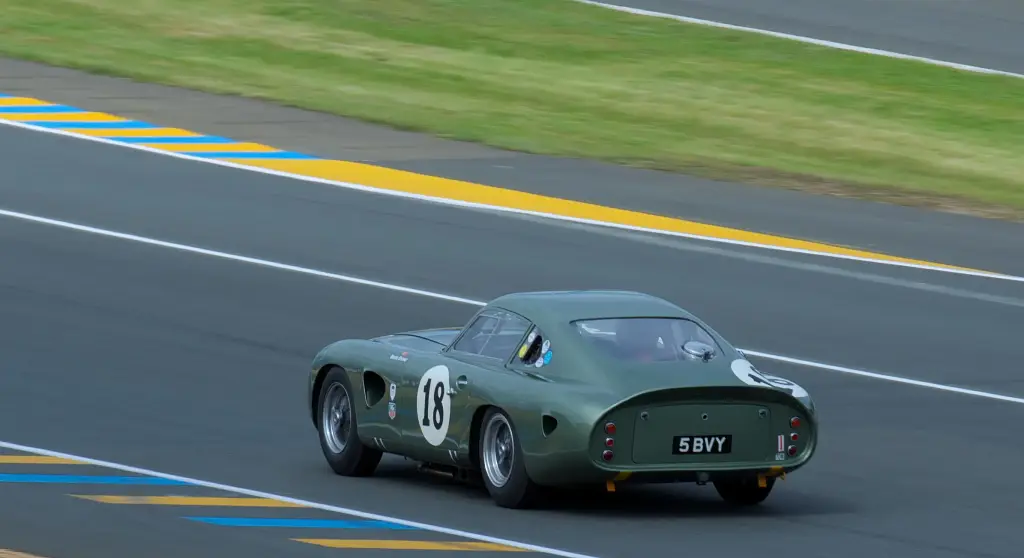
Like its predecessor the DP212, the DP214 was based on a DB4GT chassis to comply with GT regulations. The body was completely redesigned, using elements of the DP212 such as the Kamm-tail rear end, but it was wider and the nose was a completely new design. It used a production Tadek Marek 3.7-litre inline-six bored out to 3,750 cc, unlike the DP212’s larger 4.0-litre engine.
Racing, 1963
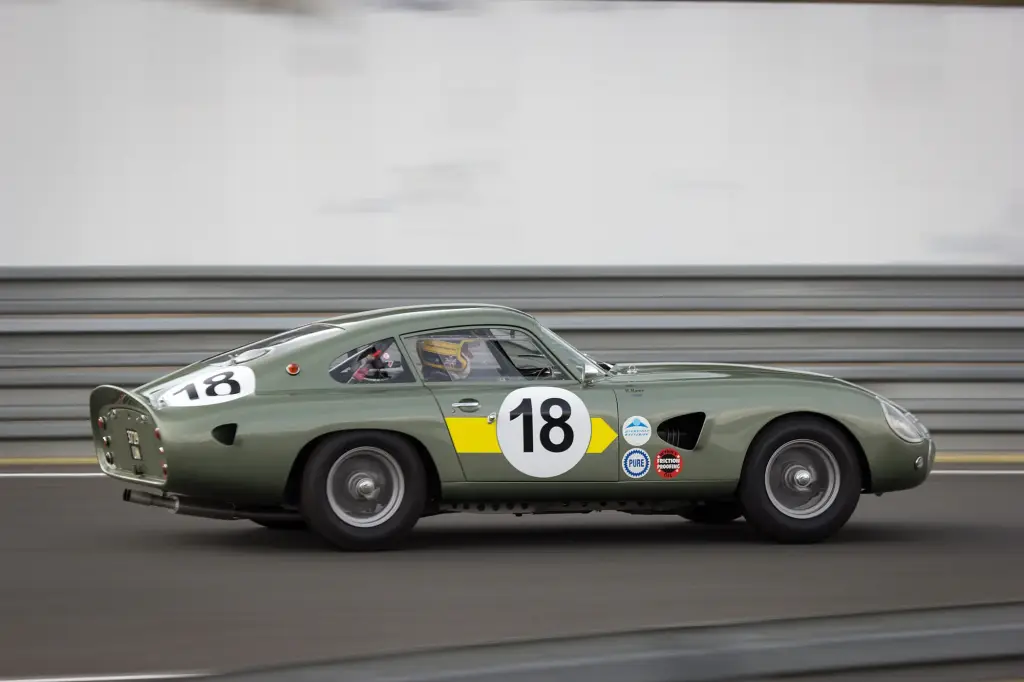
Unlike the DP212, the DP214s were used in races other than Le Mans. They debuted with the DP215 at the 1963 24 Hours of Le Mans, with Bill Kimberley and Jo Schlesser in 0194 and Bruce McLaren and Innes Ireland in 0195. In practice the DP214 set an unofficial time of 3m 58.7s and an official time of 4m 00s, with Ireland recording 300 km/h down the Mulsanne Straight.
On lap 28 McLaren pitted in 0195 when leading the GT class and 10th overall; Ireland took it to 6th overall, but a piston failed on the Mulsanne Straight on lap 60 and forced them to retire. The engine failure spilled 20 litres of oil on the track, causing a multiple accident involving Roy Salvadori’s Jaguar E-Type lightweight and Jean-Pierre Manzon’s René Bonnet Aerodjet LM6, in which Christian Heins’ Alpine M63 Renault crashed and the driver was killed. DP214 0194 reached 5th overall after nearly eight hours and was 3rd and leading the GT class at ten hours, but it suffered the same piston failure. That was Aston Martin’s last Le Mans of the era. John Wyer records that both cars, and the DP215, were capable of winning that year, but preparation left insufficient time to have forged pistons made, so they used cast pistons, which failed.
Afterwards a lone DP214 driven by Innes Ireland finished sixth overall and second in class in the Guards Trophy at Brands Hatch, and 0194 finished seventh and fourth in class in the Tourist Trophy at Goodwood.
Design and features
- Chassis: DB4GT chassis numbers 0194/R and 0195/R.
- Body: a Kamm tail and wider bodywork than the DP212.
- Engine: a bored-out 3,750 cc version of Tadek Marek’s 3.7 L straight-six.
Aston Martin DP214 versions
- DP214 (1963): two cars, 0194 and 0195.
- DP212 (1962): the predecessor with a 4.0 L engine.
- DP215: the companion car that raced with the DP214s at Le Mans 1963.
More Aston Martin cars are in our Aston Martin collection, for example the DB4 on whose chassis it was built, the DBR1 and the DB5.
Aston Martin DP214 questions and answers
What is the Aston Martin DP214?
A prototype GT racing car built in 1963 on DB4GT chassis.
How many were built?
Two, of which one survives.
How fast was it at Le Mans?
Innes Ireland recorded 300 km/h (186.4 mph) down the Mulsanne Straight in practice.
Why did it retire at Le Mans?
Piston failures; cast pistons were used because there was no time for forged ones.
What did DP stand for?
Development Project.
Video: Aston Martin DP 214
Video by Babylon Car Video on YouTube.
Sources
- Aston Martin DP214, English Wikipedia: development and racing history