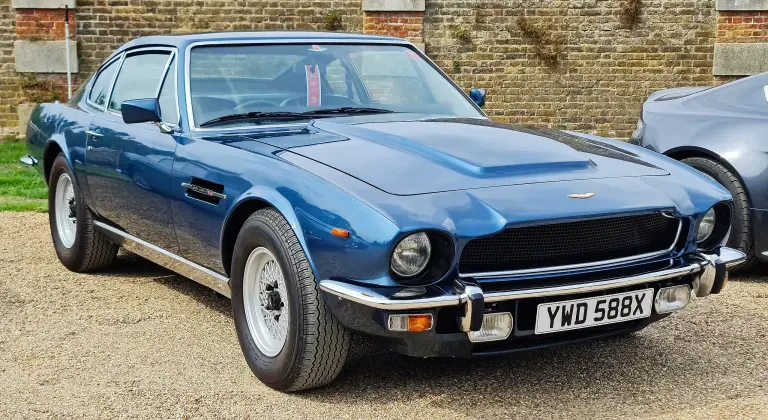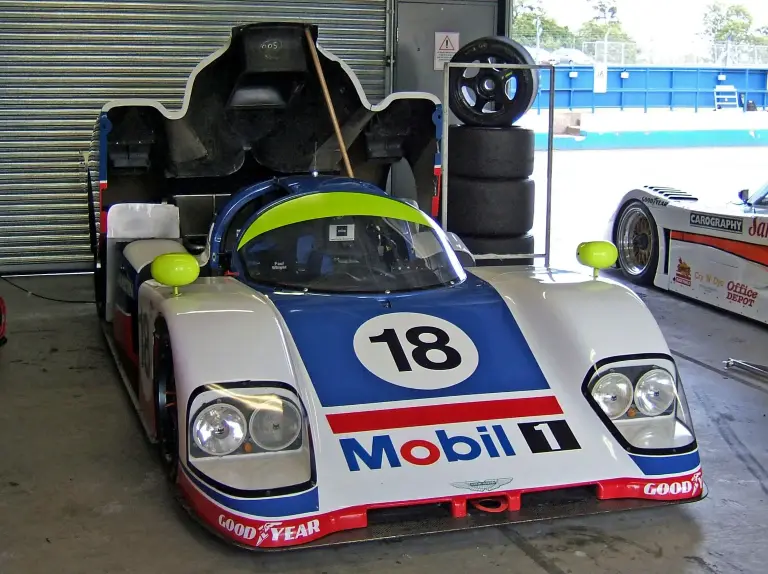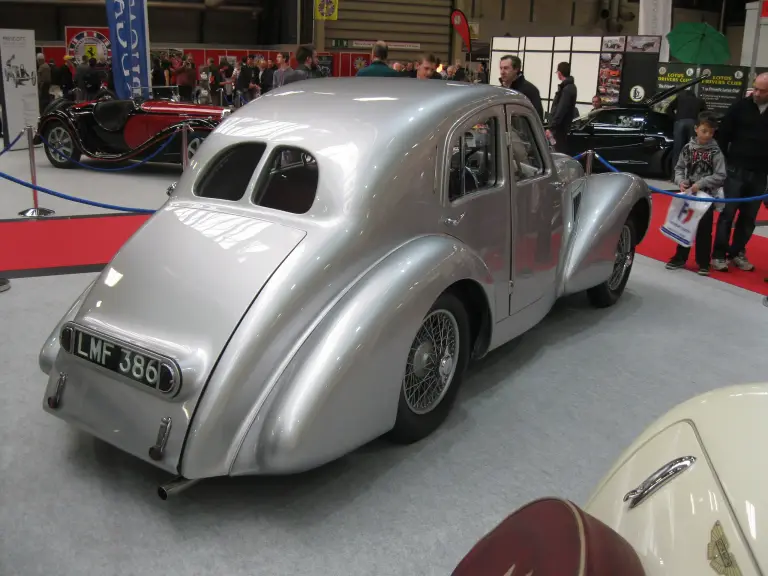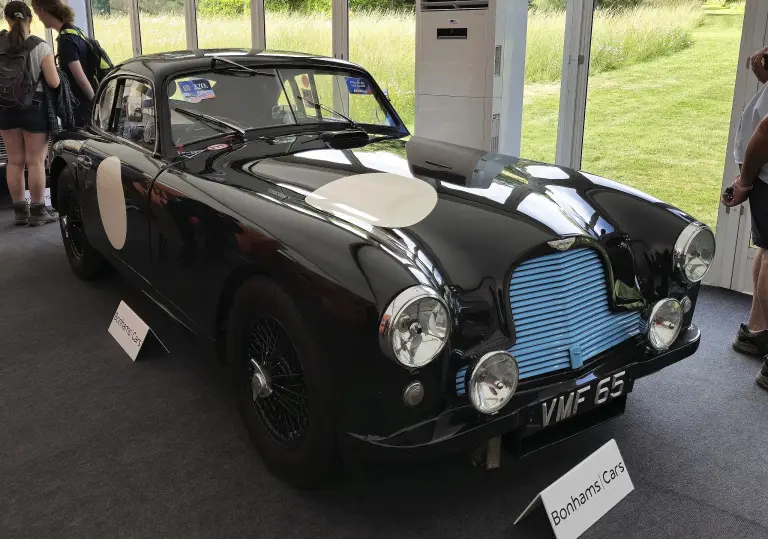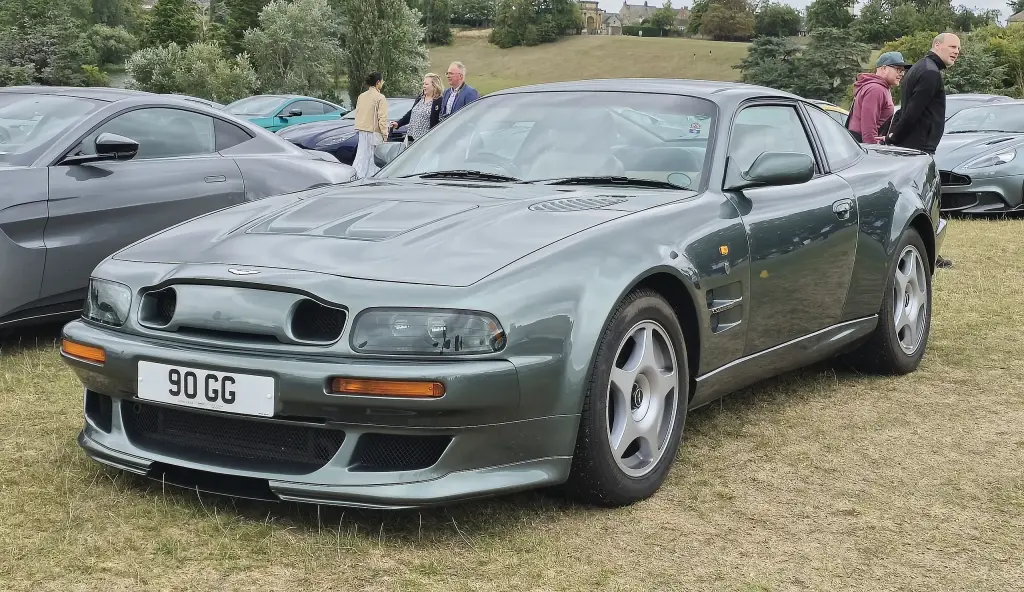
The Aston Martin Virage is an automobile produced by Aston Martin as a replacement for its V8 models. Introduced at the Birmingham Motor Show in 1988, it was joined by the high-performance Vantage in 1993, after which the name of the base model was changed to V8 Coupé in 1996.
Aston Martin Virage at a glance
| Introduced | Birmingham Motor Show, 1988; produced 1989–2000 |
|---|---|
| Built | 1,050 cars by the end of the 2000 model year |
| Engine | 32-valve 5.3 L (5,340 cc) V8, Callaway-designed heads, Weber-Marelli fuel injection; 330 hp (246 kW), 494 N·m |
| Upgrade | 350 hp (261 kW) announced at the 1996 Geneva Motor Show |
| Weight and top speed | 1,790 kg; 254 km/h (158 mph) |
| 0–60 mph | 6.5 s automatic, 7.4 s manual (claimed) |
| Rear suspension | de Dion tube located by triangulated radius rods and a Watt’s linkage |
| Replaced by | the Vanquish in 2000 |
| New Virage | introduced at the 2011 Geneva Motor Show, discontinued in 2012 |
This page is based on English Wikipedia only (a trusted source), so the facts were not cross-checked against a second source.
History of the Aston Martin Virage
The V8-powered Virage was intended as the company’s flagship, with the six-cylinder DB7 of 1994 positioned below it as an entry-level model. Although the DB7 later became available with a V12 and claimed a performance advantage, the Virage remained the exclusive, expensive and hand-built flagship of the range. In 1993 the high-performance Vantage joined it, and in 1996 the base model was renamed V8 Coupé.
Virage, 1989–2000
Compared with the preceding V8, the design was more modern. The chassis was an evolution of the Lagonda’s, with a de Dion tube rear suspension located by triangulated radius rods and a Watt’s linkage, and a double wishbone unit at the front. To cut costs many of the less important parts came from other companies: the headlights came from the Audi 200 and the taillights from the Volkswagen Scirocco, while General Motors, Jaguar, Citroën and Ford provided the steering column, climate control panel, wing mirrors and dash switches. Ford had bought Aston Martin and Jaguar shortly before the Virage debuted, and it was the first model introduced under the new ownership.
The Virage was a large, heavy car in spite of its all-aluminium body, but the 5.3 L V8’s 494 N·m of torque lifted its performance to near sports-car levels. Sports Car International said on a first test that acceleration just never seems to run out, and praised the eager, quicker-revving 330 hp engine; the 1,790 kg car could reach 254 km/h. The automatic variant could accelerate to 97 km/h in a claimed 6.5 seconds (7.4 for the manual). An engine upgrade to 350 hp was announced at the 1996 Geneva Motor Show. The Virage was replaced in 2000 by the Vanquish; 1,050 cars in total had been produced.
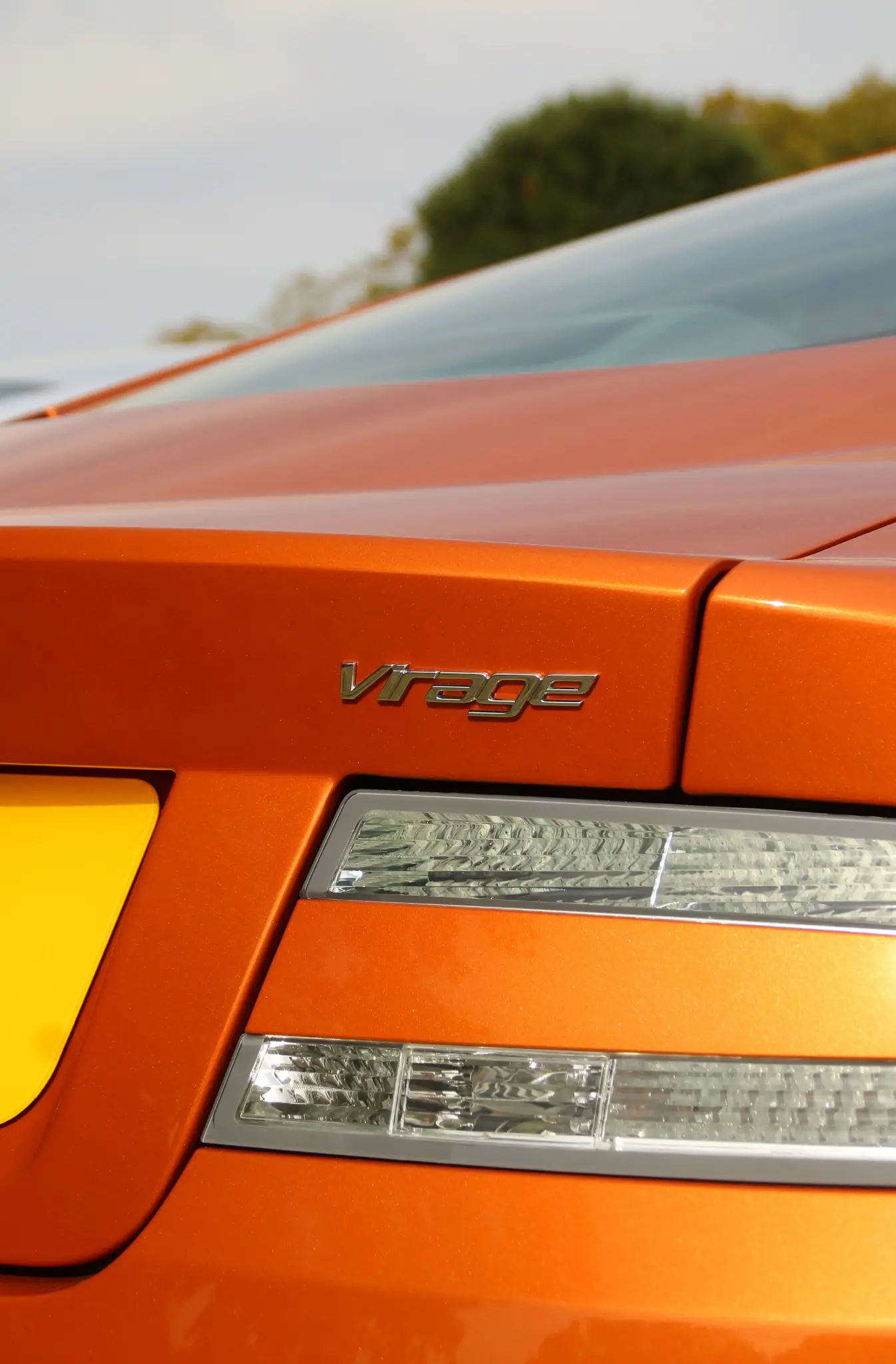
Virage, 2011–2012
Vantage and Le Mans
Customer cars could be returned to Works Service from 1998 to be converted to V600 specification, with the engine upgraded to 600 hp (447 kW) at 6,200 rpm and 600 lb-ft of torque. New European emission and safety regulations led Aston Martin to end the V8 Vantage line with a final model called “V8 Vantage Le Mans”, honouring the 1959 Le Mans victory; a prototype of a limited run of 40 cars was presented in Geneva in 1999 on the 40th anniversary of the win. All of them were sent back after delivery for engine modifications to give 612 PS (450 kW; 604 hp) and 820 N·m, with reinforced suspension, a blanked-out grille and side vents replicating those of the DBR1, claiming 320 km/h (200 mph) and 0–100 km/h in 3.9 seconds.
A new Virage was introduced at the 2011 Geneva Motor Show to fit into the middle of Aston Martin’s then-current lineup, but it was discontinued in 2012 because of its many similarities to the brand’s other models.
Design and features
- Engine: a 32-valve 5.3 L V8 with Callaway-designed heads and Weber-Marelli injection.
- Chassis: an evolution of the Lagonda’s, with a de Dion rear.
- Parts bin: Audi 200 headlights, Volkswagen Scirocco taillights and other bought-in parts.
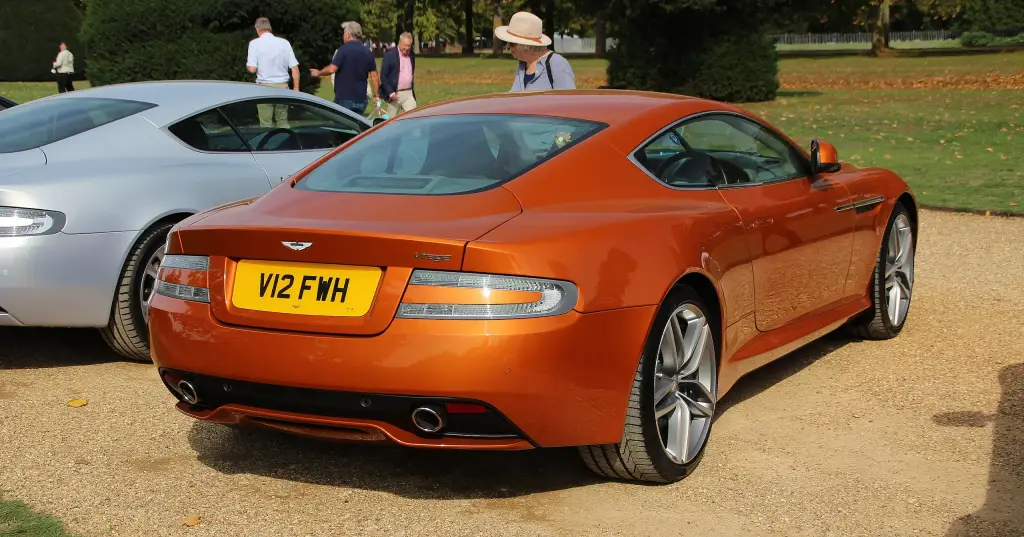
Aston Martin Virage versions
- Virage (1989–1996): the base model, then renamed V8 Coupé.
- Virage Vantage (from 1993): the high-performance version.
- V600 and V8 Vantage Le Mans (1998–1999): Works Service conversions to 600 hp and the final limited run of 40 cars.
- Virage Volante and Works Service models: convertible and special builds.
- Virage (2011–2012): the revived model.
More Aston Martin cars are in our Aston Martin collection, for example the V8 it replaced, the DB7 below it and the Vanquish that replaced it.
Aston Martin Virage questions and answers
When was the Aston Martin Virage built?
From 1989 to 2000, with a new Virage in 2011–2012.
How many were made?
1,050 by the end of 2000.
How fast was it?
254 km/h (158 mph) with the 330 hp V8.
What replaced it?
The Vanquish in 2000.
Why did the new Virage end in 2012?
It was too similar to the other models in the range.
Video: 2012 Aston Martin Virage Start Up, Exhaust, and In Depth Tour
Video by Saabkyle04 on YouTube.
Sources
- Aston Martin Virage, English Wikipedia: history and design