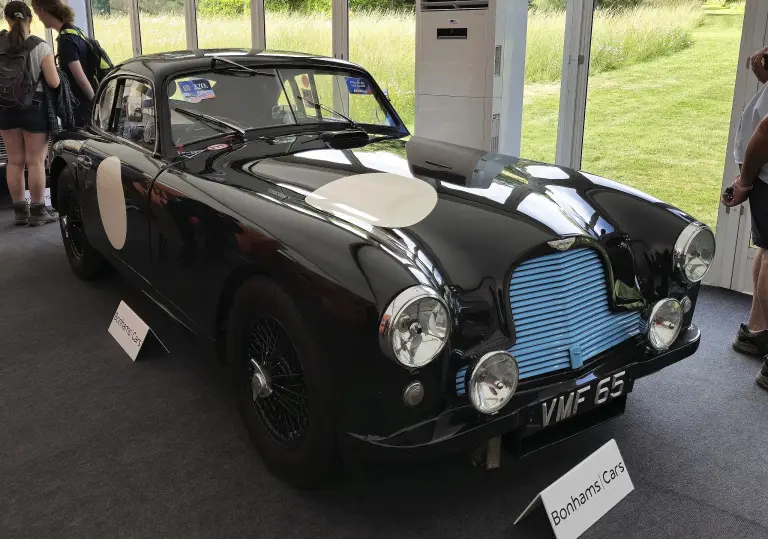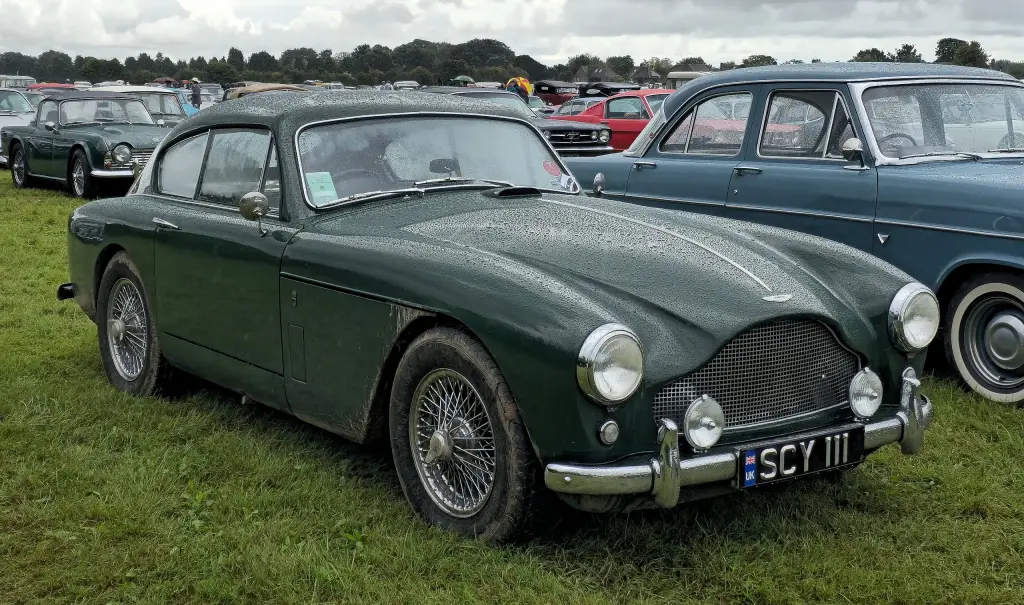
The Aston Martin DB Mark III, sometimes also referred to as the DB 2/4 Mark III, is a grand tourer sold by Aston Martin from 1957 until 1959. It was an evolution of the DB2/4 Mark II that it replaced, using an evolution of that car’s 2.9-litre Lagonda straight-six, and it was succeeded by the DB4 in 1958.
Aston Martin DB Mark III at a glance
| Sold | 1957–1959 |
|---|---|
| Built | 551 cars; only five with automatic transmission |
| Engine | 2.9 L (2,922 cc) Lagonda straight-six; standard DBA with twin SU carburettors 162 bhp, 178 bhp with dual exhaust |
| Higher outputs | DBD 180 bhp (47 cars); DBB 195 bhp (10 cars); one DBC competition engine 214 bhp |
| Performance | 0–60 mph in 9.3 s and 120 mph (193 km/h) with the 178 bhp engine |
| Brakes | Girling front discs on all cars after the first 100 |
| Grille | designed by Bert Thickpenny, first seen on the DB3S |
| Price (1959, Road & Track) | $7,450 |
This page is based on English Wikipedia only (a trusted source), so the facts were not cross-checked against a second source.
History of the Aston Martin DB Mark III
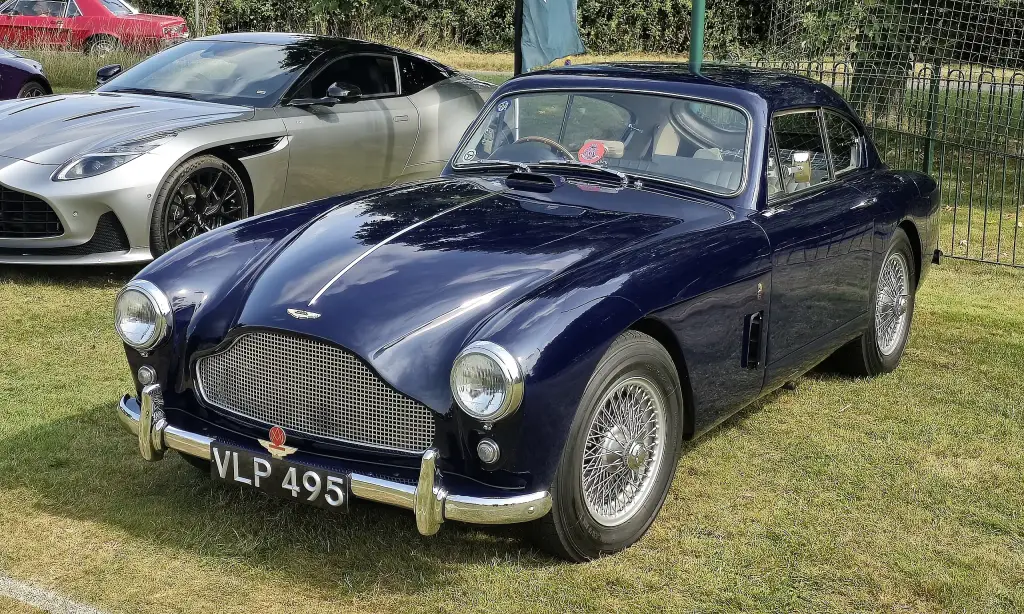
Changes from the previous car included the front grille, designed by Bert Thickpenny and first seen on the DB3S, which became the shape of all future Aston Martin models; a new instrument panel that repeated the shape of the grille; and Girling disc brakes after the first 100 cars. The clutch became hydraulic, an optional Laycock-de Normanville overdrive was offered with the standard four-speed gearbox, and even an automatic transmission was available. Worm-and-sector steering and a live rear axle were carried over. The hatchback body, used on over five sixths of the Mark IIIs built, had been introduced in the DB2/4 Mark I in 1953. At the rear the tailfins grew after the first 100 cars and took the larger Lucas rear lights from the Humber Hawk, also used on the Alvis TD21.
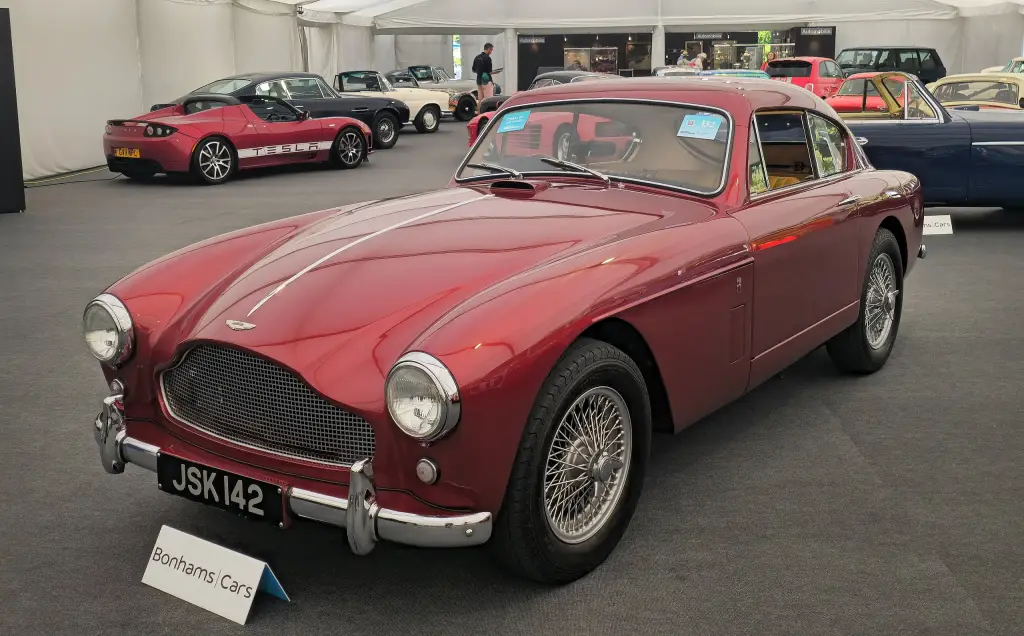
Aston Martin had already begun to consider a replacement for the Frank Feeley-designed DB2 series, which became the DB4, but a quick update of the DB2/4 was also necessary. The young designer John Turner, then 17, suggested grafting the front of the DB3S onto the rear of the DB2/4, and so the basic design of the Mark III was conceived.
Engines
The Willie Watson and W. O. Bentley designed 2.9 L Lagonda straight-six, redesigned by Tadek Marek, was carried over from the Mark II. The standard DBA engine with twin SU carburettors produced 162 bhp, and an optional dual-exhaust system raised this to a reputed 178 bhp, enough for 0–60 mph in 9.3 seconds and 120 mph. The mid-level DBD option with triple 1.75-inch SU carburettors and dual exhaust gave 180 bhp and was fitted to 47 cars. The high-output DBB, with three twin-choke Weber 35 DCO 3 carburettors, long-duration camshafts and 8.6:1 pistons, was rated at 195 bhp and ordered on only 10 cars. One car had the special DBC competition engine with a reputed 214 bhp.
A 1959 review by the US magazine Road & Track praised the car for everything but its $7,450 price.
Design and features
- Grille: the DB3S-derived shape that became the standard Aston Martin face.
- Brakes: Girling discs at the front after the first 100 cars.
- Gearbox: four-speed with optional overdrive, or automatic (five cars).
- Body: a hatchback on over five sixths of the cars.
Aston Martin DB Mark III versions
- DBA engine (standard): 162 bhp, or 178 bhp with dual exhaust.
- DBD: 180 bhp, 47 cars.
- DBB: 195 bhp, 10 cars.
- DBC: one competition engine of 214 bhp.
More Aston Martin cars are in our Aston Martin collection, for example the DB2/4 it evolved from, the DB4 that replaced it and the DB2.
Aston Martin DB Mark III questions and answers
When was the Aston Martin DB Mark III sold?
From 1957 to 1959.
How many were made?
551, only five of them with an automatic gearbox.
What is special about its front end?
The grille from the DB3S, which became the shape of all later Aston Martins.
How fast was it?
About 120 mph with the 178 bhp engine, 0–60 mph in 9.3 seconds.
What replaced it?
The DB4, which succeeded it in 1958.
Video: 1957 Aston Martin DB Mark III
Video by BoziMedia on YouTube.
Sources
- Aston Martin DB Mark III, English Wikipedia: overview and engines