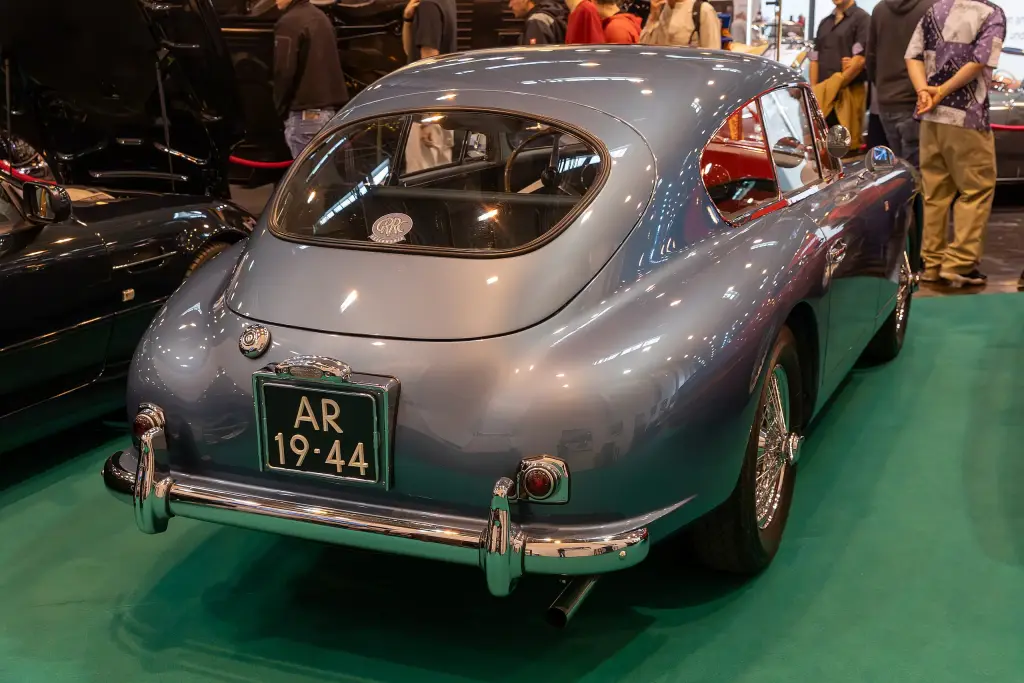
The Aston Martin DB2/4 is a grand tourer produced by Aston Martin from 1953 until 1957. It was available as a 2+2 hatchback saloon, a drophead coupé and a two-seat fixed-head coupé, and a small number of Bertone-bodied spiders and a coupé were commissioned by the American businessman Stanley H. Arnolt II.
Aston Martin DB2/4 at a glance
| Produced | 1953–1957 |
|---|---|
| Base | the DB2, which it replaced |
| Engine, Mark I | Lagonda VB6E straight-six, 2.6 L (2,580 cc), 125 hp (93 kW); from September 1953 a 2.9 L VB6J with 140 hp (104 kW) |
| Engine, Mark II | optional large-valve, 8.6:1 compression 165 hp (123 kW) engine |
| Top speed | up to 120 mph (193 km/h); 118.5 mph (190.7 km/h) in a 1954 The Motor test |
| Production | Mark I: 565 (102 drophead coupés); Mark II: 199 (34 fixed-head coupés, 16 drophead coupés) |
| Special bodies | 6 Bertone spiders and 1 coupé; 3 Touring spiders |
| Price in 1954 | £2,621 including taxes |
This page is based on English Wikipedia only (a trusted source), so the facts were not cross-checked against a second source.
History of the Aston Martin DB2/4
The DB2/4 was based on the DB2 and the key change was the addition of two small rear seats and an opening rear tailgate giving access to the luggage space. Other changes included a single-piece windscreen, larger bumpers and repositioned headlights. The Lagonda straight-six, designated VB6E, was initially the same dual overhead cam engine designed by W. O. Bentley used in the DB2 Vantage. In September 1953 the saloon received the 140 hp 2.9 L VB6J variant, followed by the drophead in April 1954.
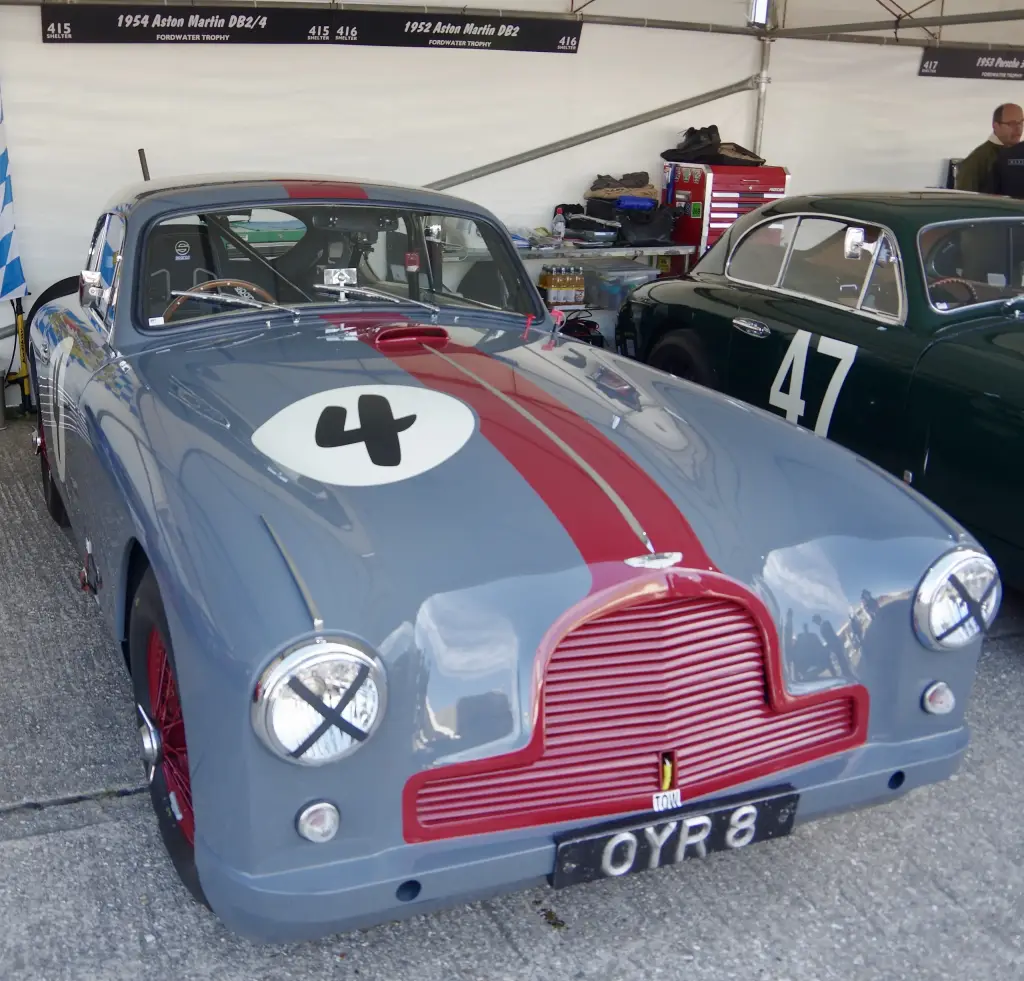
A 2.9 litre DB2/4 tested by The Motor in 1954 had a top speed of 118.5 mph and accelerated from 0–60 mph in 10.5 seconds, with fuel consumption of 23.0 mpg (imperial); the test car cost £2,621. Three works cars were prepared for the 1955 Monte Carlo Rally and two for the Mille Miglia, but Aston Martin pursued its competition ambitions more intently with the DB3. A DB2/4 Mk I drophead coupé appeared in Alfred Hitchcock’s 1963 film The Birds.
Mark II, 1955
The DB2/4 Mk II, introduced in 1955, offered an optional large-valve engine of 165 hp. Other changes included small tailfins, bubble-type tail lights as on the Morris Minor, and added chrome; the bonnet split line moved from door sill height to a line from the top of the front wheel arch. A two-seat fixed-head coupé was new, and 34 of the 199 Mark II used this body, a style favoured by David Brown for his own car. Three Mark II chassis were sent to Carrozzeria Touring in Italy to be bodied as spiders; Touring would later help Aston with the Superleggera design of the DB4.
A significant behind-the-scenes change was the relocation of coachbuilding from Mulliner of Feltham to Tickford in Newport Pagnell. Brown had purchased Tickford in 1954 and would move all of Aston Martin’s operations there with the start of DB4 production.
Design and features
- Layout: a 2+2 with a rear tailgate, a first for Aston Martin.
- Engine: the W. O. Bentley-designed Lagonda straight-six.
- Coachbuilding: Mulliner of Feltham, then Tickford from the Mark II.
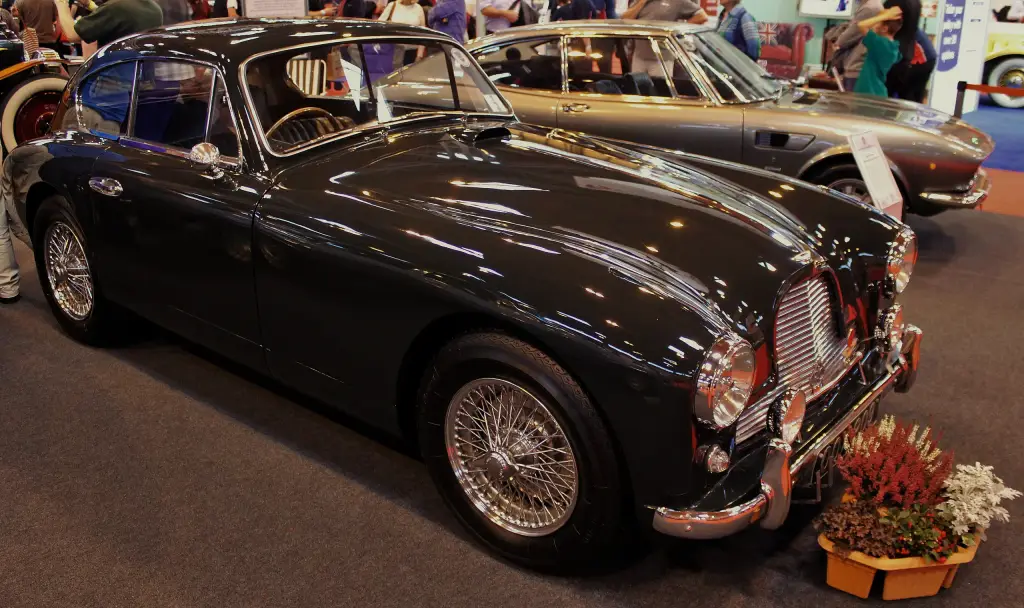
Aston Martin DB2/4 versions
- DB2/4 Mark I (1953–1955): 565 cars, 102 of them drophead coupés.
- DB2/4 Mark II (1955–1957): 199 cars, with fixed-head coupé and drophead versions.
- Bertone and Touring spiders: a handful commissioned by Stanley H. Arnolt II and Touring-bodied Mark II chassis.
More Aston Martin cars are in our Aston Martin collection, for example the DB2 it replaced, the DB Mark III that followed and the DB4.
Aston Martin DB2/4 questions and answers
When was the Aston Martin DB2/4 built?
From 1953 to 1957.
What was new compared with the DB2?
Two small rear seats and an opening rear tailgate, plus a one-piece windscreen and larger bumpers.
How many were made?
565 Mark I and 199 Mark II.
What engine did it use?
The Lagonda dual overhead cam straight-six, 2.6 L at first and 2.9 L from September 1953.
Was it in a film?
A DB2/4 Mk I drophead coupé appeared in Alfred Hitchcock’s The Birds in 1963.
Video: Aston Martin DB2/4 MKII First Start in 35 Years
Video by rayferner on YouTube.
Sources
- Aston Martin DB2/4, English Wikipedia: overview, Mark II, production