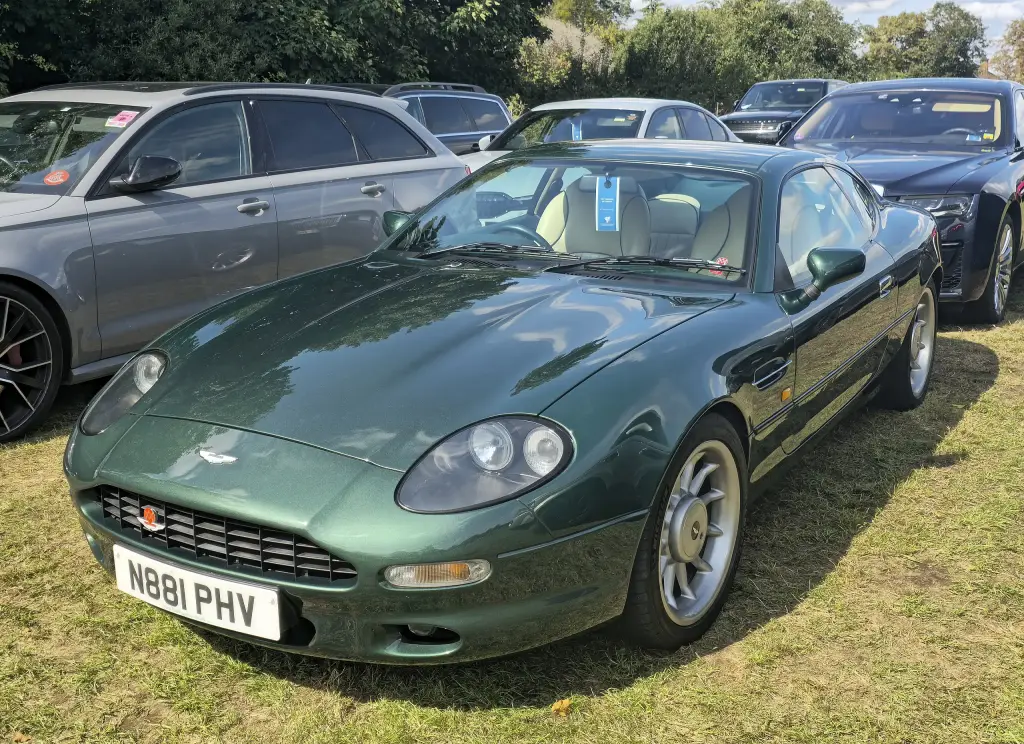
The Aston Martin DB7 is a car produced by Aston Martin from September 1994 to December 2004. It was designed by Ian Callum and Keith Helfet as a grand tourer in coupé and convertible bodystyles; the prototype was complete by November 1992 and debuted at the Geneva Motor Show in March 1993.
Aston Martin DB7 at a glance
| Produced | September 1994 to December 2004 |
|---|---|
| Prototype | completed November 1992; shown at Geneva in March 1993 |
| Designers | Ian Callum and Keith Helfet |
| Internal project name | XX |
| Platform | an evolution of the Jaguar XJS platform |
| Six-cylinder engine | based on the Jaguar AJ6, positioned as an entry-level model below the hand-built V8 Virage |
| Production | more than 7,000, the most of any Aston Martin at the time |
| Owner at the time | Ford, 1988 to 2007 |
| Replaced by | the DB9 in 2004 |
This page is based on English Wikipedia only (a trusted source), so the facts were not cross-checked against a second source.
History of the Aston Martin DB7
The DB7, known inside as the XX project, was made mostly with resources from Jaguar Cars and had the financial backing of Ford, owner of Aston Martin from 1988 to 2007. Its platform is an evolution of the Jaguar XJS platform, with many changes. It began as a successor to the XJS envisioned by Tom Walkinshaw of TWR, who had been impressed by the XJS’ potential in the European Touring Car Championship and wanted to re-body it with more modern styling. After Peter Stevens declined, Walkinshaw engaged Ian Callum, then new to car design.
Jaguar struggled to replace the XJS; a project code-named XJ41/42, designed by Keith Helfet, was already in development, but when Ford acquired both Jaguar and Aston Martin the new management cancelled it in 1990 for its weight, its budget and the overtime spent. Seeing the potential of the abandoned project, Walkinshaw based his concept on the XJ41 and had Callum design a body around it; inspired by the Nissan 300ZX, Callum redesigned it with more modern proportions.
Because of the development of the Jaguar XJ220, Ford was not keen on new Aston Martin models, given high development costs and the 1990s downturn. Aston Martin CEO Walter Hayes approached Walkinshaw, who saw the project succeed under the name XX, with Callum again redesigning the car so it would look like an Aston Martin. With limited financial backing, the final car shared many components with other Ford marques: the tail lights came from the Mazda 323 F, the exterior chrome door handles from the Mazda 323 Estate, and the side reflectors and interior door handles from the Mazda MX-5.
Design and features
- Origin: a Jaguar XJS-derived platform and the XJ41 concept.
- Design: a coupé and a convertible by Ian Callum and Keith Helfet.
- Parts: many from Ford marques, such as Mazda tail lights and door handles.
Aston Martin DB7 versions
- DB7 coupé and Volante (1994–2004): the six-cylinder cars.
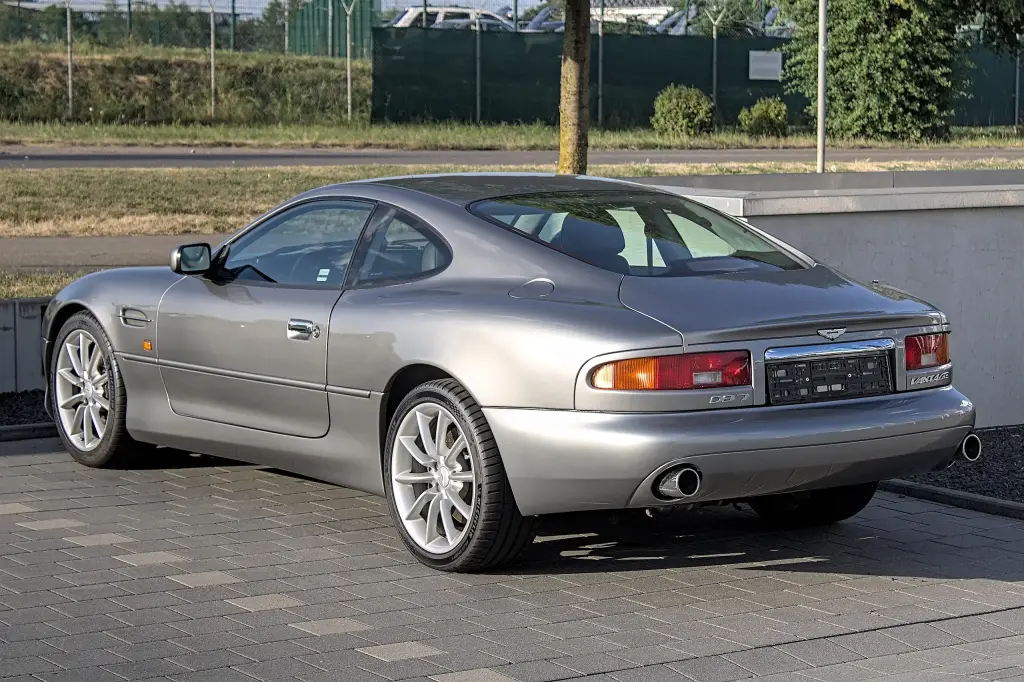
- DB7 Vantage: the higher-performance version.
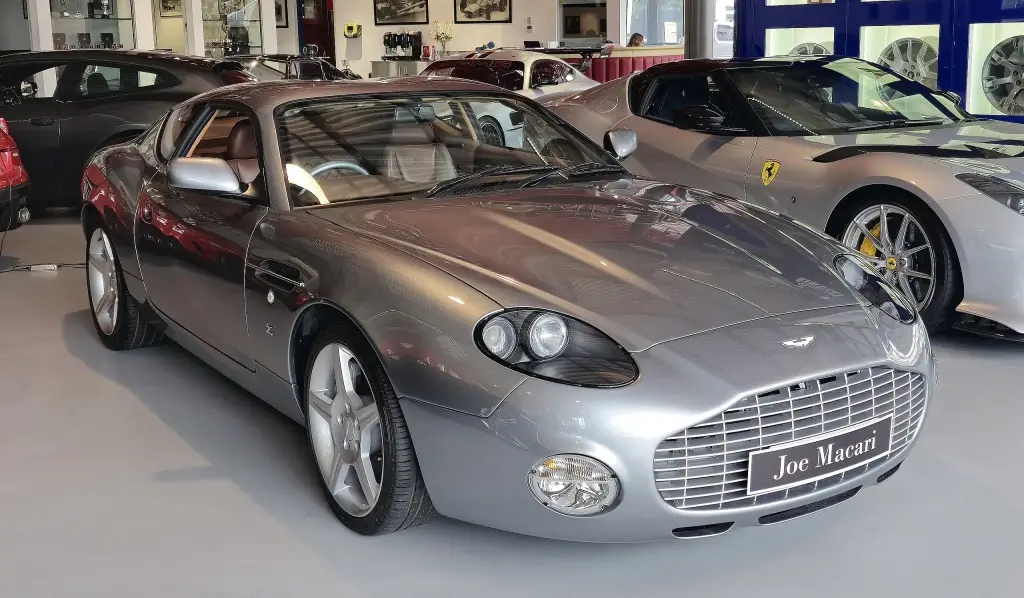
- DB7 Zagato: the coachbuilt special.
More Aston Martin cars are in our Aston Martin collection, for example the Virage above it, the DB9 that replaced it and the Vanquish.
Aston Martin DB7 questions and answers
When was the Aston Martin DB7 built?
From September 1994 to December 2004.
Who designed it?
Ian Callum and Keith Helfet.
How many were made?
More than 7,000, then the most of any Aston Martin.
What was it based on?
An evolution of the Jaguar XJS platform, with an engine based on the Jaguar AJ6.
What replaced it?
The DB9 in 2004.
Video: Aston Martin DB7 Review | Top Gear | BBC
Video by BBC Studios on YouTube.
Sources
- Aston Martin DB7, English Wikipedia: overview and development