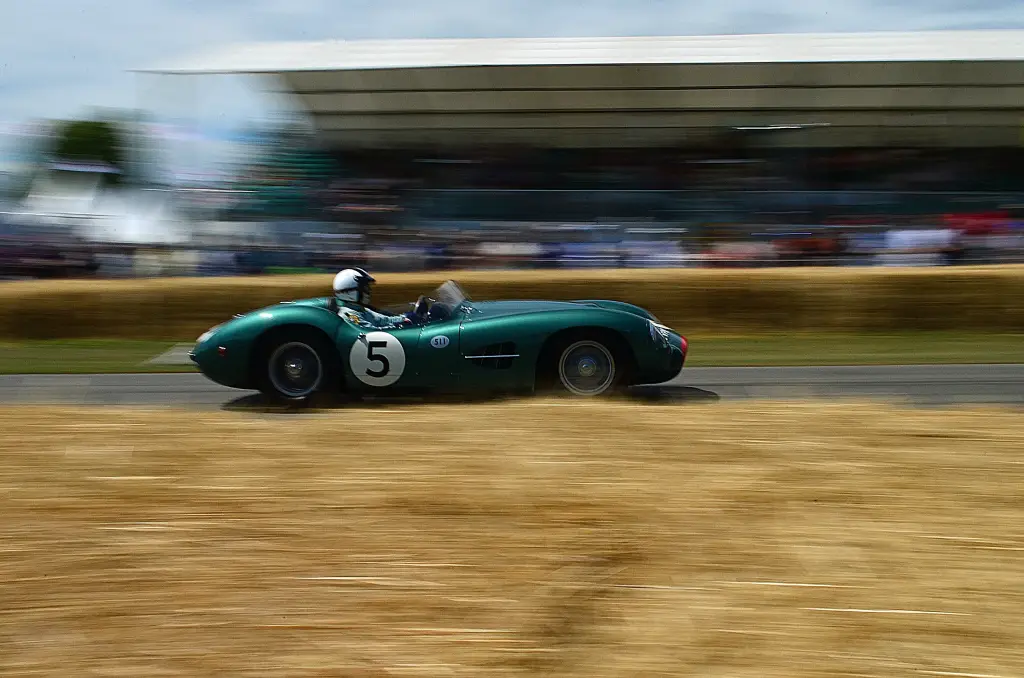
The Aston Martin DBR2 was a sports racing car built in 1957 as a sibling to the DBR1, yet competing in a larger engine capacity group.
Aston Martin DBR2 at a glance
| Built | 1957; two cars, DBR2/1 and DBR2/2 |
|---|---|
| Chief designer | Ted Cutting designed the all-aluminium body |
| Chassis origin | DP166, a short-lived Lagonda project: a multi-tube backbone space frame designed by Willy Watson |
| Engine | Tadek Marek 3.7 L six-cylinder, the unit made for the forthcoming DB4 |
| Carburation | three twin side-draught Weber DCO 50s after the 1957 Le Mans |
| After 1958 | a 3,000 cc limit for prototypes in the World Sportscar Championship ruled it out; both cars went to the USA |
This page is based on English Wikipedia only (a trusted source), so the facts were not cross-checked against a second source.
History of the Aston Martin DBR2
The DBR2 was created from a short-lived Lagonda project known as DP166 (DP for Development Project), a multi-tube backbone space-frame chassis designed by Willy Watson, itself a progression from the DP115 ladder-type chassis similar to that of the DB3S. Both were originally fitted with the failed Lagonda 4.5 L V12 engine. Three DP166 chassis were leaning against a wall in the Feltham racing department until chief race car designer Ted Cutting was asked by John Wyer to build two race cars from two of them.
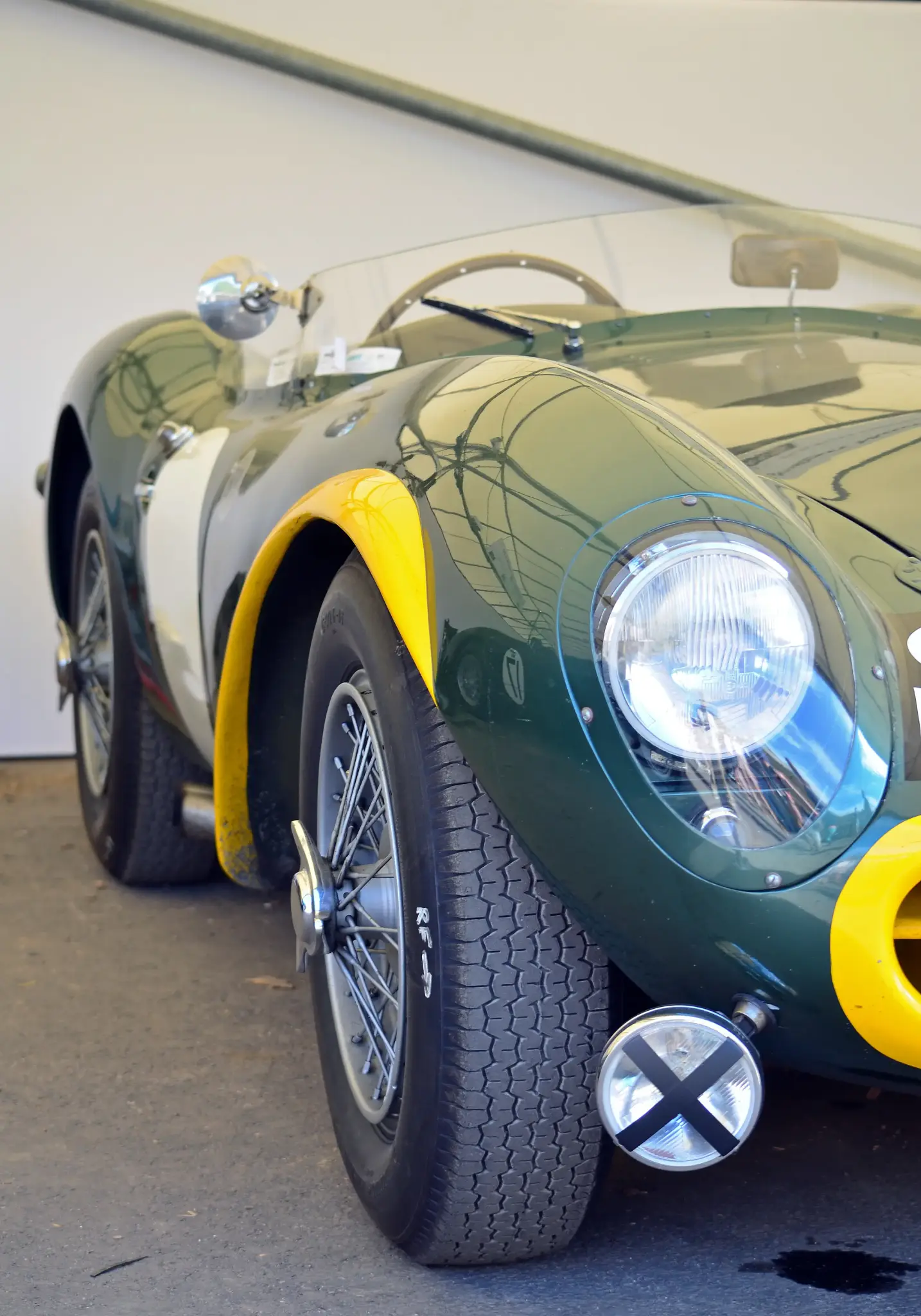
The engine was the new Tadek Marek six-cylinder, 3.7-litre unit he had just completed for the DB4. Cutting was allocated four of the six prototype DB4 engines, to Marek’s dismay, and made fundamental changes to the oil delivery system before the unit was fitted to production DB4s. The all-aluminium bodies were also designed by Cutting, similar to the later Le Mans-winning DBR1 but slightly larger and more aerodynamic.
Racing
DBR2/1 began at the 1957 24 Hours of Le Mans, where it retired because of a poorly performing carburation system with a single carburettor per cylinder; the problem was solved by three twin side-draught Weber DCO 50s. Its only notable success in 1957 was the Daily Express Trophy at Silverstone with Roy Salvadori. At the August 1957 Spa Grand Prix Noël Cunningham-Reid crashed it in practice, and John Wyer judged it too badly damaged to continue.
In 1958 a 3,000 cc engine limit was placed on prototype cars in the World Sportscar Championship, so the 3.7 L DBR2s could no longer compete at championship events. Sir David Brown then had both cars sent to the USA with Rex Woodgate and used them as a promotional tool for his new DB4.
Design and features
- Chassis: a multi-tube backbone space frame descended from the Lagonda DP166.
- Body: all-aluminium, similar to but slightly larger than the DBR1.
- Engine: the 3.7 L Tadek Marek six-cylinder that also powered the DB4.
Aston Martin DBR2 versions
- DBR2/1 and DBR2/2 (1957): the only two built.
More Aston Martin cars are in our Aston Martin collection, for example the DBR1, the DB4 whose engine it used and the DB3S.
Aston Martin DBR2 questions and answers
What is the Aston Martin DBR2?
A 1957 sports racing car, a bigger-engined sibling of the DBR1.
How many were made?
Two, DBR2/1 and DBR2/2.
What engine did it have?
A 3.7 L six-cylinder designed by Tadek Marek for the DB4.
Why did it stop racing in Europe?
A 3,000 cc limit for prototypes from 1958 excluded it from championship events.
What happened to the cars?
Both were sent to the USA and used to promote the DB4.
Video: 1957 Aston Martin DBR2 Race car – Drive by
Video by RioFunVideos on YouTube.
Sources
- Aston Martin DBR2, English Wikipedia: development and racing history