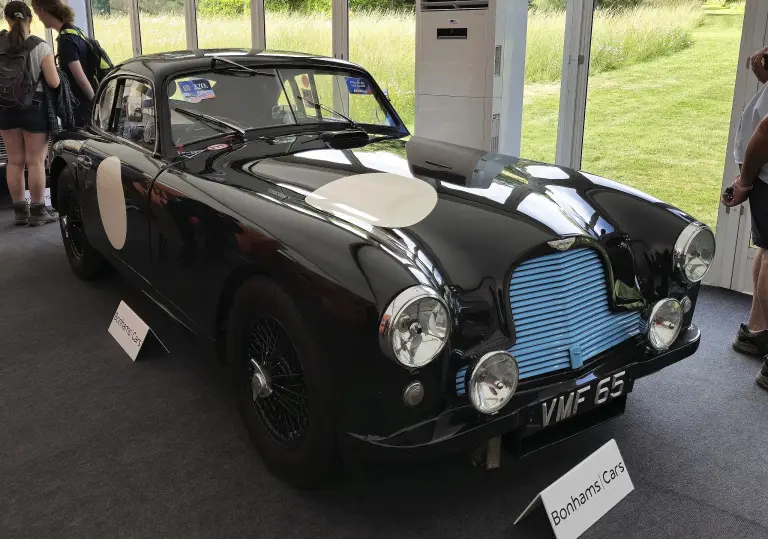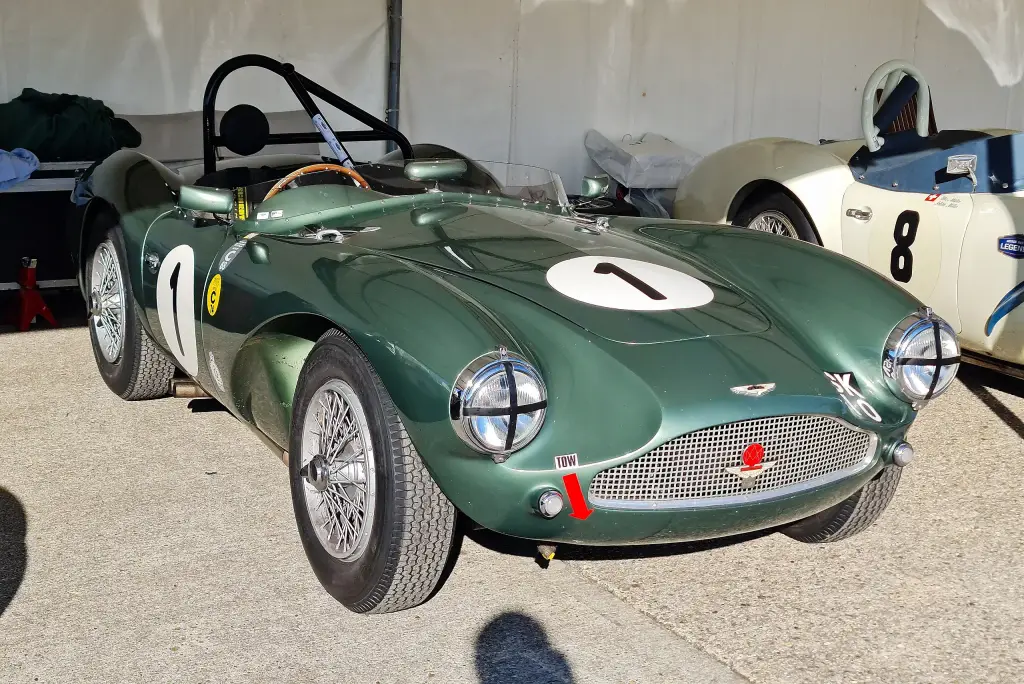
The Aston Martin DB3S is a sports racing car built by Aston Martin. It replaced the heavy and uncompetitive DB3 designed by Eberan Eberhorst with an alternative design by William Watson, presented to competitions manager John Wyer. In total 31 cars were made, 11 works cars and 20 sold for customer use.
Aston Martin DB3S at a glance
| Introduced | 1953 |
|---|---|
| Built | 31 cars: 11 works cars (DB3S/1 to DB3S/11) and 20 customer cars (DB3S/101 to /120) |
| Designer of the new car | William Watson, assistant to Eberan Eberhorst, showing the design to John Wyer |
| Best results | 1–2 at the 1953 Tourist Trophy at Dundrod; 2nd at Le Mans in 1955, 1956 and 1958 |
| Coupés | two works coupés, both crashed at Le Mans 1954; three customer cars also had coupé bodies |
| Recreation | a 1994 recreation built from original spares, chassis DB3S/121 |
| Replaced by | the DBR1 as main sports racer from 1956 |
This page is based on English Wikipedia only (a trusted source), so the facts were not cross-checked against a second source.
History of the Aston Martin DB3S
After the DB3 failed to be competitive, William Watson, employed as Eberhorst’s assistant, presented an alternative design to John Wyer, Aston Martin’s competitions manager. The DB3S was introduced in 1953 and proved significantly more successful than the DB3.
Racing, 1953–1958
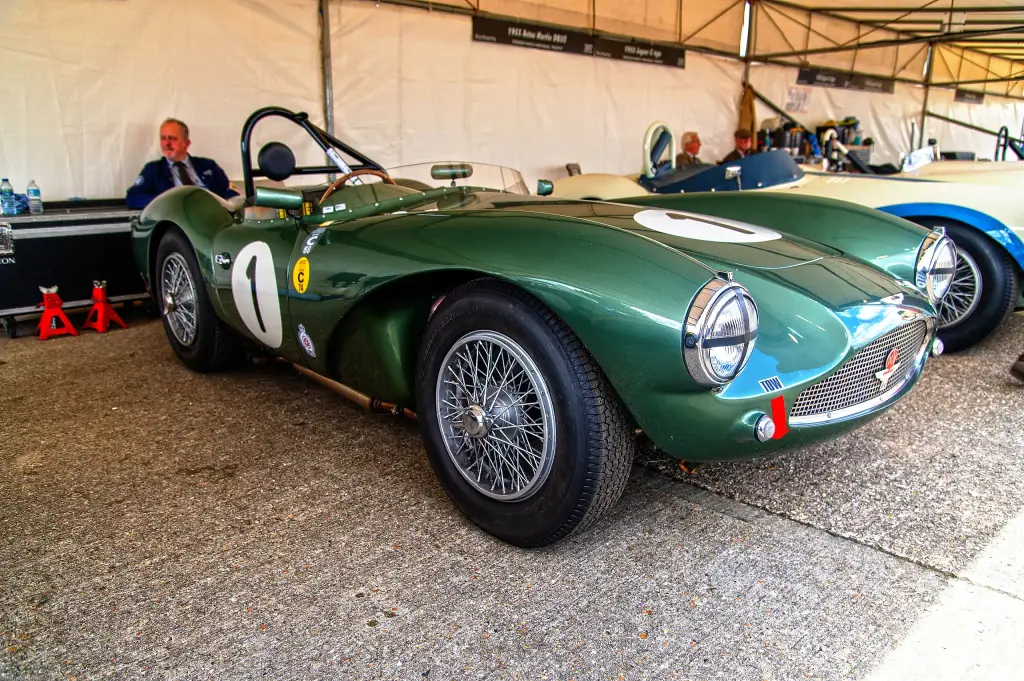
Although the DB3S failed at Le Mans in 1953, the cars scored a 1–2 at the Tourist Trophy at Dundrod, the sixth round of the first World Sportscar Championship, helping Aston Martin to third in the championship, and won the non-championship Goodwood 9 Hours. 1954 was less successful, with a third place in the Buenos Aires 1000 km the high point.
1955 saw a return to form: Collins and Frère finished second at Le Mans and Walker and Poore were fourth at the Tourist Trophy, which put Aston Martin fifth in the championship, with another win at the Goodwood 9 Hours. By 1956 the design was ageing and resources went into the DBR1, but the DB3S was still fourth at Sebring and fifth at the Nürburgring 1000 km, and Moss and Collins took another second at Le Mans, which that year was a non-championship event. The last swan song was the Whitehead brothers’ second place at Le Mans in 1958, after all the works DBR1s failed to finish. The car won the 2013 Gran Turismo Trophy at the Pebble Beach Concours d’Elegance.
Coupés
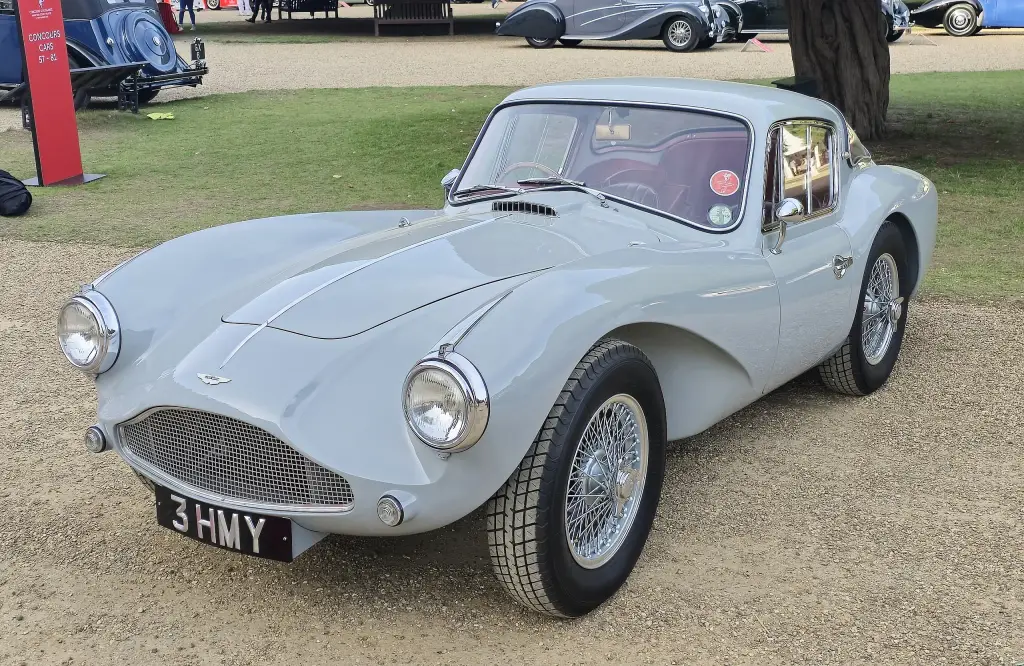
Two works DB3S fixed-head coupés were made to be more aerodynamic than the open cars, but they were unstable at high speed and both crashed at the 1954 24 Hours of Le Mans. They were rebuilt as open cars. Three customer cars were also fitted with similar coupé bodies.
Design and features
- Chassis numbers: DB3S/1–11 for works cars and three-digit numbers from DB3S/101 for customer cars.
- Body: open sports-racing body, with coupé variants.
- Role: the bridge between the DB3 and the purpose-built DBR1.
Aston Martin DB3S versions
- DB3S works cars (1953–1956): 11 cars.
- DB3S customer cars: 20 cars sold for private racing.
- DB3S coupés: five bodied as fixed-head coupés.
- DB3S/121 (1994): a continuation car built from spare parts.
More Aston Martin cars are in our Aston Martin collection, for example the DB3 that it replaced, the DBR1 that followed and the DBR2.
Aston Martin DB3S questions and answers
What is the Aston Martin DB3S?
A sports racing car introduced in 1953 that replaced the uncompetitive DB3.
How many were made?
31 in total: 11 works cars and 20 customer cars.
What were its best results?
A 1–2 at the 1953 Tourist Trophy and second places at Le Mans in 1955, 1956 and 1958.
Did it have a coupé version?
Yes, two works coupés and three customer cars, but the works coupés crashed at Le Mans in 1954.
What replaced the DB3S?
The DBR1 became Aston Martin’s main sports racer from 1956.
Video: Aston Martin DB3-S
Video by boldorboy on YouTube.
Sources
- Aston Martin DB3S, English Wikipedia: history, chassis numbers, coupés