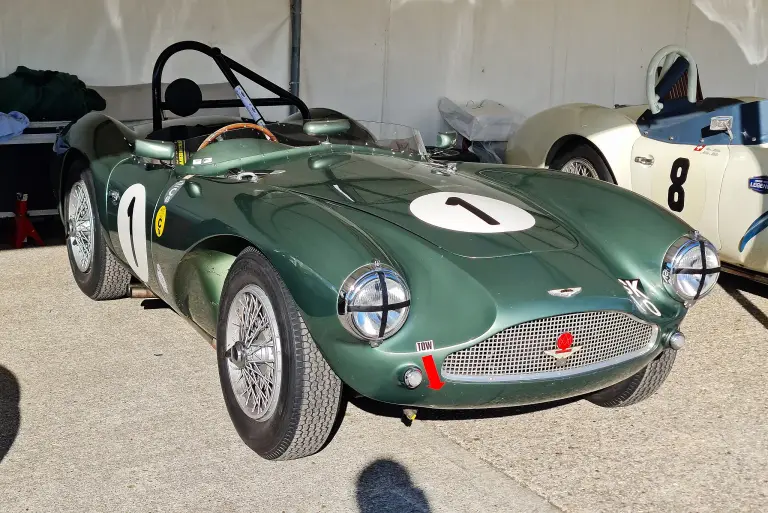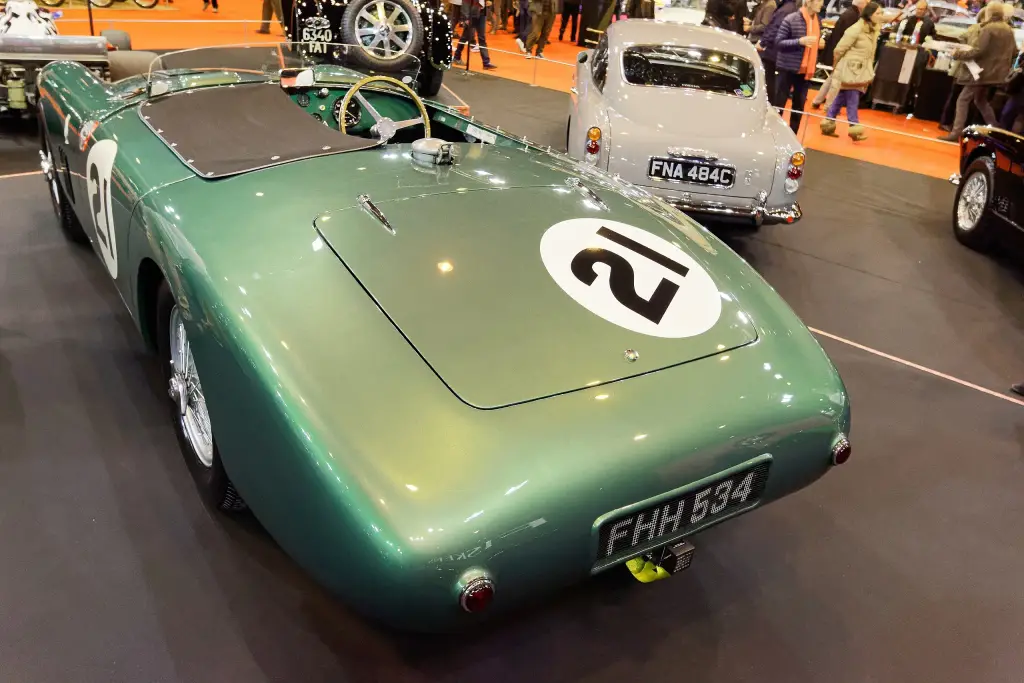
The Aston Martin DB3 and the later DB3S were sports racing cars built in the 1950s. Although they used some DB2 parts, they were quite different, designed specially for racing, and the original modifications were done by the ex-Auto Union engineer Eberan von Eberhorst.
Aston Martin DB3 at a glance
| Introduced | 1951 |
|---|---|
| Built | 10 cars between 1951 and 1953, chassis DB3/1 to DB3/10 |
| Works and customer cars | cars 1 to 5 works cars, cars 6 to 10 sold to customers |
| Engine, 1951 | 2.6 L Lagonda straight-six from the DB2 Vantage, 133 hp (99 kW) |
| Engine, June 1952 | 2.9 L, 163 hp (122 kW) |
| Highlights | 2nd, 3rd and 4th at Silverstone in May 1952; 2nd at the 1953 Sebring 12 Hours; 5th at the Mille Miglia |
| Replaced by | the DB3S in 1953 |
This page is based on English Wikipedia only (a trusted source), so the facts were not cross-checked against a second source.
History of the Aston Martin DB3
The DB3 was originally going to be fitted with a new V12, but funds had to be spent on making the car competitive. It was introduced in 1951 with the 133 hp 2.6 L Lagonda straight-six from the DB2 Vantage. The car was unsuccessful at first, so a larger 2.9 L engine producing 163 hp was introduced in June 1952.
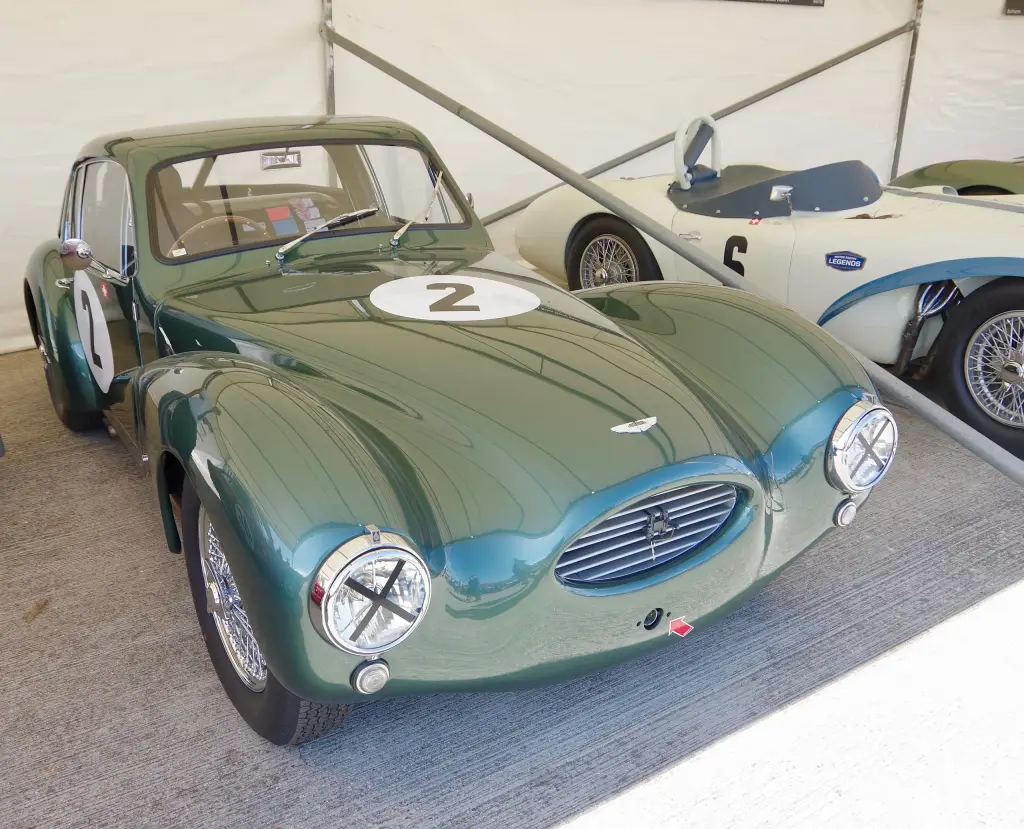
The cars placed 2nd, 3rd and 4th at Silverstone in May 1952, in the 2.6 L form, behind a Jaguar C-Type. They were forced out of Le Mans but did win the 9-hour race at Goodwood.
In 1953 a DB3 driven by Parnell and Abecassis placed 2nd at the Sebring 12 Hours, the opening race of the World Sports Car Championship, behind a Cunningham CR4. At the Mille Miglia Reg Parnell drove a DB3 to 5th, the highest position ever reached by a British sports car in the Italian classic. The car was then replaced as Aston’s front-line car by the DB3S.
Chassis and coupés
Ten DB3s were made, DB3/1 to DB3/10. Chassis number 1 was sold to Eric Forrest Greene in 1953; it was used only once, at the 1954 Buenos Aires 1000 km, where it crashed and caught fire, causing the death of its co-driver. It was repaired and later raced by his son Jack. Several DB3s have received coupé-style bodies over the years.
Design and features
- Engine: a Lagonda straight-six, 2.6 L then 2.9 L.
- Origin: designed specially for racing, though it used some DB2 parts.
- Designer: the original work was by Eberan von Eberhorst.
Aston Martin DB3 versions
- DB3 (1951–1953): 10 cars, works and customer.
- DB3 coupés: bodies fitted over the years.
- DB3S (from 1953): the lighter, more successful development.
More Aston Martin cars are in our Aston Martin collection, for example the DB3S, the DB2 whose parts it used and the DBR1.
Aston Martin DB3 questions and answers
What is the Aston Martin DB3?
A sports racing car of 1951–1953, designed specially for racing.
How many were built?
Ten, chassis DB3/1 to DB3/10.
What engine did it use?
The Lagonda straight-six, 2.6 L at first and 2.9 L with 163 hp from June 1952.
Was it successful?
It was unsuccessful at first, with a 2nd at Sebring 1953 and a 5th at the Mille Miglia the best results.
What replaced it?
The lighter DB3S, introduced in 1953.
Sources
- Aston Martin DB3, English Wikipedia: DB3 and DB3S, chassis numbers, racing