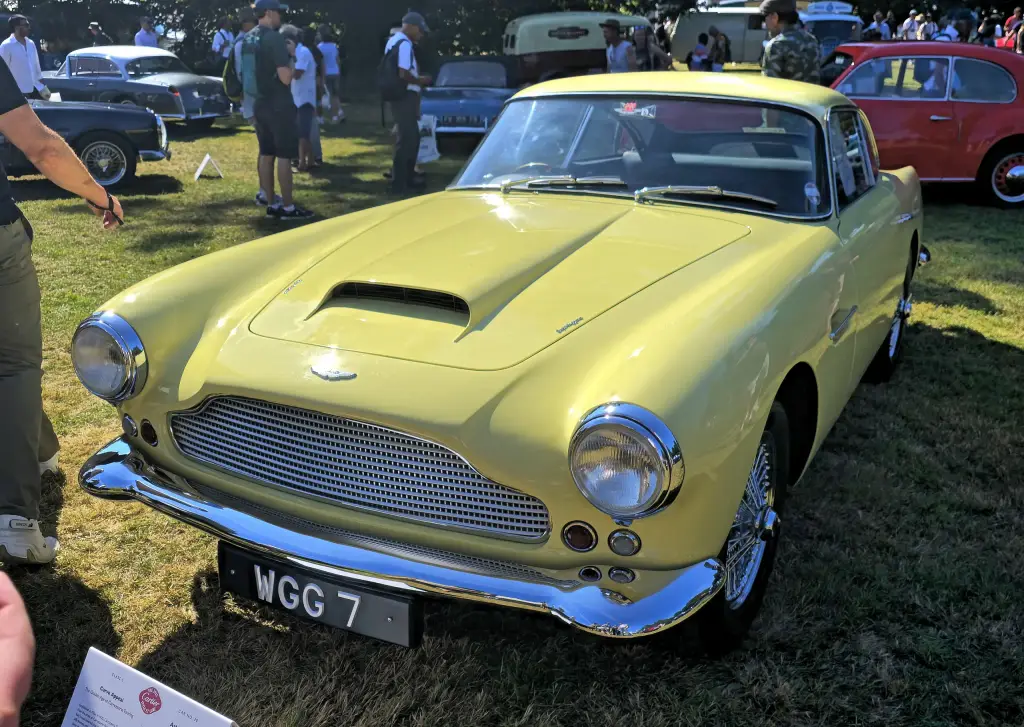
The Aston Martin DB4 is a grand tourer produced by Aston Martin from 1958 until 1963. The “DB” designation came from Sir David Brown, who built up the company from 1947 onwards.
Aston Martin DB4 at a glance
| Produced | 1958–1963 |
|---|---|
| Body | lightweight superleggera tube-frame body designed by Carrozzeria Touring, Milan |
| Engine | 3.7 L (3,670 cc) double overhead cam straight-six by Tadek Marek, aluminium block and head; 240 hp (179 kW) with twin SU carburettors |
| Brakes | servo-assisted discs all round, Dunlop then Girling |
| Performance (The Motor, 1960) | 139.3 mph (224.2 km/h); 0–60 mph in 9.3 s; 17.7 mpg |
| Price (1960 test car) | £3,967 including taxes |
| Series | five series |
| Production | 1,110 cars, of which 70 convertibles (30 Series IV, 40 Series V) |
This page is based on English Wikipedia only (a trusted source), so the facts were not cross-checked against a second source.
History of the Aston Martin DB4
Technically the DB4 was not a development of the DB Mark III that it replaced, nor did it evolve into the DB5. It had a platform rather than a tubular chassis and a new engine by Tadek Marek. The lightweight Superleggera body was designed by Carrozzeria Touring of Milan, and its Continental looks caused a sensation at its unveiling at the 1958 London Motor Show. Although the design and construction methods were Italian, the DB4 was the first Aston to be built at the company’s Newport Pagnell works in Buckinghamshire.
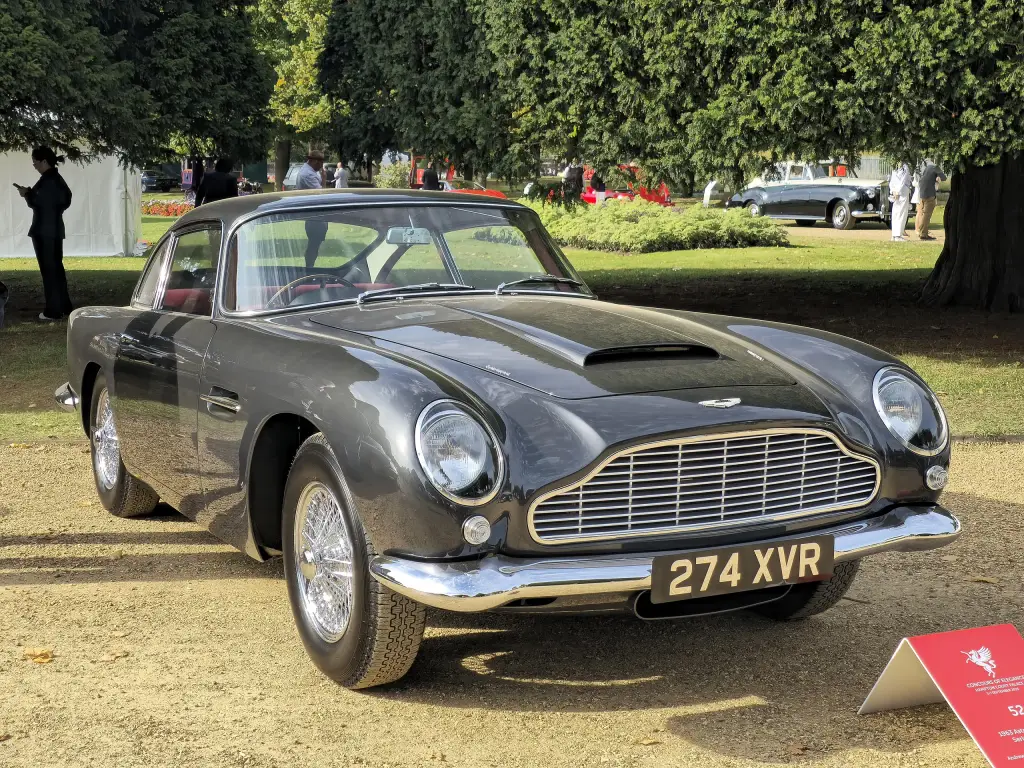
The engine, designed by the Polish-born racing driver Tadek Marek, is a double overhead cam straight-six with an R.R.50 aluminium alloy head and block, a further development of the earlier Lagonda straight-six. It was prone to overheating at first, but the 240 hp produced by the twin-SU version made buyers forgive this. The independent front suspension used ball-jointed wishbones, coil springs and rack-and-pinion steering; the live rear axle also had coil springs and was located by a Watt’s linkage. The usual final-drive ratio was 3.54:1 in Britain and Europe, 3.77 in the United States and 3.31 for an especially high top speed.
Series, convertible and GT
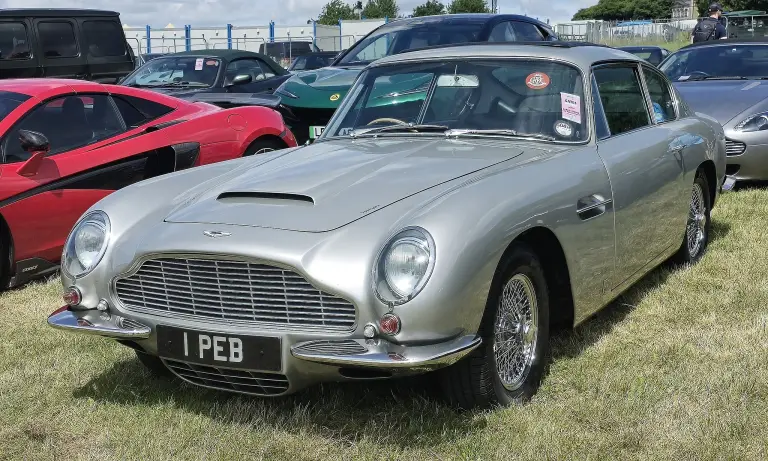
There were five series of DB4. The most visible changes were window frames in Series II and a barred rather than eggcrate grille in Series IV; Series III had taillights of three small lamps on a chrome backing plate, and the last Series V cars of September 1962 had a taller and longer body for more interior space, with smaller wheels to keep the height the same, and usually the more aerodynamic front already used on the Vantage and GT models.
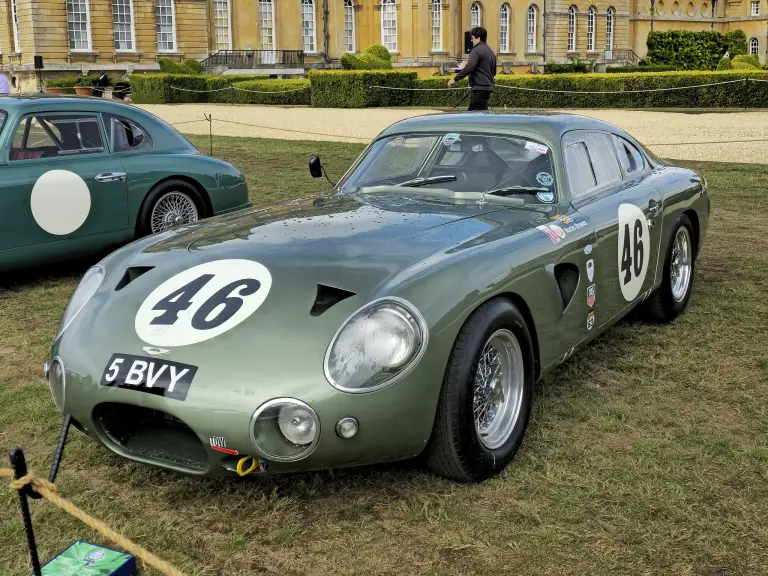
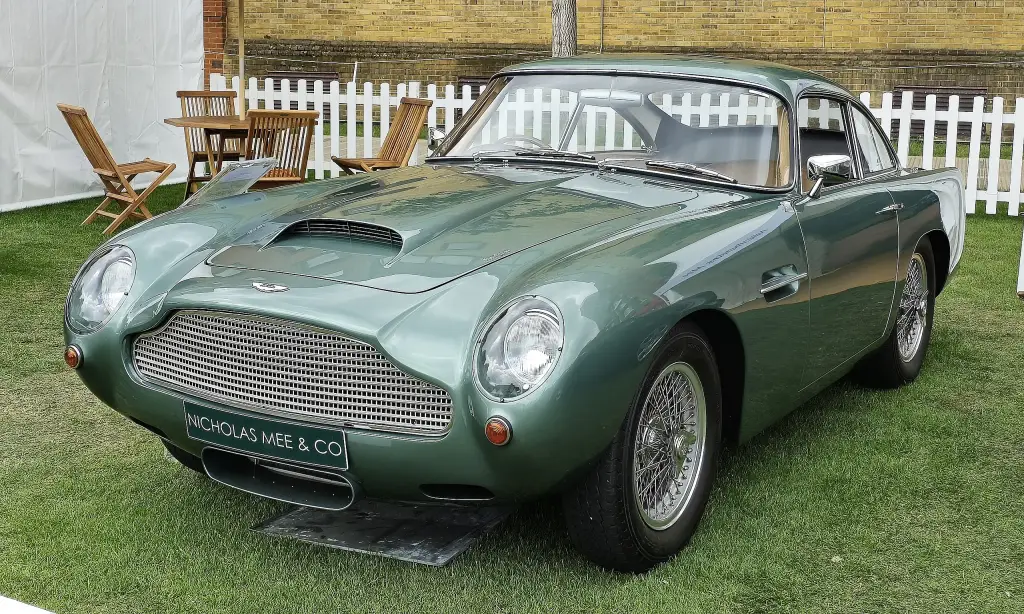
A convertible was introduced in October 1961, with in-house styling similar to the Touring saloon and an extremely rare factory hardtop. 70 convertibles were made from a total DB4 run of 1,110 cars; 32 of them had the more powerful Vantage engine. The DB4 GT, introduced in September 1959, was a special lightweight, high-performance version with enclosed headlights and a thinner aluminium skin, and its design formed the basis for later models such as the DB4 GT Zagato and the Lagonda Rapide four-door saloon.
Design and features
- Body: superleggera construction by Touring, Milan.
- Engine: the 3.7 L Marek straight-six with an aluminium block.
- Brakes: servo-assisted discs on all four wheels.
- Suspension: independent front with rack-and-pinion steering, live rear axle on a Watt’s linkage.
Aston Martin DB4 versions
- DB4 Series I–V (1958–1963): the saloons.
- DB4 Convertible (1961–1963): 70 built.
- DB4 Vantage: the more powerful engine version.
- DB4 GT (1959): the lightweight version, and the DB4 GT Zagato.
More Aston Martin cars are in our Aston Martin collection, for example the DB Mark III it replaced, the DB5 that followed and the DB6.
Aston Martin DB4 questions and answers
When was the Aston Martin DB4 built?
From 1958 to 1963.
Who designed the body?
Carrozzeria Touring of Milan, using the Superleggera method.
How many were made?
1,110, including 70 convertibles.
How fast was it?
The Motor measured 139.3 mph and 0–60 mph in 9.3 seconds in 1960.
What is the DB4 GT?
A special lightweight, higher-performance version introduced in September 1959.
Video: ASTON MARTIN DB4 Coupé 1961 – Test drive in top gear – I6 Engine sound | SCC TV
Video by VESTIGES on YouTube.
Sources
- Aston Martin DB4, English Wikipedia: design, specifications, series, convertible and GT