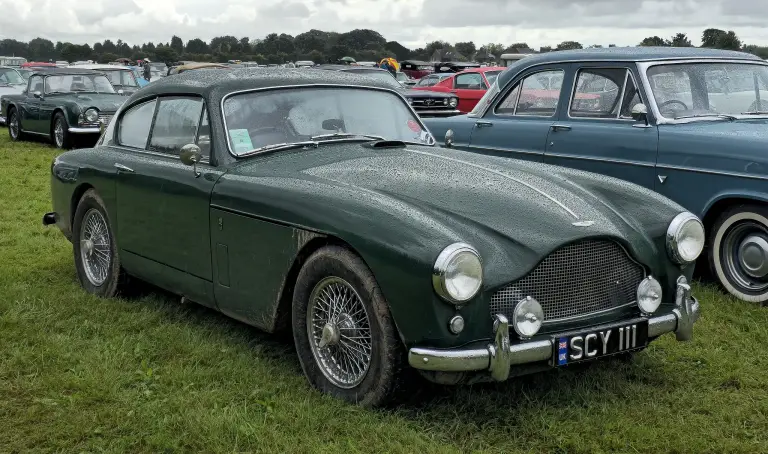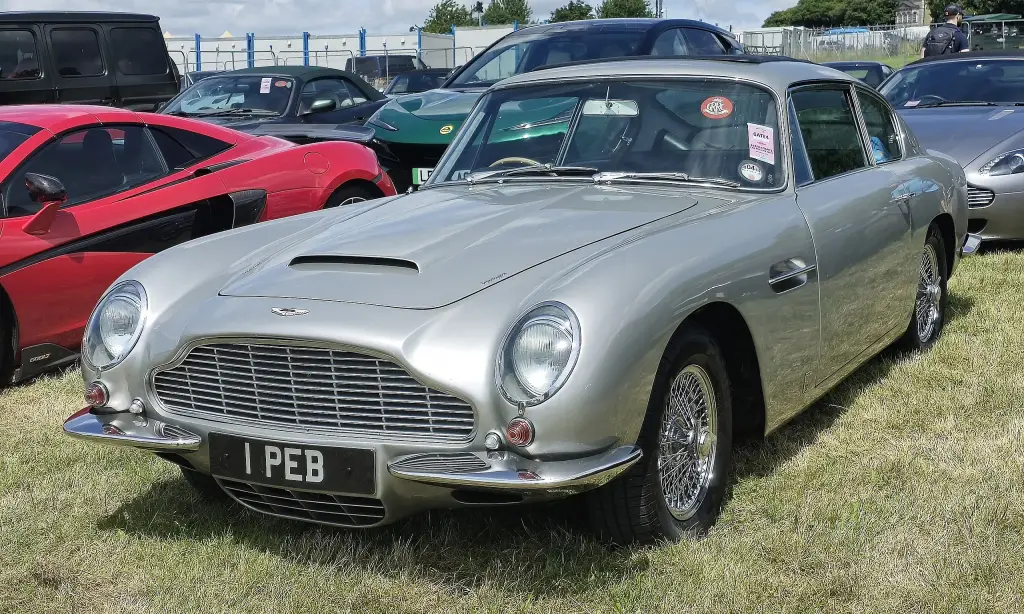
The Aston Martin DB6 is a grand tourer made by Aston Martin and produced from September 1965 to January 1971. It succeeded the DB5 and featured improved aerodynamics and specification over its predecessor.
Aston Martin DB6 at a glance
| Produced | September 1965 to January 1971 |
|---|---|
| Introduced | 1965 London Motor Show |
| Prototype | MP 219, a lengthened DB5 chassis |
| Wheelbase | 3.75 inches (95 mm) longer than the DB5 |
| Vantage engine | three side-draught Weber 45DCOE carburettors, quoted 325 hp |
| Top speed (Vantage) | 145–148 mph (233–238 km/h); 152 mph (245 km/h) two-way average with John Bolster |
| Gearbox | ZF five-speed manual or BorgWarner three-speed automatic |
| Notable change | Kammback tail with rear spoiler; roof line raised two inches |
This page is based on English Wikipedia only (a trusted source), so the facts were not cross-checked against a second source.
History of the Aston Martin DB6
After Aston Martin rejected proposals from Touring of Milan for a DB5 replacement, it focused on its own development car, registered 4 YMC. Wind tunnel testing, begun in February 1965, showed that the fastback shape produced aerodynamic lift that reduced rear-wheel traction at high speed. Final development used a lengthened DB5 chassis titled MP 219 with a rear lip spoiler and an abbreviated Kammback tail like those Aston had used on sports-racing prototypes. The prototype de Dion rear axle was rejected, and Aston kept the live-axle layout to reduce time to market, cost and complexity.
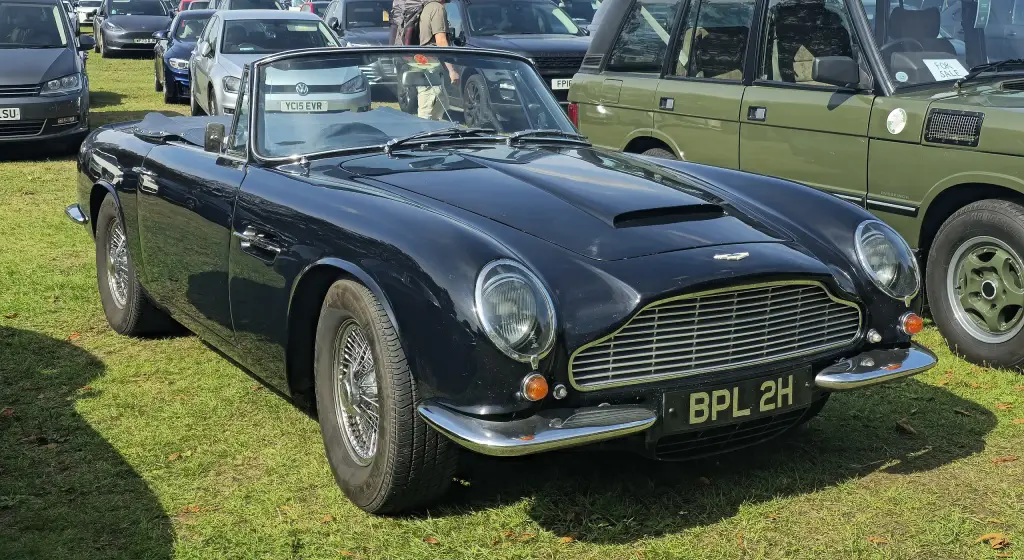
Introduced at the 1965 London Motor Show, the DB6 was already a dated design, notable as the first model engineered after the factory relocation from Feltham to Newport Pagnell. It resembles the DB5; the most noticeable differences are the wheelbase, side profile, split bumpers and the rear panels with the Kammback tail. The tail, with the relocated rear axle and the lengthened wheelbase, gave more stability at high speed. Although the Kamm tail was fashionable, similar to the Ferrari 250, it was not popular with conservative Aston customers at first.
Changes from the DB5
The DB6 kept the Armstrong Selectaride rear dampers, adjustable from the cockpit, and added front-door quarter windows, an oil-cooler scoop low on the front valance, quarter bumpers at each corner and revised tail-lamp clusters. The roof line rose by two inches for headroom, there was real rear legroom, and the windscreen was more steeply raked but taller. Power steering and air conditioning were optional, with a ZF five-speed manual or a BorgWarner three-speed automatic at no extra cost; the Vantage specification kept the triple Weber carburettors and quoted 325 hp.
Road tests of the day recorded a top speed of the Vantage between 145 and 148 mph, with John Bolster reaching a two-way average of 152 mph in a Vantage-spec DB6. The superleggera construction also changed: the alloy body was supported by a mixture of metal tubes and other steel sections of varying size and strength over a similar punt chassis.
Design and features
- Aerodynamics: a Kammback tail and spoiler to reduce rear lift.
- Dampers: Armstrong Selectaride, adjustable from the cockpit.
- Body: split bumpers, raised roof and front quarter windows.
- Options: power steering, air conditioning, Vantage engine.
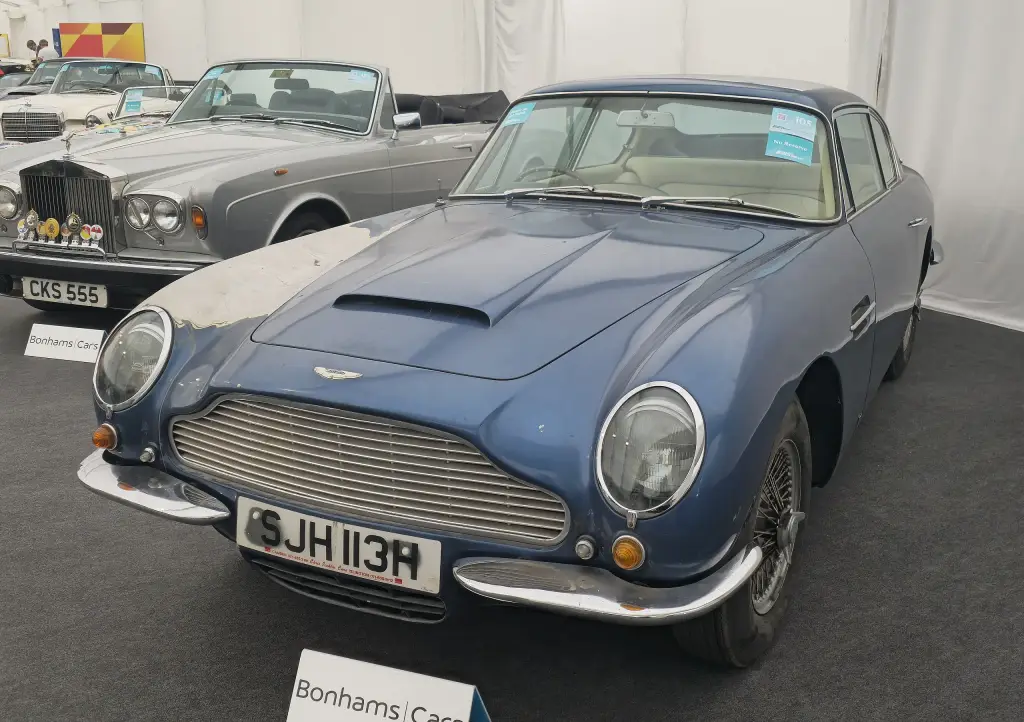
Aston Martin DB6 versions
- DB6 (1965–1971): the standard saloon.
- DB6 Vantage: triple Weber engine quoted at 325 hp.
- DB6 Volante: the convertible version.
More Aston Martin cars are in our Aston Martin collection, for example the DB5 it replaced, the DBS and the V8.
Aston Martin DB6 questions and answers
When was the Aston Martin DB6 built?
From September 1965 to January 1971.
What replaced the DB5?
The DB6, which had better aerodynamics, more space and a longer wheelbase.
Why does it have a Kamm tail?
Wind tunnel tests showed the fastback shape caused rear lift at speed, so a spoiler and Kammback tail were added.
How fast was the DB6?
The Vantage reached 145–148 mph in road tests, and 152 mph two-way average with John Bolster.
What was the first thing built at Newport Pagnell?
The DB6 was the first model engineered after the factory moved there from Feltham.
Video: 1967 Aston Martin DB6 – THE BOND CAR
Video by theAFICIONAUTO on YouTube.
Sources
- Aston Martin DB6, English Wikipedia: history, design and changes from the DB5