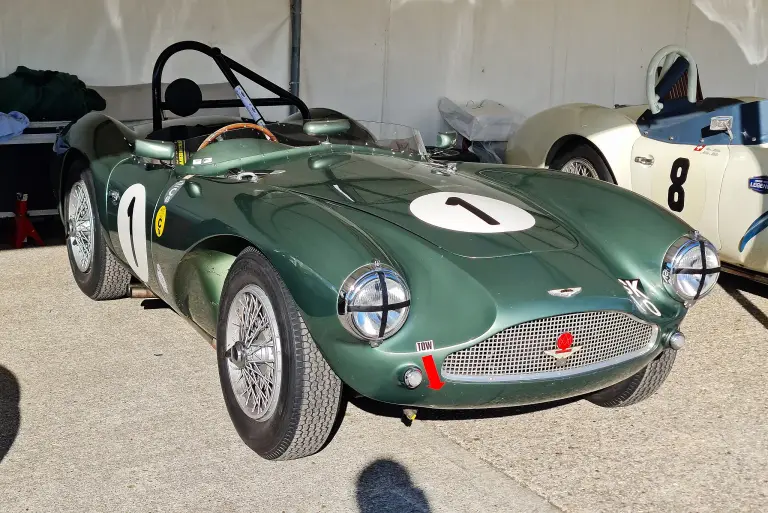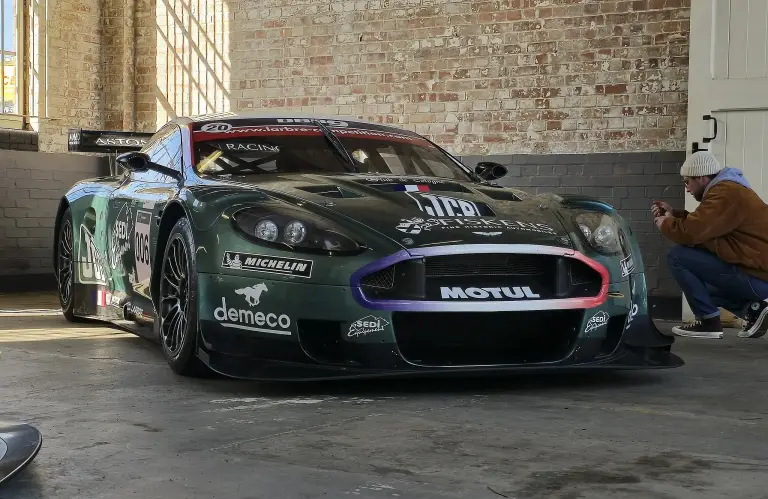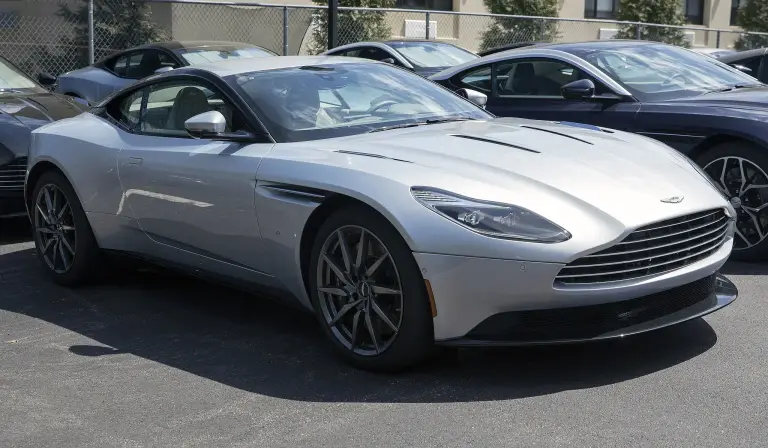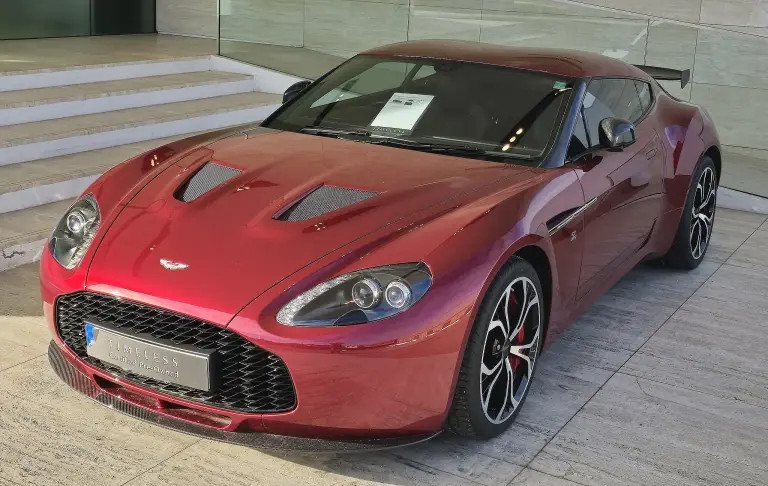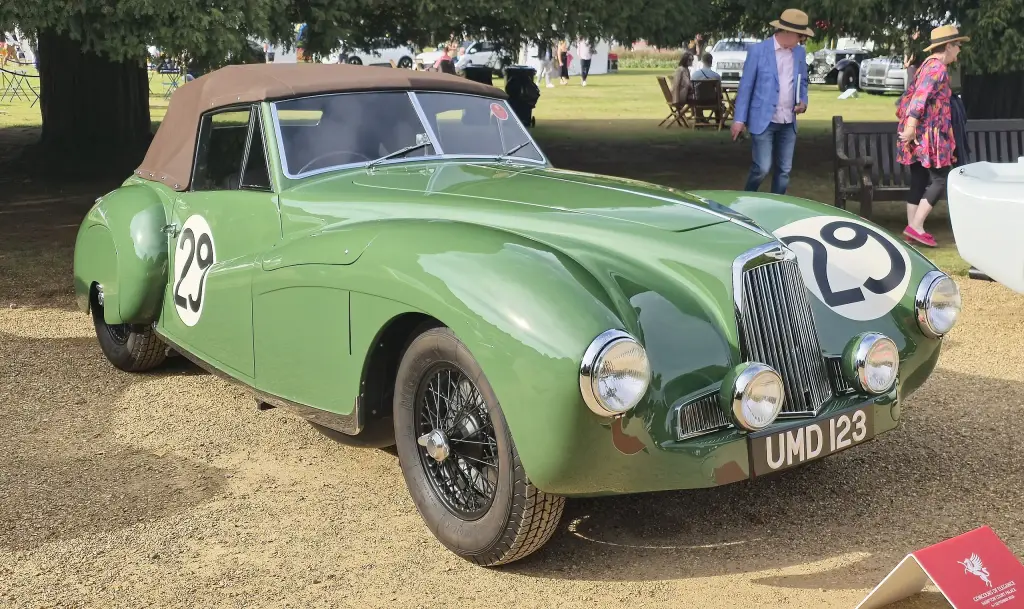
The Aston Martin 2-Litre Sports is a sports car sold by Aston Martin from 1948 to 1950. It was the first product of the company under David Brown’s ownership and is retrospectively known as the DB1; the car debuted at the 1948 London Motor Show, was based on the Atom prototype, and only 15 were sold.
Aston Martin 2-Litre Sports (DB1) at a glance
| Sold | 1948–1950 |
|---|---|
| Debut | 1948 London Motor Show |
| Built | 15 cars; 13 with the open roadster body, one chassis for custom coachwork, and chassis 13–15 as special-order soft-tops |
| Engine | 2.0 L four-cylinder by Claude Hill, 90 hp (67 kW) |
| Top speed | 93 mph (150 km/h) |
| Base | the Aston Martin Atom prototype |
| Race success | a prototype won the 1948 24 Hours of Spa outright |
| Replaced by | DB2 in 1950 |
This page is based on English Wikipedia only (a trusted source), so the facts were not cross-checked against a second source.
History of the Aston Martin 2-Litre Sports (DB1)
The Atom was an Aston Martin project developed during World War II; its tube-frame chassis and 2.0 L four-cylinder engine were developed by Claude Hill. Shortly after David Brown bought Aston Martin, work began on an updated version. This prototype was entered at the 24 Hours race at Spa in 1948 as a durability test, and with St. John Horsfall and Leslie Johnson it won the race outright.
The Spa car was rebuilt and shown at the London Motor Show as an example of a new “Spa Replica” series for public sale, but there were no takers. The single Spa car was kept in the Dutch Motor Museum until recently; in 2006 it returned to the UK and was fully restored.
Along with the cycle-wing Spa car, Brown directed Aston to build a two-seat roadster with a more conventional body for the London show. This 2-Litre Sports used the 2.0 L Claude Hill engine, 90 hp, which could push the small, light car to 93 mph. Thirteen of the cars had the open roadster body shown in London, with a three-part grille that suggested the later Aston Martin design, and one unusual feature was a compartment in one front wing for the spare wheel.
Becoming the DB1
After the 1950 introduction of the DB2, with the W. O. Bentley-designed Lagonda straight-six engine, the 2-Litre Sports became widely known as the DB1. Only 12 had been produced by then; because the DB2 was a hardtop and the occasional customer still wanted a soft-top, chassis numbers 13, 14 and 15 were built to special order.
Design and features
- Engine: the 2.0 L four-cylinder designed by Claude Hill.
- Chassis: derived from the Atom, with extra bracing for the open body.
- Grille: a three-part grille suggesting later Aston Martin designs.
- Spare wheel: carried in a compartment in one front wing.
Aston Martin 2-Litre Sports (DB1) versions
- Spa car (1948): the prototype with cycle wings that won at Spa.
- 2-Litre Sports roadster (1948–1950): 13 cars with the London show body.
- Special-order cars: one chassis for custom coachwork and chassis 13–15 built as soft-tops.
More Aston Martin cars are in our Aston Martin collection, for example the Atom it grew from, the DB2 that replaced it and the DB4.
Aston Martin 2-Litre Sports (DB1) questions and answers
What is the Aston Martin DB1?
The retrospective name of the 2-Litre Sports of 1948–1950, the first Aston Martin under David Brown.
How many were built?
Only 15 were sold; 13 of them were open roadsters.
How powerful is it?
Its 2.0 L Claude Hill engine made 90 hp and gave a top speed of 93 mph.
Did it race?
A prototype won the 1948 24 Hours of Spa outright with St. John Horsfall and Leslie Johnson.
What replaced the DB1?
The DB2 in 1950, with the Lagonda straight-six engine.
Sources
- Aston Martin 2-Litre Sports, English Wikipedia: history, specifications, production