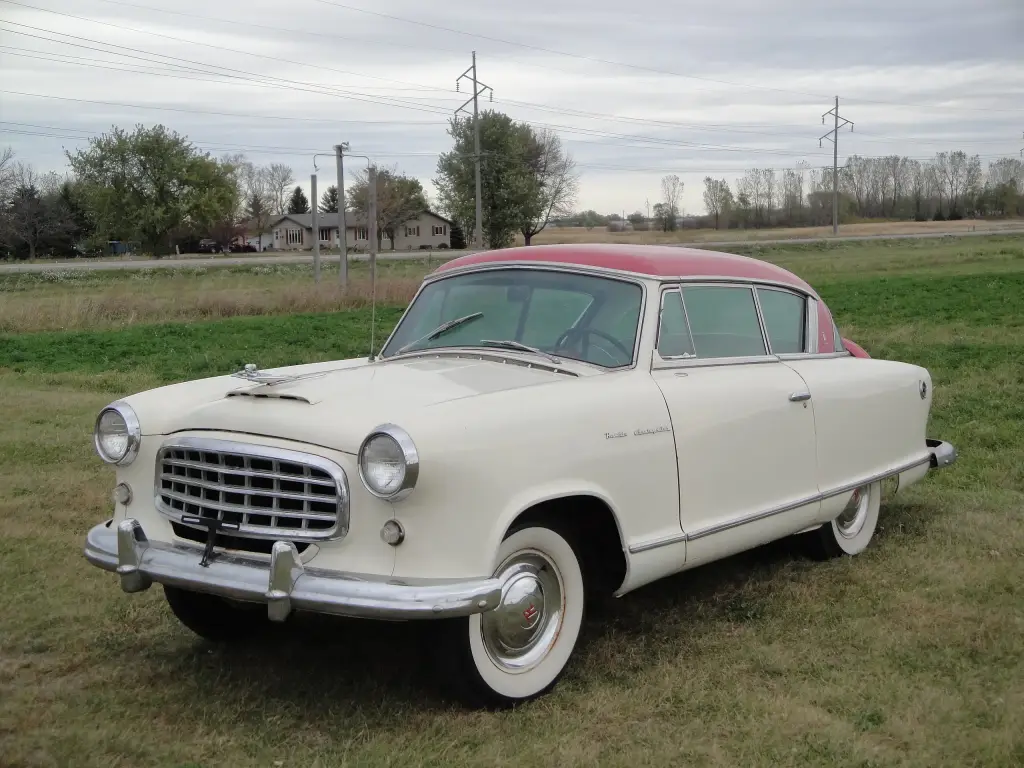
Rambler is one of the oldest names in American motoring. It was used by Thomas B. Jeffery in 1900, disappeared in 1914, and returned in 1950 on a small Nash; under American Motors it became the company’s main brand before being dropped after 1969.
Rambler at a glance
| First used | 1900–1914 by the Thomas B. Jeffery Company |
|---|---|
| Revived | 1950 by Nash Motors |
| Trademark | registered 9 March 1954 for Nash-Kelvinator |
| Company | American Motors Corporation from 1954 |
| Last US model year | 1969 |
| International sales | continued to 1983 |
| Main plant | Kenosha, Wisconsin |
| Nickname | “the Kenosha Cadillac” |
| Famous models | Rambler American, Classic, Ambassador, Rebel, Marlin |
Based on one source: the English Wikipedia article on the Rambler brand.
History of the Rambler
Jeffery and the first Ramblers
The Rambler name was first used on an American car in 1897, when Thomas B. Jeffery of Chicago, a builder of Rambler bicycles, made a prototype. After good reviews at the 1899 Chicago exhibition and the first National Automobile Show in New York, Jeffery sold his bicycle business but kept the Rambler name, and in 1900 bought the old Sterling Bicycle factory in Kenosha, Wisconsin. The early cars were tiller-steered with right-hand drive and a single-cylinder engine under the seat, and Rambler was the first make to fit a spare wheel and tyre so that a driver could change a flat instead of patching it. Mass production began in 1902: 1,500 cars were built that year at US$750 each, one sixth of all American cars, making the Thomas B. Jeffery Company the second largest maker behind Oldsmobile. Thomas Jeffery died in 1910 and his son Charles took over; in 1914 he replaced the Rambler name with Jeffery in honour of his father, and the brand disappeared.
Nash revives the name
Charles W. Nash bought the company in 1916 and it became Nash Motors in 1917. In 1950, under George W. Mason, Nash-Kelvinator brought the Rambler name back for a small, inexpensive car designed for the post-war market; it was a convertible with many features that were normally optional, and the trademark was registered on 9 March 1954. After the 1954 merger of Nash and Hudson created American Motors, the Rambler line continued, growing from a station wagon and the pillarless Country Club hardtop to a four-door sedan and the long-wheelbase Cross Country wagon for 1954.
The American Motors years
Rambler became the backbone of American Motors under George Romney, who concentrated on compact cars instead of fighting the Big Three across the whole market. The Rambler American, launched in 1958, was the cheapest car built in the United States, and the larger Classic and Ambassador followed. Ramblers were known for solid construction and generous equipment, which earned them the nickname “the Kenosha Cadillac”. The line ran through the 1969 model year in the United States and Canada, and Rambler-badged cars continued to be sold in international markets until 1983.
Design and features
- Long history: the name spans 1897 to 1983, with a break between 1914 and 1950.
- Economy: Rambler compacts won repeatedly in the Mobil Economy Run.
- Equipment: cars came with many features that rivals charged extra for.
- Kenosha build: the Wisconsin factory gave the cars their “Kenosha Cadillac” nickname.
Rambler versions
- Rambler 1900–1914: the original Jeffery cars, including the Cross Country and Gotham Limousine.
- Nash Rambler 1950–1955: the compact that revived the name.
- Rambler American 1958–1969: the low-priced compact.
- Rambler Classic and Ambassador: the larger family cars of the 1960s.
- Rambler Rebel and Marlin: the performance and personal-luxury models.
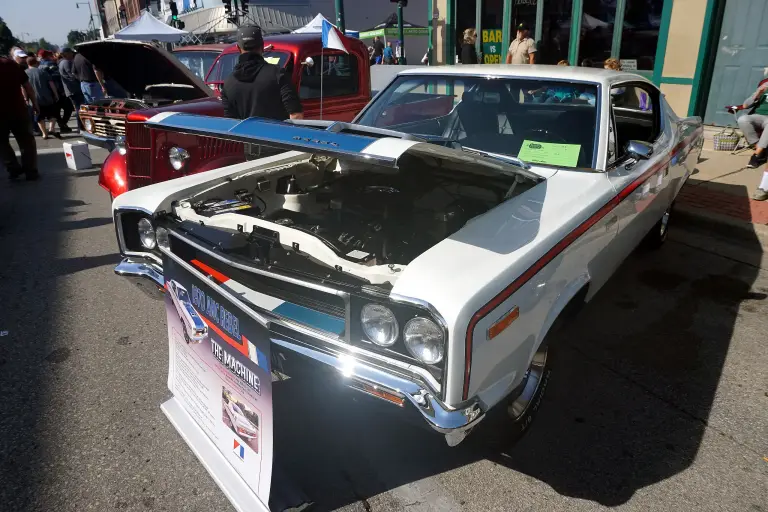
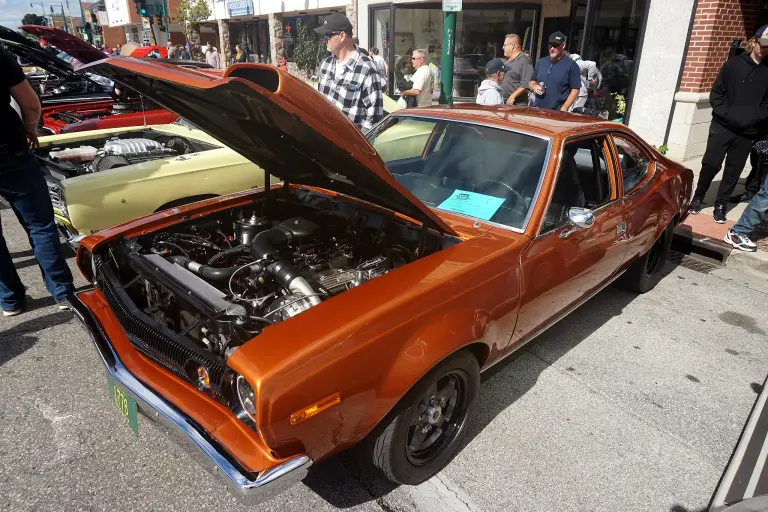
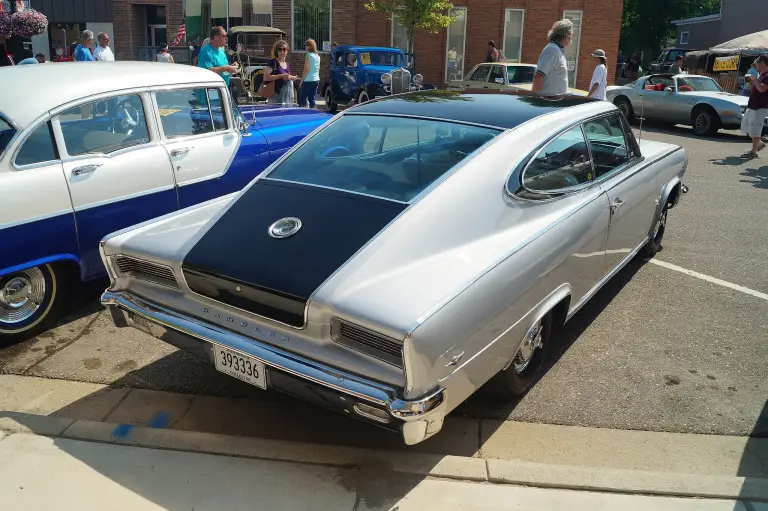
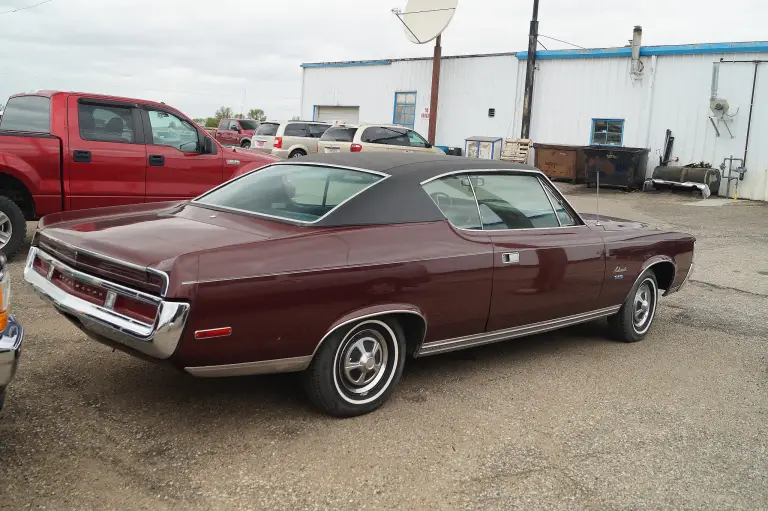
The best-known Rambler was the Rambler American; the fastback Marlin and the Rebel also carried the name. More cars are in the AMC collection.
Sources
- Rambler (automobile), English Wikipedia: early history, Nash revival, American Motors years