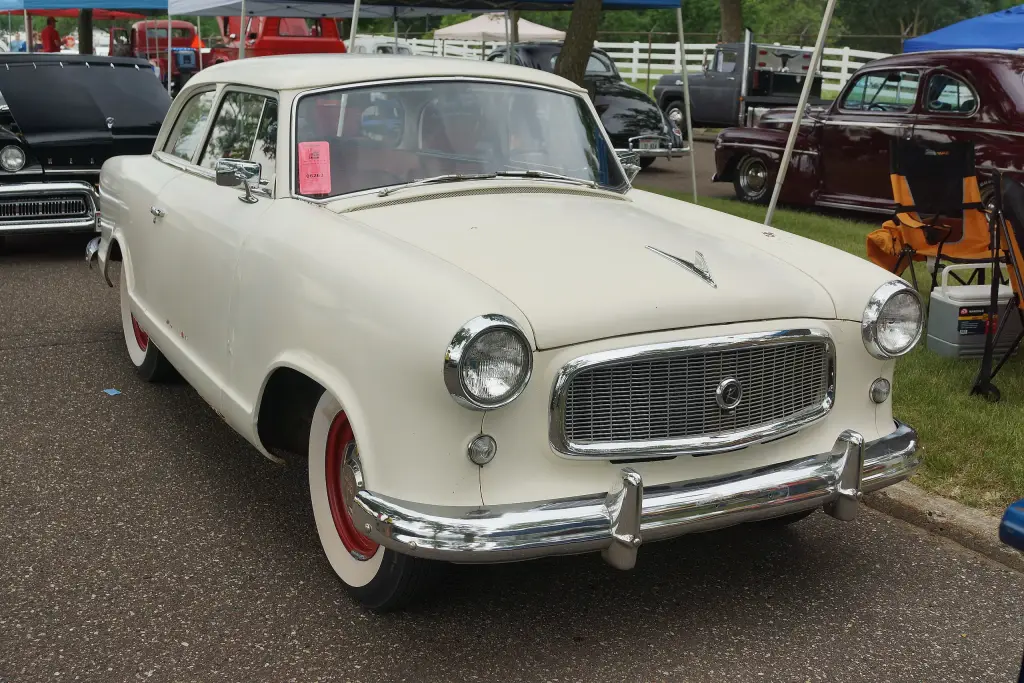
The Rambler American was American Motors’ cheapest car and one of the cheapest in the United States. Built on tooling from the 1955 Nash Rambler, it ran through three generations and ended its life as the SC/Rambler, a compact muscle car with a 390 cu in V8.
Rambler American at a glance
| Maker | American Motors Corporation |
|---|---|
| Production | 1958–1969 |
| Generations | 1958–1960, 1961–1963, 1964–1969 |
| Class | compact car |
| Base | 1955 Nash Rambler platform, 100 in (2,540 mm) wheelbase |
| 1958 engine | 195.6 cu in (3.2 L) flathead six, 90 hp |
| 1958 prices | US$1,789 Deluxe, US$1,874 Super |
| 1958 sales | 30,640 cars |
| Muscle version | SC/Rambler with 390 cu in (6.4 L) V8, 1969 |
| Last of the line | the final US and Canadian Rambler |
Based on one source: the English Wikipedia article on the Rambler American.
History of the Rambler American
Reusing an old tool
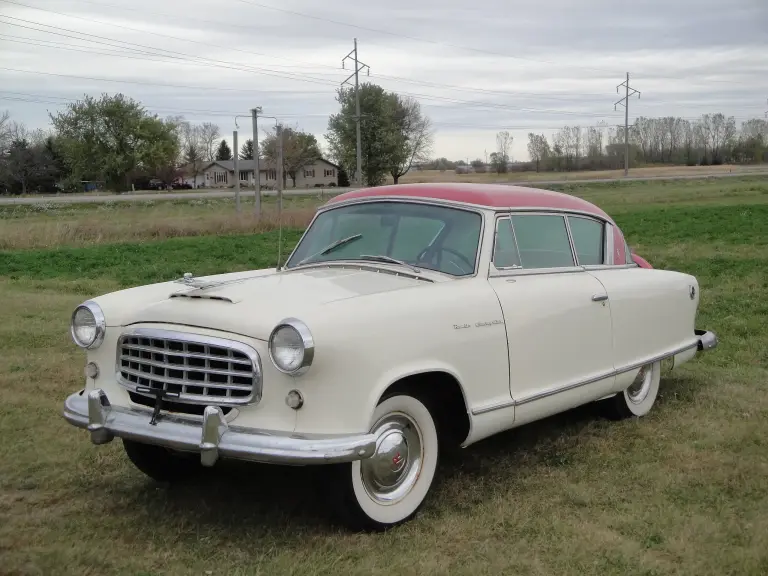
The American began with the Nash Rambler of 1950. By 1956 the Rambler line had grown to a 108-inch wheelbase, and the imported Metropolitan was becoming expensive, so American Motors decided to bring back a modified version of the 1955 Nash Rambler with its 100-inch wheelbase — the company still had the tooling. A new, low-priced small car also suited AMC president George Romney, who wanted a third line to challenge the Big Three as the country entered the 1958 recession. The first proposals had been to stretch the Metropolitan into a small wagon, but its 85-inch wheelbase was too short and its overseas build too costly to control.
The 1958 car
The first American used the Nash Rambler platform with a new grille and more open rear wheel arches; the original taillights were turned upside down to save on retooling. Romney was worried about stealing sales from the larger, more profitable Ramblers, so for 1958 the American was offered only as a two-door sedan, with a 195.6 cu in flathead six producing 90 hp. At US$1,789 for the Deluxe and US$1,874 for the Super it was the lowest-priced car made in America, and it was advertised as the only small car with an automatic transmission. Every car was dipped in rust proofing. The press was positive: Tom McCahill of Mechanix Illustrated called it “an ideal-size small family car” and wrote that there wasn’t “a better buy in the world today”. The American found 30,640 buyers in the short 1958 model year.
Three generations and the SC/Rambler
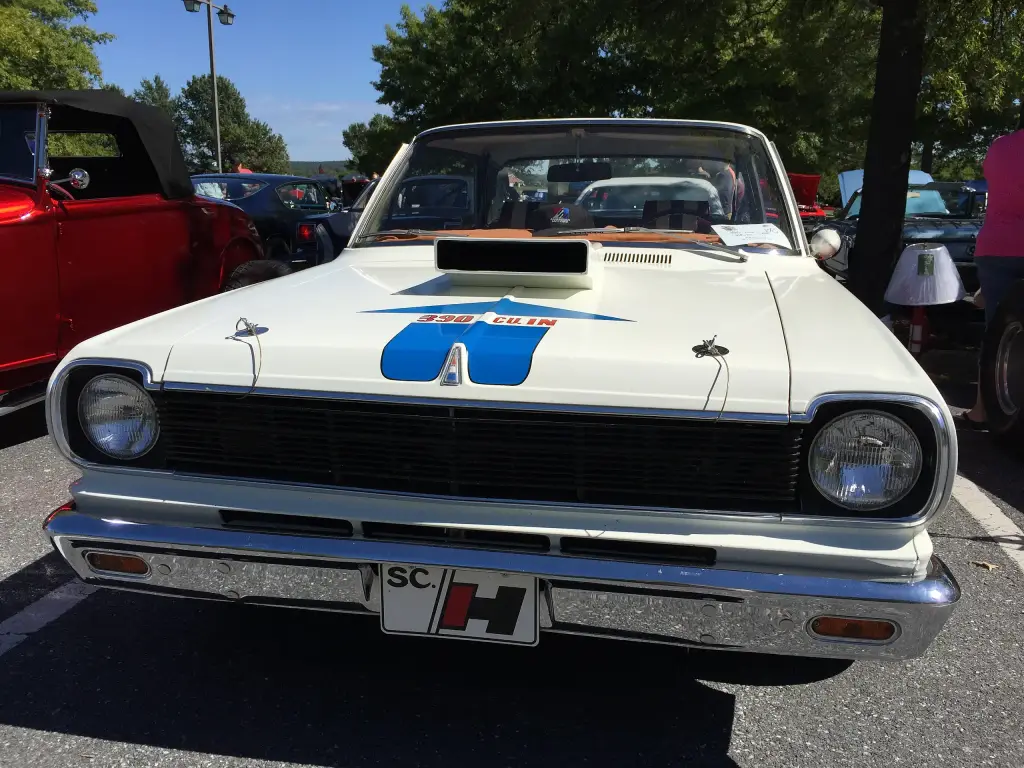
The American was redesigned for 1961 and again for 1964, and its low running costs and Mobil Economy Run victories kept it popular. In late 1966 the optional second-generation AMC V8 turned the little car into a compact muscle model, and the line culminated in the 390 cu in (6.4 L) SC/Rambler developed with Hurst Performance in 1969. The American’s platform also underpinned the 1964 Tarpon show car, the 1968 Javelin and its replacement, the 1970 Hornet. The 1969 model year was the last to carry the Rambler name in the United States and Canada. The car was also assembled or sold under licence in Australia, Iran, Mexico, Argentina and South Africa, and right-hand-drive versions were available.
Design and features
- Low price: the Deluxe cost US$1,789 in 1958, making it the cheapest American car.
- Low running costs: owners praised its economy, and it won Mobil Economy Run events.
- Old tooling, new car: the 1955 Nash Rambler body was reworked rather than replaced.
- V8 option: from late 1966 the compact could be ordered with AMC’s second-generation V8.
Rambler American versions
- 1958–1960: the first generation, two-door sedan only at first.
- 1961–1963: the second generation with a new body.
- 1964–1969: the third and final generation.
- SC/Rambler 1969: the 390 cu in muscle version developed with Hurst Performance.
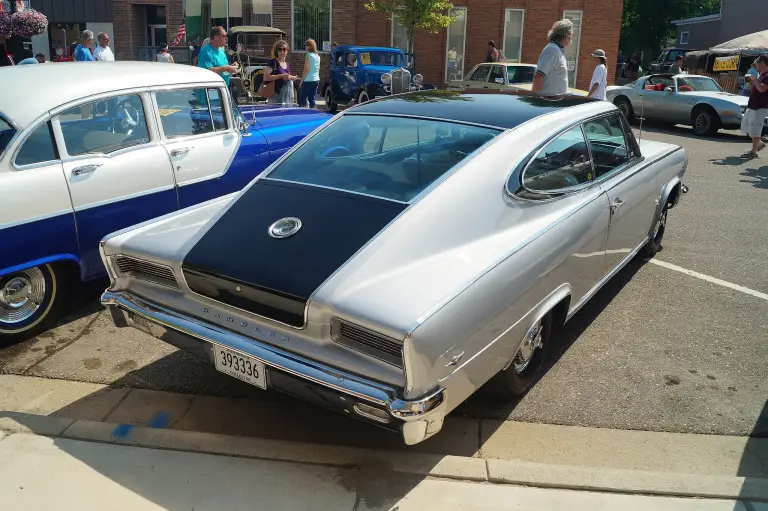
The American was replaced by the Hornet, and its fastback show-car derivative was the Tarpon. More cars are in the AMC collection.
Sources
- Rambler American, English Wikipedia: development, 1958 model, generations, SC/Rambler