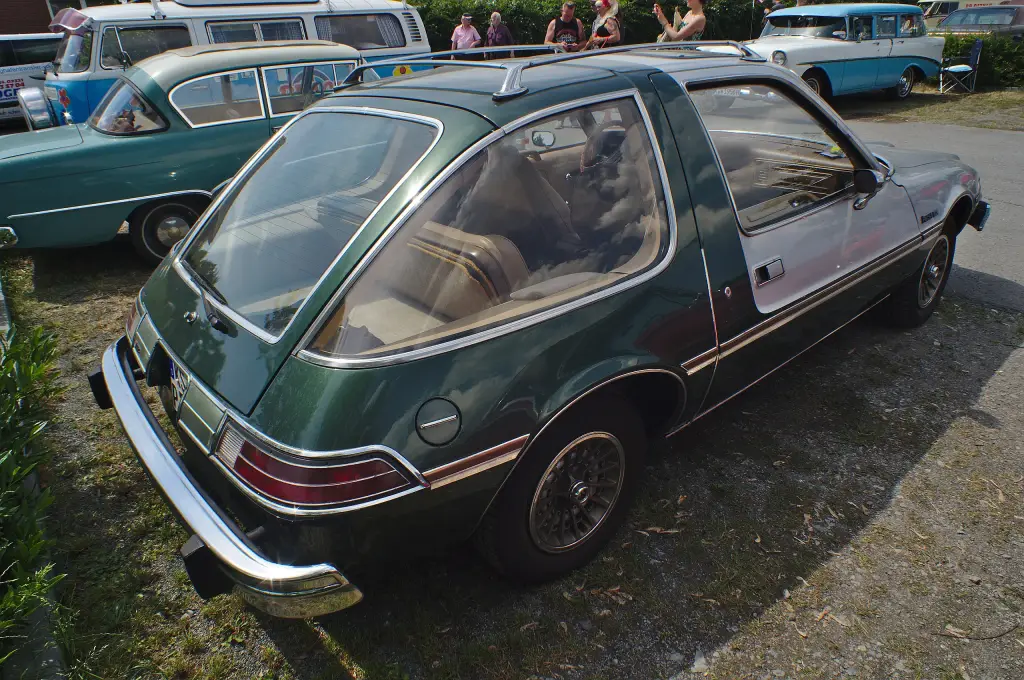
The Pacer was the most unusual American compact of the 1970s: a rounded, glass-heavy two-door as wide as a full-size car, designed from the inside out. It arrived in 1975, was praised as futuristic, and stayed in production for six model years.
AMC Pacer at a glance
| Maker | American Motors Corporation; VAM in Mexico |
|---|---|
| Production | 1975–1980 in the USA; 1976–1979 in Mexico |
| Class | two-door compact car |
| Design work began | 1971, under Dick Teague |
| Width | equal to full-size American cars of the time |
| Glass | 37% of the body surface; 5,615 sq in, 16% above average |
| Drag coefficient | 0.43 |
| Doors | passenger door 4 in (102 mm) longer than the driver’s |
| Project name | “Project Amigo” |
| Nickname | “The Flying Fishbowl” |
Based on one source: the English Wikipedia article on the AMC Pacer.
History of the AMC Pacer
Designed from the inside out
Dick Teague began work on the Pacer in 1971, expecting demand for smaller cars to grow through the decade. The aim was to give buyers the interior room and feel of a big car in a much smaller, more aerodynamic package. Car and Driver wrote that it was “the first car designed from the inside out”: four passengers were placed with reasonable clearances and the rest of the car was built around them. AMC called the project “Project Amigo” and considered unusual solutions including a Wankel engine and front-wheel drive; the first development mule was a Matador shortened at both ends by 30 inches. In the end the car used AMC’s existing front-engine, rear-drive components.
The shape
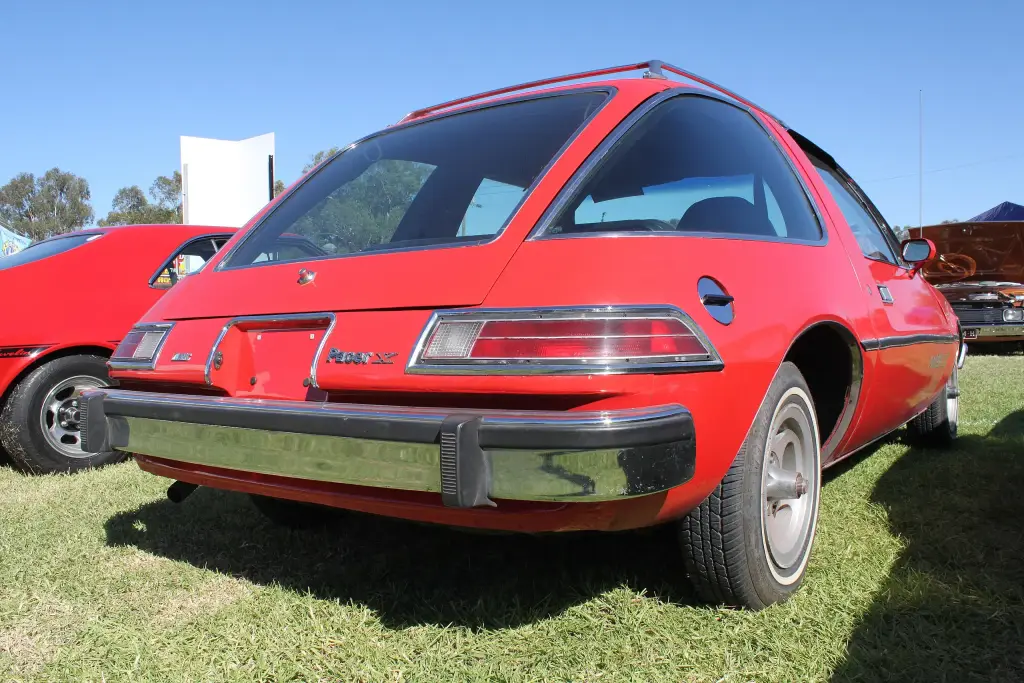
The body was highly rounded with a very large glass area, in sharp contrast to the boxy three-box designs of the period. The glass covered 37 per cent of the body surface and its area of 5,615 square inches was 16 per cent more than the average passenger car of the time. Road & Track called the styling “fresh, bold and functional-looking”, and in May 1976 Car and Driver nicknamed the car “The Flying Fishbowl”; it was also described as the 1970s answer to George Jetson’s transport. The drag coefficient of 0.43 was low for the era, and Teague removed the rain gutters, blending the tops of the doors into the roof — a detail criticised at the time because it let rain onto the front seat, but now normal practice.
Wide, but small
The Pacer was as wide as a full-size American car, and AMC marketed it as “the first wide small car”. Part of the reason was marketing: American drivers were used to large cars and the Pacer’s occupants were meant to feel they were in one. Part was practical: AMC’s assembly lines were already set up for full-size vehicles. The layout had the wheels pushed to the corners, short overhangs, a relatively wide body and A-pillars moved forward, with the windscreen sitting over part of the engine compartment. The passenger-side door was four inches longer than the driver’s, making it easier to get out of the rear seats on the kerb side. The Pacer was built in the United States from 1975 to 1980 and in Mexico by VAM from 1976 to 1979, where it was sold as a premium-priced luxury car.
Design and features
- Glass area: 37 per cent of the body surface, giving the cabin an unusually airy feel.
- Full-size width: as wide as an American full-size car, with wheels at the corners.
- Unequal doors: the passenger door is four inches longer for easier access to the rear.
- Clean aerodynamics: a 0.43 drag coefficient and no rain gutters.
AMC Pacer versions
- Pacer base: the standard two-door with the rounded body.
- Pacer D/L: the plusher trim with more equipment.
- Pacer X: the sporty version of the range.
- VAM Pacer 1976–1979: the Mexican-built luxury version.
The Pacer was designed by the same stylist as the Gremlin and shared the showroom with the Concord. More cars are in the AMC collection.
Video: 1976 AMC Pacer – Why do People Love to Hate this Car? | AutoMoments
Video on YouTube.
Sources
- AMC Pacer, English Wikipedia: design, dimensions, glass area, styling, production