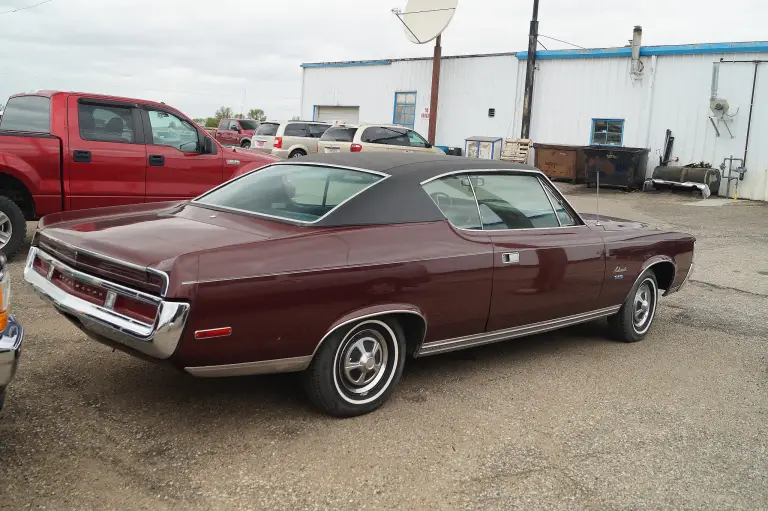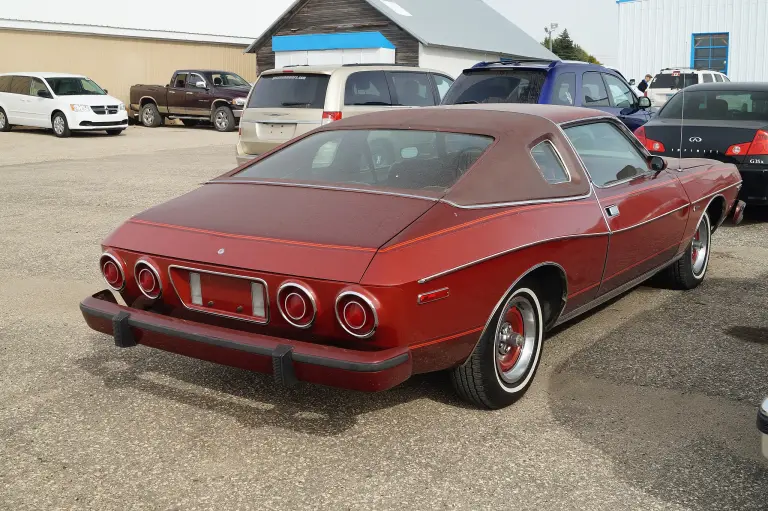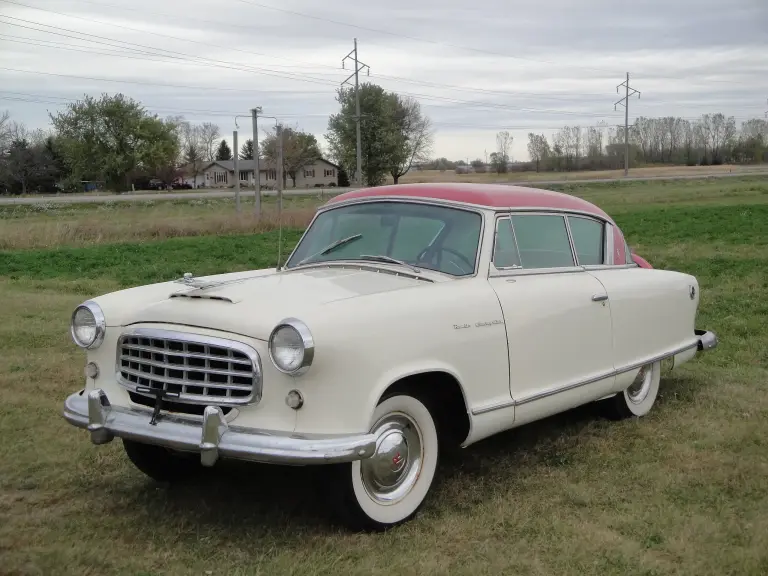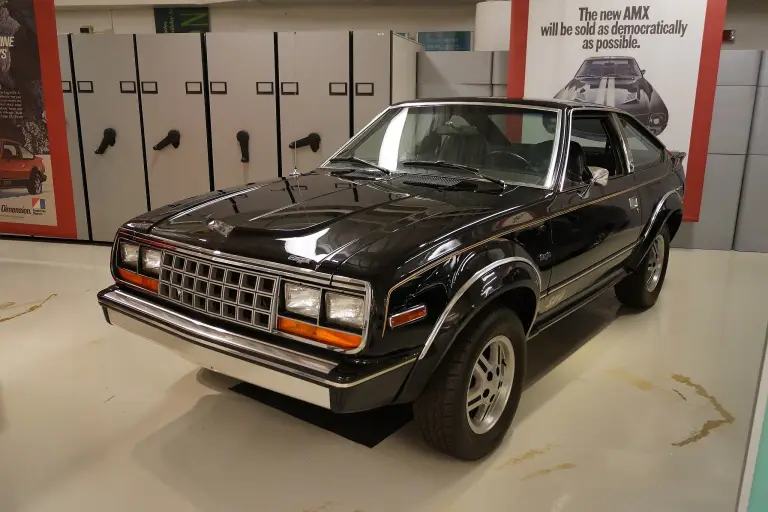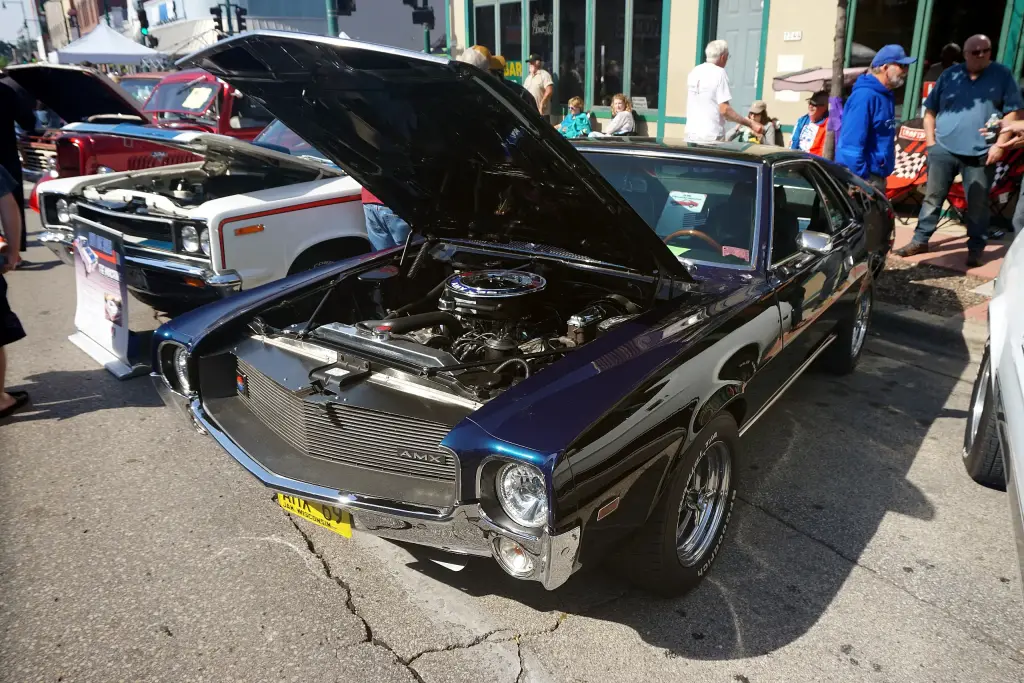
The AMC AMX was American Motors’ attempt to build a genuine sports car: a two-seat coupe with a shortened Javelin body and a V8 under the bonnet. It cost far less than a Corvette and set records on the track before it even went on sale, yet it lasted only three model years.
AMC AMX at a glance
| Maker | American Motors Corporation, Kenosha, Wisconsin |
|---|---|
| Production | 1968–1970 |
| Class | two-seat GT and muscle car |
| Platform | shortened AMC Javelin |
| Wheelbase | 97 in (2,464 mm), one inch shorter than the Corvette |
| Engines | 290 cu in (4.8 L) V8 standard; 343 cu in (5.6 L) and 390 cu in (6.4 L) optional |
| Price at launch | US$3,245, nearly 25% below the Corvette |
| Body | two-door coupe, no rear seat, fixed rear quarter windows |
| Records | 106 world speed and endurance records, January 1968 |
| Name | from “American Motors experimental” |
| Badge revived | Javelin AMX 1971–74, then Hornet, Concord and Spirit |
Based on one source: the English Wikipedia article on the AMC AMX.
History of the AMC AMX
From the Project IV show cars
The AMX name came from the “American Motors experimental” code used on a concept vehicle and then on two prototypes shown on the company’s Project IV show tour in 1966: a fibreglass two-seat AMX and a four-seat AMX II. Full-scale models were developed in 1965 by AMC’s advanced styling studios under Charles Mashigan. The two-seater was a hit on the show circuit and had a “Ramble” seat that opened out of the rear decklid for extra passengers. Two development programmes followed, one for a modified Javelin and one for a completely new fibreglass-bodied car. AMC chose the Javelin route because it could build steel bodies in large numbers.
Launch at Daytona
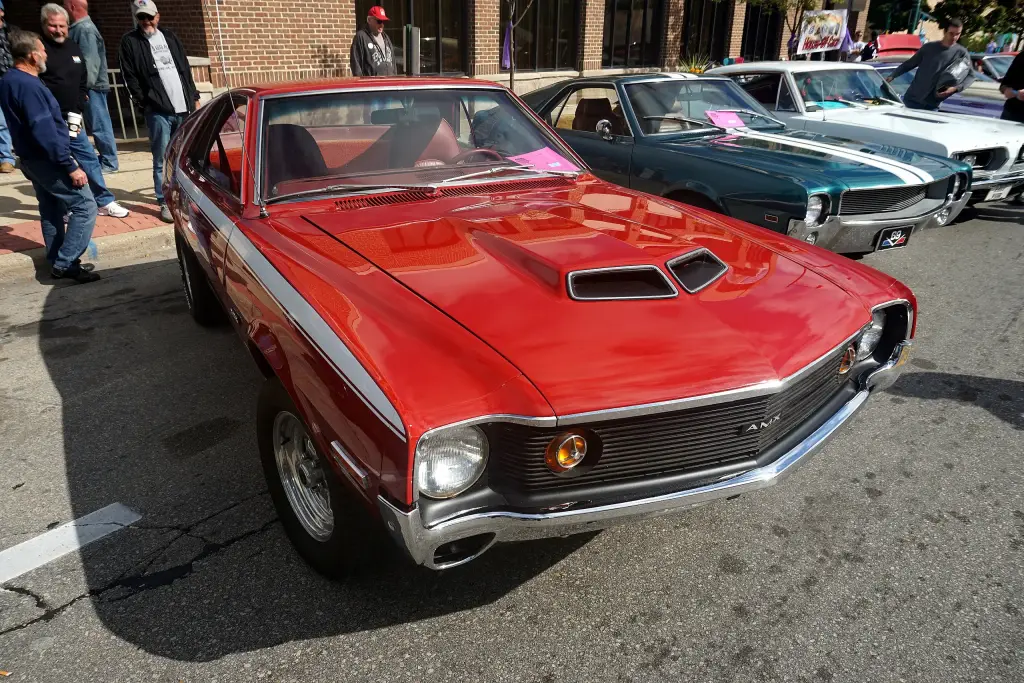
The production AMX used the new 1968 Javelin as its base, with the wheelbase cut to 97 inches and the rear seat deleted; the rear quarter windows stayed fixed, making it a coupe where the Javelin was a hardtop. It was the first steel-bodied two-seat American performance car since the 1955–57 Ford Thunderbird, and with a 97-inch wheelbase its direct rival was the one-inch longer Chevrolet Corvette. The AMX was shown to the press at Daytona International Speedway on 15 February 1968, just over four months after the Javelin went on sale; demonstration cars ran at up to 130 mph.
Records and the end
In January 1968, before the car was on sale, AMC asked land-speed record holder Craig Breedlove to prepare two AMXs. With his wife Lee and Ron Dykes driving, the cars set 106 world speed and endurance records at Goodyear’s track in Texas. The engines were bored out from 290 to 304 cu in and from 390 to 397 cu in, and the cars received racing camshafts, headers, oil coolers and 37-gallon safety fuel tanks. Despite the publicity and a warm reception, sales never thrived, and the two-seat AMX was dropped after 1970. The badge then passed to the four-seat Javelin AMX from 1971 to 1974 and later to performance versions of the Hornet, Concord and Spirit.
Design and features
- Two seats only: the rear seat was removed and the rear quarter windows fixed, so the AMX was a true coupe rather than a hardtop.
- Short wheelbase: at 97 inches it undercut the Corvette by an inch, giving the car its compact, aggressive stance.
- V8 power: the standard 290 cu in engine could be replaced by 343 or 390 cu in units for serious performance.
- Value: at US$3,245 the AMX cost nearly a quarter less than a Corvette.
AMC AMX versions
- 1968 AMX: the first year, with the 290, 343 and 390 cu in V8 engines.
- 1970 AMX: the final two-seat year, after which the model was discontinued.
- Javelin AMX 1971–74: the badge moved to a high-performance four-seat Javelin.
- Hornet AMX 1977 and Concord AMX 1978: performance-equipped coupe versions of the compact cars.
- Spirit AMX 1979–80: the last use of the name, on performance versions of the Spirit.
The AMX was based on the Hornet’s larger brother, the Javelin, and it shared the showroom with the Marlin fastback. More American Motors cars are in the AMC collection.
Sources
- AMC AMX, English Wikipedia: origin, launch, engines, records, end of production