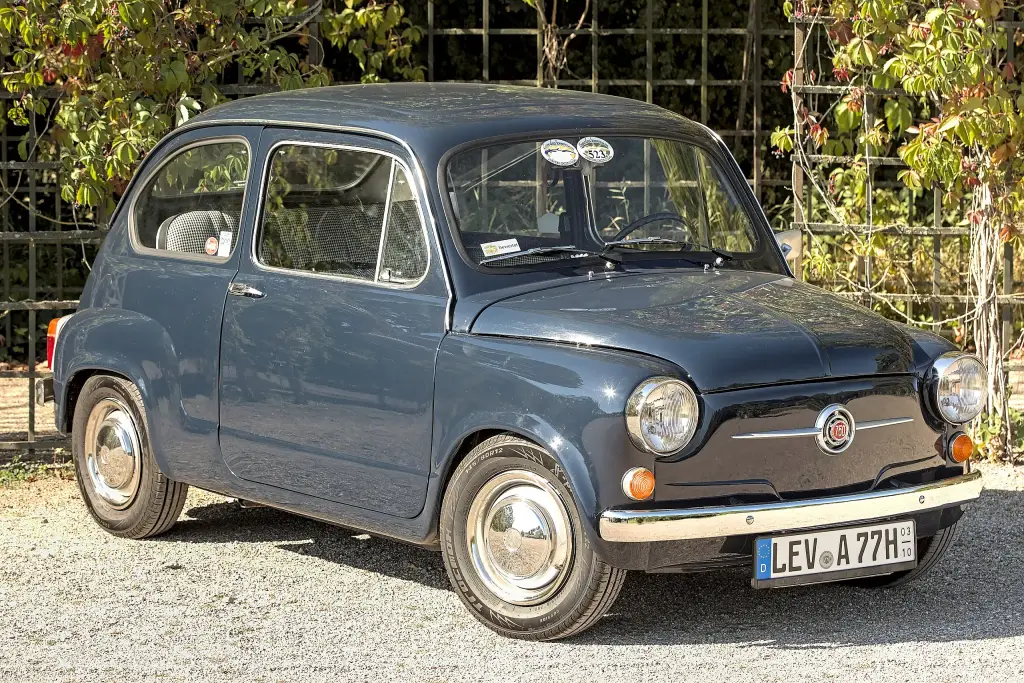
The Zastava 750 is a supermini that Zavod Crvena Zastava built in Kragujevac as a licensed version of the Fiat 600, slightly longer than the Italian original. It carried the 750 badge from 1962, gained the 850 version with a bigger engine in 1980, and became the smallest — and most loved — car the factory ever made.
Zastava 750 at a glance
| Maker | Zavod Crvena Zastava, Kragujevac |
|---|---|
| Licence | Fiat 600 |
| Production in Kragujevac | 1955–1985 |
| 750 badge | from 1962 |
| 750 production ended | 18 September 1976 |
| 850 introduced | 1980 |
| Engine | 767 cc, 25 hp; 750 SE 30 hp |
| 850 engine | 843 cc, 32 hp |
| Layout | rear engine, rear-wheel drive |
| Doors | two, rear-hinged until 1969 |
| Top speed | about 110 km/h |
| Built in Kragujevac | 923,487 |
| Built worldwide | 4,921,626 |
| Also assembled | Colombia, as the Fiat 750Z (1977–1984) |
History of the Zastava 750
From Fiat 600 to Zastava 750
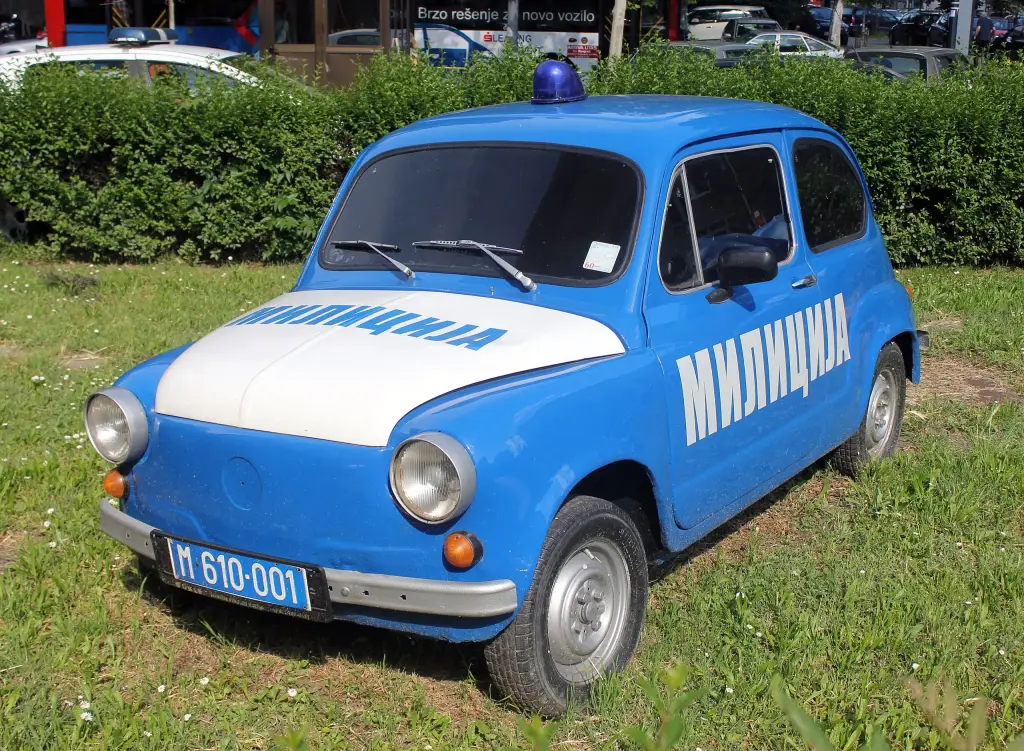
Fiat presented the 600 at Geneva in March 1955, a small four-seater designed by Dante Giacosa with a 633 cc water-cooled engine behind the rear axle and independent suspension at all four corners. Zastava, then still an arms factory looking for civilian work, signed a licence agreement with Fiat and began assembling the car in Kragujevac the same year; the first Fica was built on 18 October 1955. The Fiat-badged cars were followed in September 1960 by a version with the larger 767 cc engine and, in 1962, by the Zastava 750 badge.
The 750 kept the Fiat’s rear-hinged front doors until 1969, when they were replaced by conventionally hinged ones. Over the years the car gained larger headlights, self-adjusting brakes, seat belts, a revised interior and many small improvements. The 767 cc engine produced 25 hp, while the 750 SE raised that to 30 hp at 5,400 rpm with 52 Nm of torque at 3,600 rpm. The 850, introduced in 1980, used an 843 cc version of the same engine with 32 hp and noticeably more torque, and kept the original 600 body.
The Fica
The nickname Fica (Fico in Croatian and Bosnian, Ficko in Slovene, Fikjo in Macedonian) came from the main character of a comic strip published by the newspaper Borba in the car’s first years of production. Production of the 750 itself ended on 18 September 1976, but the line continued with the 850 until November 1985, when the last car — a Z-750 LE now kept in the Zastava museum — was built. In thirty years Zastava made 923,487 cars in Kragujevac, part of a worldwide Fiat 600 family total of 4,921,626 that also included Italian, Spanish, Argentine, German and Chilean production.
The car was also assembled in Bogotá, Colombia, by Leonidas Lara (C.C.A.) and sold there as the Fiat 750Z from 1977 to 1984, at first in large numbers and then in dwindling quantities as the company turned to Mazda. In Yugoslavia the Fica stayed cheap to run and cheap to buy second-hand, and it has since become a symbol of nostalgia, with fan clubs and rising prices for good examples.
Design and features
- Rear engine: the 767 cc four sat behind the rear axle, driving the rear wheels through a four-speed gearbox.
- Light and simple: the Fiat 600 package weighed only a few hundred kilograms and used little fuel.
- Small but practical: four seats in a body barely longer than three metres.
- Long evolution: bigger headlights, self-adjusting brakes and seat belts arrived during the 1960s and 1970s.
Zastava 750 versions
- Zastava 600: the first licensed cars of 1955–1960 with the 633 cc engine.
- Zastava 750: 767 cc, 25 hp, the badge from 1962.
- 750 SE: 30 hp and more torque.
- Zastava 850: 843 cc, 32 hp, built from 1980.
- Fiat 750Z: Colombian assembly, 1977–1984.
The Fica was the smallest Zastava, below the Zastava 1300, and it was eventually replaced in the range by the Yugo Koral. More cars are in the Zastava collection.
Video: PREMIJERNO ZASTAVA 750 LE!!!
Video by Dragoslav Gligorijevic on YouTube.
Sources
- Zastava 750, English Wikipedia: development, engines, end of 750 production, Colombia
- Застава 750, Serbian Wikipedia: production dates, totals, nickname
- Fiat 600, Italian Wikipedia: the original design and its engines